



-
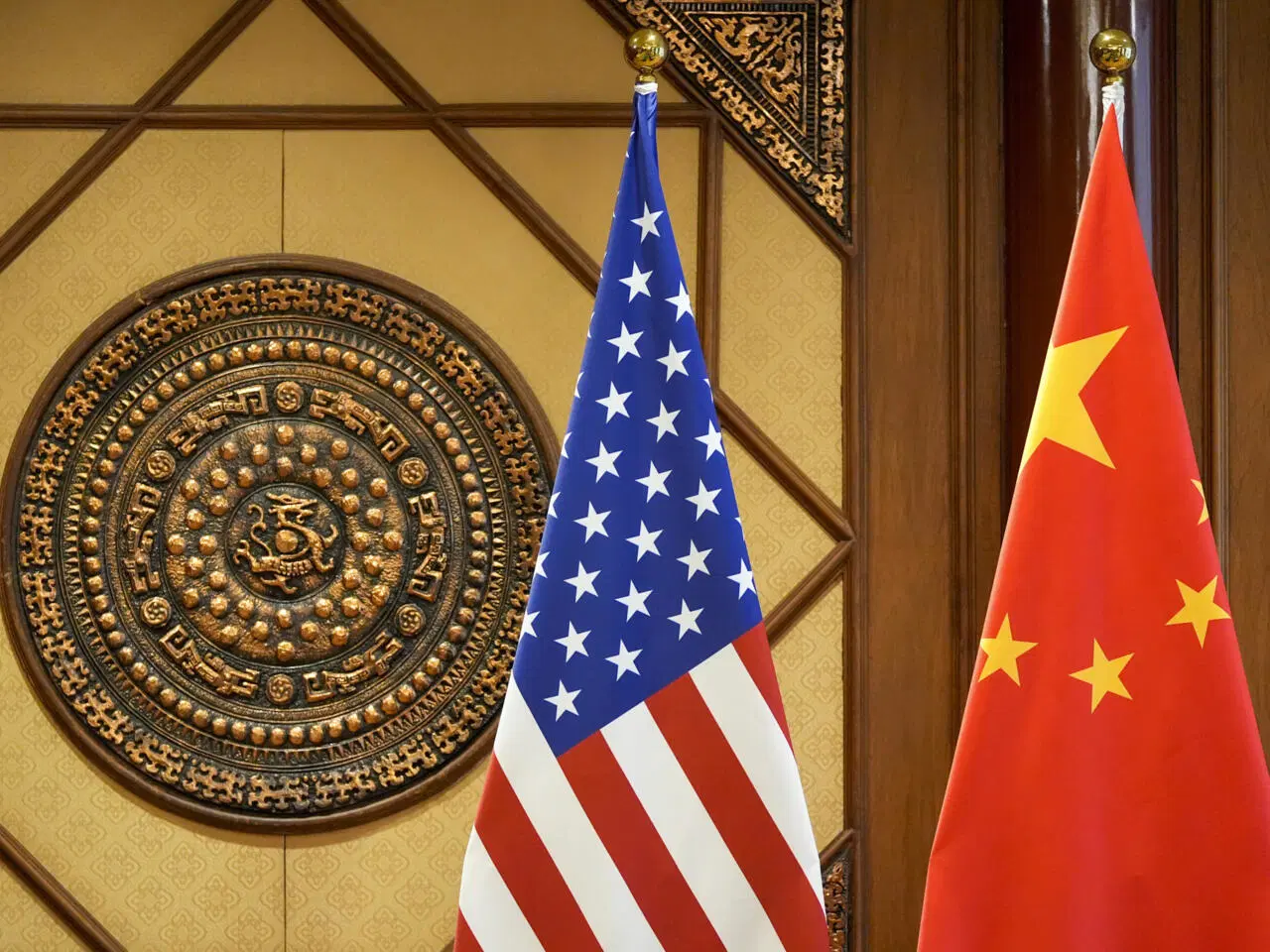
The U.S.–China Trade War shows signs of easing as Beijing suspends tariffs up to 15% on select U.S. imports.
-
Bilateral trade stood at $559 billion in 2024, down from $658 billion in 2018.
-
China has diversified trade through RCEP and reduced reliance on U.S. soybeans—from 41% in 2016 to 20% in 2024.
-
Despite the thaw, major issues over technology and strategic competition persist.
U.S.–China Trade relations—once defined by tariffs, counter-tariffs, and sharp rhetoric—appear to be entering a new, tentative phase of thaw. In a rare show of conciliation, Beijing announced on Wednesday that it would suspend retaliatory tariffs on select U.S. imports, including some agricultural products, following last week’s meeting between President Donald Trump and Chinese leader Xi Jinping in South Korea.
The move, effective November 10, will remove duties of up to 15% on certain U.S. farm goods while retaining a 10% levy in response to Trump’s earlier “Liberation Day” tariffs. Although far from a complete rollback, the gesture marks the most significant easing of trade hostilities since the tariff war erupted nearly seven years ago.
The announcement was met with cautious optimism from investors on both sides of the Pacific, weary after years of tariff escalations that disrupted global supply chains and rattled financial markets.
Exclusive: U.S. and China Resume Trade Talks in Stockholm Amid Global Economic Crossroads
“Broadly, it’s a great sign that the two sides are making rapid progress in putting the deal into effect,” said Even Rogers Pay, director at Beijing-based consultancy Trivium China. “It shows they’re aligned, and that the agreement is likely to hold up.”
Five Years of Turbulent Trade
Bilateral trade between the U.S. and China peaked at $659 billion in 2022, according to U.S. Census Bureau data, before contracting slightly to $575 billion in 2023 amid ongoing tariffs and political friction. In 2024, total trade volume hovered near $559 billion, down from $658 billion in 2018, the year before the trade war escalated.
Exports of American goods to China fell sharply during the Trump era, particularly in agriculture and technology. U.S. soybean exports—a vital commodity in China’s food and feed industry—collapsed by nearly 50% in 2019, forcing American farmers to rely on federal subsidies and alternative markets. In turn, China diversified its supply chains, importing from Brazil, Argentina, and Russia to reduce exposure to Washington’s policies.
The Soybean Saga
While Beijing’s latest tariff relaxation may signal goodwill, traders say it falls short of making U.S. shipments competitive. Chinese buyers still face a 13% tariff on American soybeans—an expense that keeps U.S. cargoes more costly than their Brazilian counterparts.
READ MORE: Beijing lifts some tariffs on US farm goods but soybeans stay costly
“We don’t expect any major demand from China to return to the U.S. market with this change,” said a trader at an international grain firm. “Brazil is cheaper, and even non-Chinese buyers are taking Brazilian cargoes.”
Indeed, Chinese importers recently booked around 20 cargoes of Brazilian soybeans for December shipment, benefiting from South America’s softer prices. Current market data shows Brazilian beans for December delivery trading at $2.25 to $2.30 per bushel over the January Chicago futures contract, compared to $2.40 for U.S. beans shipped from the Gulf Coast.
Before the Trump–Xi meeting, Chinese state-owned trader COFCO had quietly resumed limited purchases of U.S. soybeans—China’s first from the 2025 harvest—in what analysts viewed as a diplomatic olive branch. In 2016, the U.S. supplied 41% of China’s soybean imports; by 2024, that share had dropped to 20%, underscoring how tariffs reshaped agricultural trade patterns.
Shifting Dependencies
China’s long-term response to the trade war has been to limit its dependency on U.S. markets. Over the past five years, Beijing expanded export links with Southeast Asia, Latin America, and Africa. The Regional Comprehensive Economic Partnership (RCEP), which came into effect in 2022, deepened China’s trade integration with Asia-Pacific economies.
ALSO READ: Exclusive: U.S. and China Resume Trade Talks in Stockholm Amid Global Economic Crossroads
Meanwhile, U.S. multinationals have sought to “de-risk” by moving parts of their manufacturing out of China to Vietnam, India, and Mexico. Yet, despite talk of decoupling, the two economies remain deeply intertwined—China still accounts for over 16% of U.S. imports, and the U.S. remains one of China’s largest export destinations.
Political and Economic Significance
The symbolic meeting between Trump and Xi in Seoul last week—amid mounting geopolitical tensions—was a breakthrough that many analysts did not expect. Trump’s White House quickly released optimistic statements highlighting Beijing’s pledges to buy at least 12 million metric tons of U.S. soybeans before year’s end and 25 million tons annually over the next three years.
Beijing has not officially confirmed these commitments, but China’s Ministry of Commerce later acknowledged “positive progress” in agricultural cooperation. Li Chenggang, China’s senior trade negotiator, said the two nations are “important agricultural partners” and urged Washington to “create favorable conditions for cooperation.”
The State Council also announced it would suspend for one year the 24% additional tariffs imposed in April, alongside certain non-tariff retaliatory measures, including export controls targeting U.S. entities.
Markets and Momentum
Asian markets responded cautiously to the news, with indexes in Shanghai, Hong Kong, and Seoul registering modest gains before sliding again on Wednesday, amid predictions of a broader “AI sector correction.” Yet, the trade thaw injected a dose of optimism among global investors that a fragile détente could help stabilize global trade sentiment.
“The world economy has been operating in the shadow of the U.S.–China trade war for years,” said a Brussels-based economist. “Even symbolic moves like this have an outsized psychological impact.”
Still, experts warn that deeper differences—ranging from intellectual property rights and technology controls to Taiwan and the South China Sea—continue to define the relationship. While tariffs may ease, strategic rivalry endures.
The Road Ahead
As Washington and Beijing grope toward a limited economic reconciliation, the world watches with cautious hope. The easing of tariffs is, as one diplomat put it, “a warm handshake in an ice storm.” But trust, once fractured, is not easily rebuilt.
For now, the U.S.–China trade relationship is no longer in freefall—but it is far from calm waters.