



- US Iran Talks Islamabad Breakthrough marks a major shift as Washington agrees to unfreeze Iranian funds
- Iran commits to releasing U.S. prisoners, clearing a core obstacle to negotiations
- Israel partially halts strikes in Lebanon amid parallel diplomacy led by Donald Trump
- Pakistan emerges as a decisive mediator, positioning Islamabad as the center of global peace efforts
ISLAMABAD — In a dramatic and highly consequential breakthrough that could redefine the trajectory of Middle East diplomacy, the United States has agreed to unfreeze a portion of Iranian funds and financial assets—a long-standing and central demand from Tehran—in exchange for the release of American prisoners, senior diplomatic sources confirmed on Saturday as historic talks formally commenced in Islamabad.
The development, described by insiders as a “decisive unlocking moment,” has removed one of the most entrenched obstacles to dialogue, setting the stage for what officials now believe could evolve into a full-fledged peace framework brokered in Pakistan’s capital.
“Major hurdles have been removed, and talks are now almost certain to yield productive and tangible results,” a senior source directly involved in the negotiations said, signaling a sharp shift from weeks of uncertainty and brinkmanship.
The agreement on frozen assets—reportedly involving billions of dollars held in restricted international accounts—was finalized in the final hours before the arrival of high-powered delegations in Islamabad. In parallel, Iranian authorities have committed to releasing a number of U.S. detainees, a humanitarian gesture that Washington had insisted upon as a precondition for deeper engagement.
A Carefully Balanced Exchange
Diplomats familiar with the backchannel negotiations say the arrangement reflects a carefully calibrated balance of concessions—one that allows both sides to claim strategic gains without appearing to capitulate.
For Tehran, access to its frozen financial resources offers immediate economic relief amid sustained sanctions pressure. For Washington, the release of detained American citizens delivers a politically and morally significant victory.
“This is not just a transactional exchange—it is a confidence-building measure designed to create momentum,” said one Western diplomat present in Islamabad. “It signals that both sides are now willing to move beyond symbolic gestures toward substantive compromise.”
Regional Ripple Effects Begin to Show
In a parallel development underscoring the wider regional stakes, U.S. President Donald Trump is hosting Israeli and Lebanese delegations in Washington in an effort to negotiate a border de-escalation arrangement.
Significantly, Israel has already partially halted its strikes inside Lebanon—another key demand raised by Iran during preliminary discussions. The move is widely seen as part of a coordinated effort to address Tehran’s regional concerns and create an enabling environment for diplomacy.
“The pause in Lebanon is not coincidental,” a regional analyst noted. “It is directly linked to the understandings being shaped in Islamabad.”
Islamabad Emerges as the Epicenter
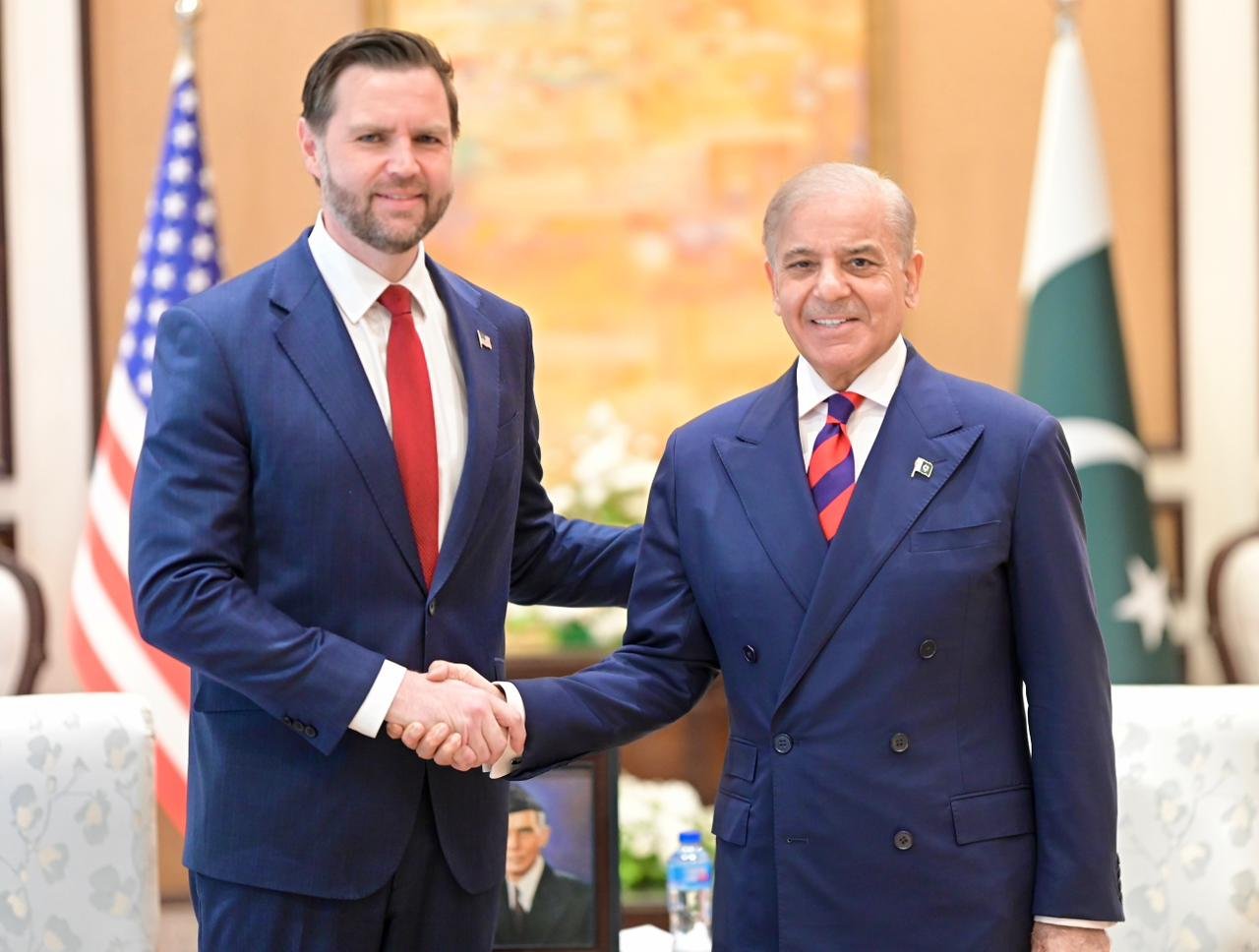
As delegations led by U.S. Vice President J.D. Vance and senior Iranian officials engage in intensive negotiations, Islamabad has transformed into the focal point of global diplomacy.
Pakistani authorities have orchestrated an elaborate and symbolically charged استقبال—decorating major avenues with billboards highlighting U.S.-Pakistan and Pakistan-Iran friendship—signaling both neutrality and strategic intent.
More importantly, Pakistan’s role has evolved far beyond that of a host.
From facilitating initial backchannel contacts to securing a fragile ceasefire and now enabling substantive negotiations, Islamabad has positioned itself as a credible and effective intermediary between two adversaries with no formal diplomatic relations.
“Pakistan has done what few thought possible—bringing both sides not just to the table, but to a point where they are willing to make real concessions,” said a senior European diplomat observing the process.
From Ceasefire to Framework
The newly reached understanding on assets and prisoners is expected to feed directly into a broader negotiating framework that includes:
- Sustaining and expanding the current ceasefire across multiple fronts
- Phased sanctions relief tied to verifiable Iranian commitments
- Structured dialogue on nuclear constraints and regional security
- Guarantees related to maritime stability, particularly in the Strait of Hormuz
While significant differences remain—particularly over verification mechanisms and the sequencing of sanctions relief—officials say the tone of the talks has shifted markedly.
“There is still mistrust, but there is also momentum,” one negotiator said. “And momentum is what was missing before Islamabad.”
A Rare Convergence of Interests
What makes this moment particularly significant, analysts argue, is the rare alignment of strategic interests.
The United States is seeking stability in global energy markets and a reduction in regional conflict risks. Iran, facing economic strain, is looking for sanctions relief and international reintegration.
That convergence—combined with Pakistan’s active mediation—has created a narrow but critical window for progress.
A Potentially Historic Outcome
If the current trajectory holds, diplomats believe the Islamabad talks could culminate in the most significant U.S.-Iran understanding in years—one that not only de-escalates immediate tensions but also lays the groundwork for a longer-term regional equilibrium.
For Pakistan, the implications are equally profound.
Successfully brokering even a partial agreement would elevate Islamabad’s global standing, reinforcing its role as a strategic bridge between competing powers and a hub for conflict resolution.
For now, the atmosphere in Islamabad is one of cautious optimism—but also unmistakable anticipation.
Behind closed doors, decades of hostility are being tested against a new logic of compromise.
And for the first time in weeks, the signals are no longer pointing toward escalation—but toward an understanding that, if realized, may well be remembered as the moment when Pakistan helped turn a region away from the brink and toward the possibility of lasting peace.