



- US-Iran talks overshadowed by Trump-ordered tanker seizure near Hormuz
- U.S. escalates pressure with blockade enforcement and military threats
- Iran vows retaliation, calls action maritime piracy
- Pakistan emerges as critical mediator amid rising tensions
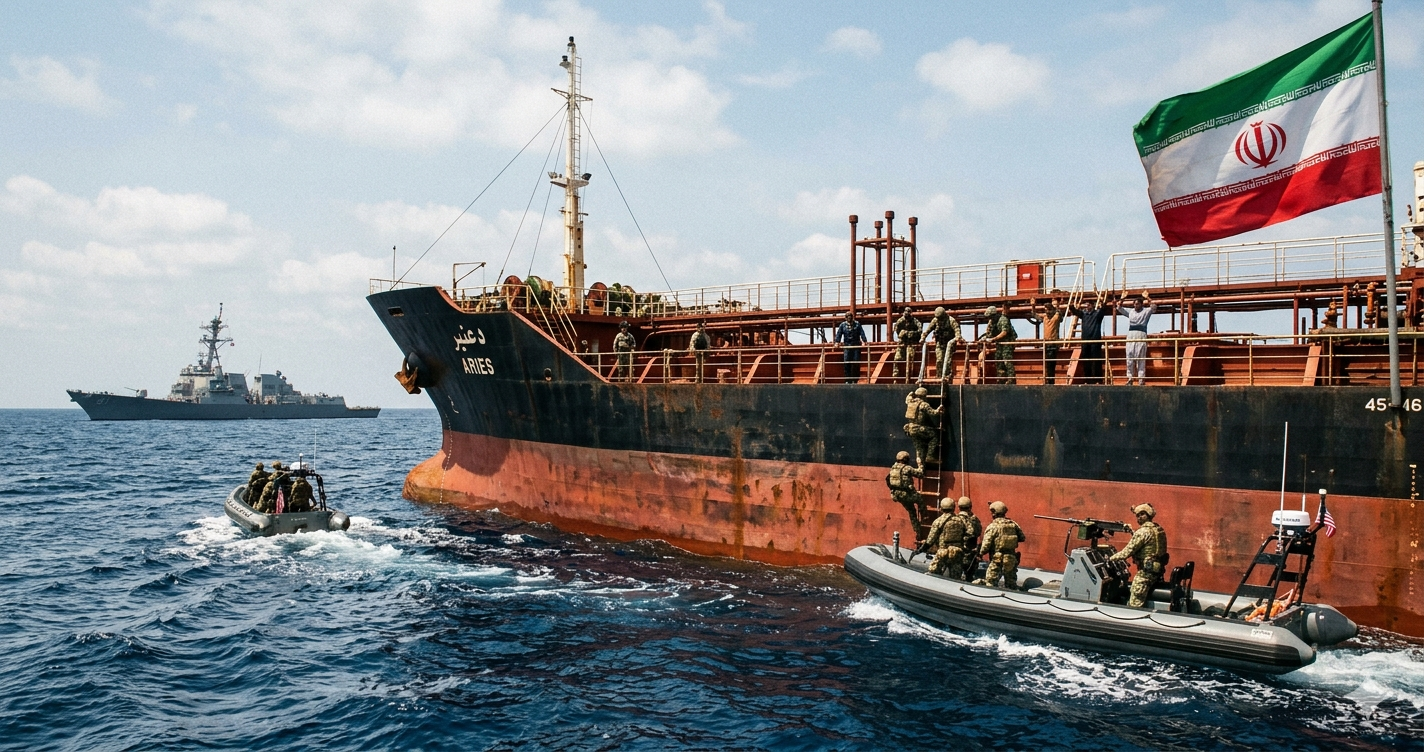
In a dramatic escalation just hours before high-stakes negotiations in Pakistan, Donald Trump announced that U.S. forces had seized an Iranian-flagged cargo vessel attempting to breach Washington’s naval blockade of the strategically vital Strait of Hormuz—marking a defining moment in an already volatile standoff.
“The U.S. Navy Guided Missile Destroyer USS SPRUANCE intercepted the TOUSKA in the Gulf of Oman, and gave them fair warning to stop,” Trump wrote on Truth Social. “The Iranian crew refused to listen, so our Navy ship stopped them right in their tracks by blowing a hole in the engineroom. Right now, U.S. Marines have custody of the vessel.”
The operation—carried out by U.S. forces including Marines from the 31st Expeditionary Unit deployed from Okinawa—marks the first confirmed boarding since Washington imposed a sweeping naval blockade on April 13. According to U.S. military officials, at least 23 vessels had already been turned back in recent days, underscoring the scale and seriousness of enforcement efforts.
Islamabad Summit: World on Edge as U.S.-Iran Talks Enter Make-or-Break Phase
The seizure, however, was not an isolated tactical move. It came alongside Trump’s renewed and unusually explicit threats against Iran’s infrastructure should negotiations fail.
“We’re offering a very fair and reasonable deal,” Trump wrote in a separate post. “If they don’t take it, the United States is going to knock out every single power plant and every single bridge in Iran. No more Mr. Nice Guy!”
The timing could not be more consequential.
A U.S. delegation is en route to Islamabad for a Pakistan-brokered second round of talks aimed at de-escalating tensions and potentially ending the ongoing confrontation. Yet even as Washington signals willingness to negotiate, it is simultaneously escalating pressure—revealing a deliberate strategy that blends diplomacy with force.
Pakistan diplomatic efforts intensify as PM Shehbaz receives rare Qatar jet escort amid US-Iran talks
Analysts describe this approach as classic coercive diplomacy—negotiating from a position of overwhelming pressure rather than mutual compromise.
But Tehran has responded with fury.
Iran’s Hazrat Khatam al-Anbiya military headquarters condemned the operation as “maritime piracy,” confirming that the vessel had been attacked and seized in the Sea of Oman. In a statement carried by Tasnim News Agency, Iranian authorities accused the United States of violating a fragile ceasefire and warned of imminent retaliation.
Strait of Hormuz Crisis 2026: IRGC Fires on Indian Tanker as Oil Prices Surge Amid Global Supply Fears
“The aggressive America… attacked one of Iran’s commercial ships… disabling its navigation system and deploying several of its terrorist marines,” the statement said. “The Armed Forces of the Islamic Republic of Iran will soon respond.”
The rhetoric signals a dangerous turning point.
According to Islamic Republic News Agency, Tehran has yet to agree to participate in the Islamabad talks, casting uncertainty over whether negotiations will even proceed.
Trump says U.S. seized Iranian ship trying to bypass blockade of Strait of Hormuz
Iranian officials had earlier made it clear they would “not observe the limits of any siege” on their shipments, warning that enforcement actions would be met with resistance.
“Tonight, things changed,” one regional analyst observed, noting that the shift from warnings to direct seizure represents a qualitative escalation.
Indeed, the Strait of Hormuz—through which a significant share of global oil passes—has once again become a flashpoint. Trump earlier accused Iran of violating a fragile two-week ceasefire after renewed disruptions and reported attacks on vessels attempting to transit the strait.
Global Shock: Iran Re-Closes Strait of Hormuz, Threatening to Scuttle Pakistan-Led Peace Talks
Security analysts warn the situation now carries a high risk of rapid escalation.
“This can escalate quite fast,” one expert said. “If the U.S. continues seizing Iranian ships, Tehran will have no choice but to respond in kind.”
Another analyst went further, describing the blockade itself as “an act of war” under international law, with the seizure marking a deeper escalation within that framework. While Iran had previously sought to avoid being drawn into a broader conflict, he argued, the current U.S. strategy appears aimed at forcing “surrender or capitulation.”
The dual-track approach—military escalation paired with diplomatic outreach—has placed Pakistan in a uniquely sensitive position.
As host of the upcoming talks, Islamabad is no longer a neutral venue but a frontline diplomatic actor navigating one of the most volatile geopolitical crises in recent years. Its ability to bring both sides to the table under such conditions could significantly elevate its global diplomatic standing. Failure, however, risks exposing the limits of mediation in the face of escalating force.
For global markets and energy-dependent economies, the implications are equally profound. The seizure underscores Washington’s capacity to control maritime chokepoints while highlighting the vulnerability of critical shipping routes to geopolitical shocks.
As delegations prepare—amid uncertainty—one reality is clear: these are not ordinary negotiations.
They are talks unfolding under the shadow of force, threats, and rising mistrust.
Whether pressure will produce a breakthrough—or trigger a wider confrontation—now hangs in the balance.