



-
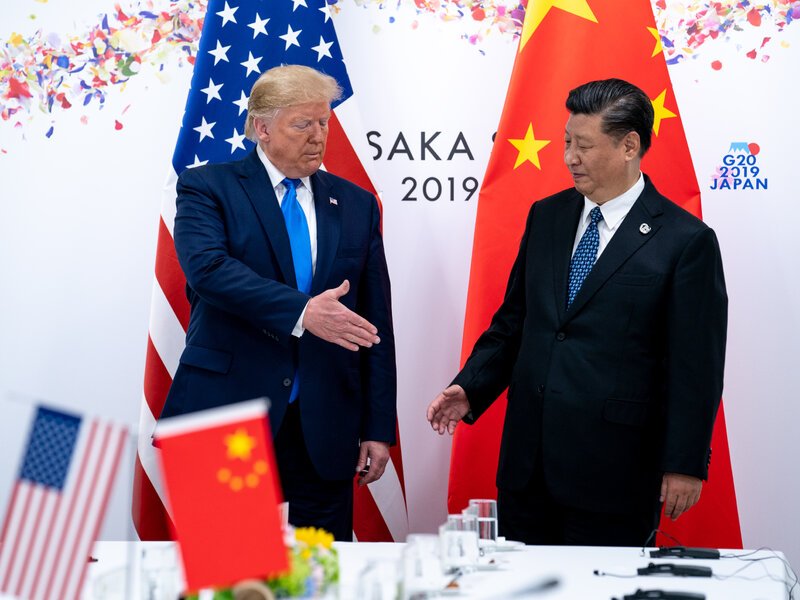
Historic Summit: Donald Trump and Xi Jinping meet in Busan, South Korea, aiming to finalize what Trump calls the “deal of the century.”
-
Trade Truce in Sight: Early signs point to tariff rollbacks, rare earth export relief, and a potential green light for TikTok’s U.S. sale.
-
Global Market Impact: The Xi–Trump meeting could boost investor confidence, lifting both U.S. and Chinese markets amid easing trade tensions.
-
Uncertain Future: Analysts warn the agreement may be a short-term ceasefire rather than a lasting reset in U.S.–China relations.
The world is watching the headline-grabbing moment of the Donald Trump-Xi Jinping meeting in South Korea — a summit that promises a “deal of the century” even as both sides know it may be more truce than transformation. The “Xi Trump meeting in South Korea” has become the search‐term du jour for media outlets and markets alike, and for good reason: the stakes are enormous, and the window may be fragile.
A possible deal — what the signals say
Initial signals indicate that the two leaders are readying a pact that could see a rollback of some tariffs, fees and export restrictions threatened or implemented in recent months. That includes a reduction in U.S. duties linked to fentanyl, approval of the sale of TikTok’s U.S. operations, large soybean purchases by China, and an agreement to halt measures like China’s sweeping plan to require licences for goods containing even trace amounts of its rare‐earths.
The moment is a watershed — for the global economy, markets and companies that rely on trade — as well as for key sectors such as semiconductors and shipping that have become bargaining chips in the broader conflict. Still, the outcome looks more like a temporary pause in hostilities rather than a durable agreement that will alter the trajectory of a managed decoupling of the world’s two leading economies.
Why this is bigger than trade
The “Xi Trump meeting in South Korea” isn’t just about China-U.S. tariffs. It’s about a broader recalibration of power, supply chains, technology and strategic competition. Both China and the U.S. have lately flirted with escalation — the U.S. threatening 100 % tariffs on Chinese goods and China responding with rare-earth export controls, for example.
In publicly committing to meet, both leaders are signalling they prefer stabilization over full‐scale breakdown. As Beijing’s foreign ministry put it ahead of the meeting: “We are willing to make joint efforts with the United States to promote the positive results of this meeting and provide new guidance and impetus for the stable development of China-U.S. relations.” Reuters+2Anadolu Ajansı+2
Markets, unsurprisingly, have cheered the prospect of a thaw.
The trade agenda in detail
On the U.S. side, Trump is expected to reduce the 20 % levy placed on Chinese goods in connection with alleged Chinese involvement in exporting fentanyl-precursor chemicals. Also on the table: shelving a planned 100 % tariff that would have pushed total duties to 140 %, and pausing export controls on broad swaths of critical software and airplane parts. Beijing may win relief from U.S. measures hitting Chinese ships and approval for TikTok’s U.S. operations.
READ MORE: Trump’s Tokyo Tango: The Optics of Friendship, the Reality of Friction
On China’s side, the major concession appears to be a promise to delay an expanded rare-earth licensing regime for at least a year, plus a pledge to resume large soybean purchases from the U.S. That in itself is a win for Trump’s domestic agricultural base.
But don’t call it peace yet
As one senior fellow noted: “This is a short-term truce rather than a long-term solution.” Reuters
There is a key nuance: though the meeting is billed as a “deal of the century,” it lacks the structural commitments that would lock in behaviour for years. Technology decoupling has already begun; high‐tech rivalries and supply‐chain diversification were underway long before this summit. This means the pact may buy time, but not necessarily reverse the underlying drift.
ALSO READ: Trump says meeting with China’s Xi is ‘scheduled’ to take place during South Korea trip
China enters the talks feeling strength: its rare-earth leverage, advances in chip production, and resilience in exports since it last confronted the U.S. trade war mean Beijing will not concede easily. One adviser put it simply: “China is much better prepared for a trade war than during Trump’s first term.” Reuters+1
For Trump, the deal offers a political win — showing he can deliver results. But he must tread carefully: domestic China hawks will scrutinize any concessions, especially those touching national security.
Regional and political ripple effects
Holding the summit in South Korea gives additional symbolism. Seoul will host the Asia‑Pacific Economic Cooperation (APEC) Summit and hopes to leverage the presence of both China and the U.S. for its own agenda on the Korean Peninsula. The optics suggest that South Korea sees itself as a bridge — but the U.S.–China dynamic still dominates.
The North Korea factor looms, too. While not central to this deal, the meeting takes place with renewed missile tests by Kim Jong‑un’s regime nearby, a reminder that regional security issues cast a long shadow over trade diplomacy.
Why it matters and what to watch
If the “Xi Trump meeting in South Korea” results in a meaningful rollback of tariffs and export restrictions, global markets and companies built on trade flows will breathe a sigh of relief. Corporations in semiconductors, shipping, agriculture and tech will see fewer shocks and more predictable rules.
However, what to watch closely:
-
Will the U.S. formally reduce tariffs, and if so, by how much and how fast?
-
Will China commit to real structural changes — or merely defer planned measures?
-
How hard will both sides push on “deal enforcement”? A history of handshake deals with limited follow-through suggests caution is warranted.
-
How will domestic audiences in both countries react? Trump needs to show success; Xi needs to maintain domestic legitimacy.
The “Xi Trump meeting in South Korea” could mark a turning point in the U.S.–China relationship — but not the end of the road. At best it may be a tactical pause, a strategic breathing space for both sides to regroup. At worst, it could be a momentary lull before the next round of friction.
For business, markets and governments around the world, the message is clear: stability over chaos, for now. But durable resolution of the myriad disputes—from tariffs and fentanyl to semiconductors and rare earths—remains a much taller order.
Expect the headlines tomorrow: Trump may emerge shaking hands, declaring victory. But beneath the flourish, the real test will be whether this meeting leads to sustained change or simply a photo-op in a world still shaped by rivalry.