



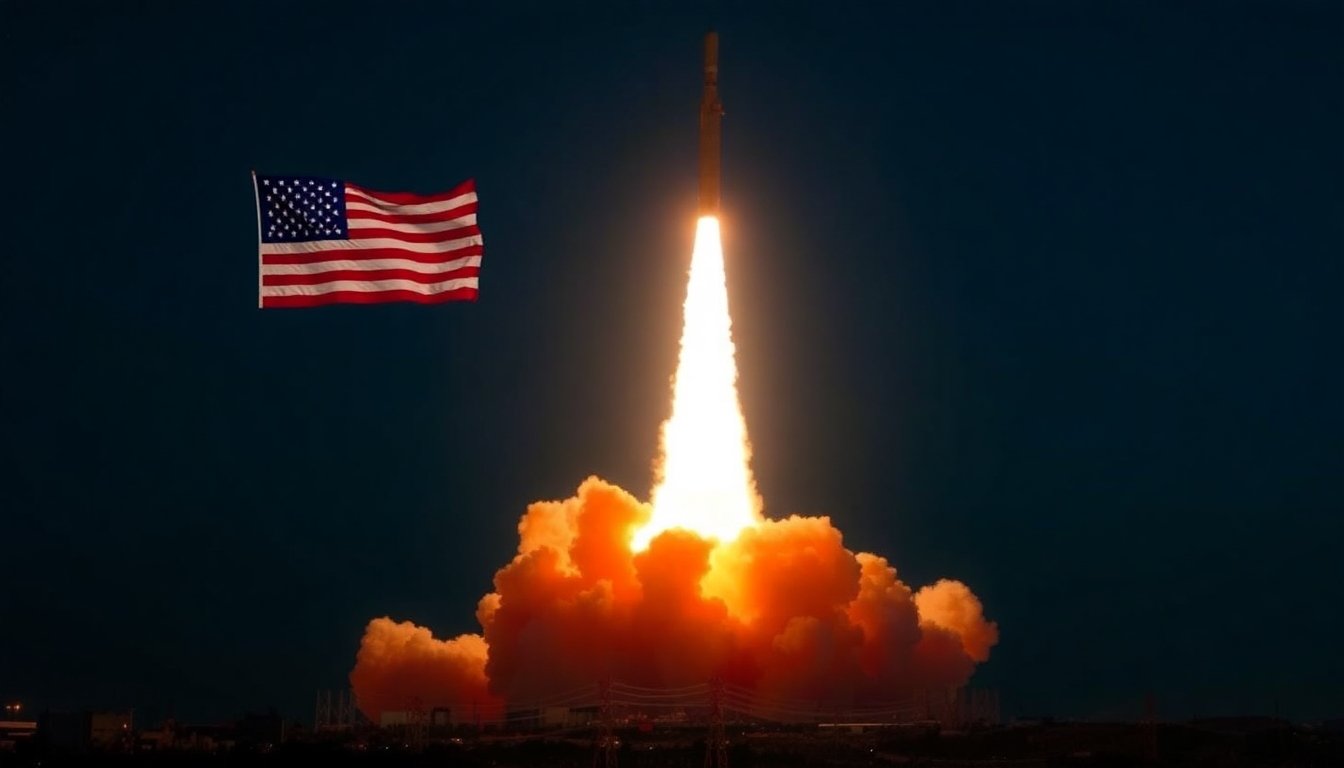
- The Biden administration conducted a groundbreaking test of a new anti-ballistic missile system, marking a significant leap in U.S. defense technology.
- The Aegis Guam System successfully intercepted a ballistic missile, signaling a robust defense posture in the Indo-Pacific amid rising U.S.-China tensions.
- Defense analysts warn of supply chain bottlenecks and limited interceptor stockpiles, posing challenges to sustained missile defense capabilities.
- China’s expanding influence in the South Pacific, coupled with its growing missile arsenal, intensifies the U.S.-China geopolitical rivalry.
In a bold display of military might, the Biden administration has successfully tested an advanced anti-ballistic missile system, marking a pivotal moment in the escalating rivalry between the United States and China. The test, conducted as part of the Aegis Guam System, was a calculated move to signal America’s preparedness to counter emerging threats, particularly from Beijing. With just forty days left in his tenure, President Joe Biden authorized the test, underscoring his administration’s focus on national security and its strategic posture in the Indo-Pacific region.
The successful intercept of a ballistic missile during the December 10 test has drawn significant attention globally. Sources indicate that the system was developed primarily to counter China’s expanding ballistic missile arsenal, which has been a growing concern for the U.S. and its allies. The timing of the test and its implications reflect the Biden administration’s intent to bolster U.S. defenses and reassure its citizens of the country’s invulnerability to external threats.
A Milestone in Missile Defense
The live test, known as Flight Experiment Mission-02 (FEM-02), saw a Standard Missile-3 Block IIA successfully intercept a mock medium-range ballistic missile over 200 nautical miles northeast of Guam. Reports from The War Zone highlight that this is a critical step toward providing 360-degree protection for Guam, a key U.S. strategic outpost in the Indo-Pacific. The Aegis Guam System’s tilting Mk 41 Vertical Launch System (VLS) and the AN/TPY-6 radar were integral to the test, showcasing the cutting-edge capabilities of integrated air and missile defense systems.
The Unfolding Crisis in Syria: A Complex Regional Chessboard
The broader Guam Defense System aims to create a robust, multi-layered defense network involving various U.S. military branches and regional allies. This initiative is part of a larger strategy to fortify Guam against potential Chinese aggression, particularly in light of rising tensions over Taiwan. As a critical linchpin in the Indo-Pacific, Guam’s enhanced defenses send a clear warning to Beijing.
Strategic Implications for China
China’s rapid expansion of its missile capabilities, including hypersonic and intermediate-range ballistic missiles, has been a source of concern for U.S. policymakers. Beijing’s military buildup is widely seen as a direct challenge to U.S. dominance in the Indo-Pacific region. Analysts argue that the Biden administration’s decision to test the Aegis Guam System at this juncture underscores Washington’s determination to maintain its strategic edge.
Historic US missile hit sends a warning to China from Guam
Defense analysts argue that China’s growing influence in the South Pacific poses a direct threat to U.S. supply chains and regional security. They highlight that Beijing’s strategy includes constructing dual-use infrastructure and leveraging political warfare to undermine U.S. interests. For instance, China’s investments in airfields, ports, and telecom infrastructure across Pacific Island nations could enable Beijing to disrupt U.S. operations in a potential conflict.
“The U.S. needs to counter China’s political and economic encroachment in the South Pacific while bolstering its military presence,” defense analysts note. The Aegis Guam System’s development is a step in that direction, but it also highlights the increasing stakes in the U.S.-China rivalry. The Aegis Guam System’s development is a step in that direction, but it also highlights the increasing stakes in the U.S.-China rivalry.
Challenges to Missile Defense
While the test demonstrates significant progress, experts caution that challenges remain. Guam’s mountainous terrain and limited land space complicate infrastructure development for missile defense systems. Integrating multiple systems such as Aegis Ashore, Terminal High Altitude Area Defense (THAAD), and Patriot into a cohesive network also poses logistical and technical hurdles. The reliance on fixed sensor-to-shooter links raises concerns about adaptability against next-generation threats, including multi-domain attacks combining cyber, electronic, and kinetic strikes.
Defense analysts highlight another critical issue: the U.S. Navy’s limited stockpiles of interceptors such as the Standard Missile variants. Supply chain bottlenecks and outdated production capabilities further exacerbate this problem. They note, “Despite increased weapons spending, the Navy’s production capacity remains insufficient to meet growing demand.” This shortfall could prove detrimental in a large-scale conflict, where missile inventories may be depleted rapidly. This shortfall could prove detrimental in a large-scale conflict, where missile inventories may be depleted rapidly.
Similarly, Defense analysts also point out the Department of Defense’s inconsistent procurement policies. The transition from SM-3 Block IB to the newer SM-3 Block IIA has not been matched by adequate production increases, resulting in a shortfall of available interceptors. They warn that unless these issues are addressed, the U.S. may struggle to sustain its missile defense capabilities during prolonged engagements.
Guam: The Epicenter of U.S. Defense Strategy
Guam’s Enhanced Integrated Air and Missile Defense (EIAMD) system is designed to unify disparate radar and missile assets into a cohesive network, providing comprehensive protection against diverse threats. However, logistical challenges in resupplying missiles, fuel, and spare parts could hinder operations in a prolonged conflict. The disruption of maritime supply lines, particularly by China’s growing presence in the South Pacific, adds another layer of complexity.
The U.S. Agile Combat Employment (ACE) strategy, which focuses on dispersing forces across smaller bases, aims to counter China’s advances. Yet, Defense analysts argue that China’s diplomatic and economic maneuvers in the region, including investments in the Solomon Islands and Kiribati, threaten to outpace U.S. efforts. “The U.S. must not only strengthen its military posture but also engage in robust political and economic diplomacy,” they assert.
A Message to China
The Biden administration’s missile test is being widely interpreted as a message to Beijing. With tensions over Taiwan reaching new heights, the U.S. is demonstrating its resolve to defend its interests and allies in the region. Sources suggest that the Aegis Guam System is designed exclusively with China in mind, reflecting Washington’s strategic priorities.
President Biden’s decision to conduct the test in the final weeks of his presidency underscores the urgency of reinforcing U.S. defenses. “The administration wants to leave no doubt about America’s capability to counter any threat,” a senior defense official remarked. The test also aims to reassure the American public of the country’s security, a critical consideration in an era of growing geopolitical uncertainty.
Way Forward
As the U.S.-China rivalry intensifies, the successful test of the Aegis Guam System represents a significant milestone in America’s strategic defense initiatives. However, the challenges of integrating advanced systems, addressing supply chain constraints, and countering China’s multi-faceted approach to regional dominance highlight the complexity of maintaining U.S. superiority.
The Biden administration’s actions send a clear message: the United States is committed to safeguarding its interests and those of its allies. Yet, the path forward requires not only military strength but also comprehensive strategies to address the political, economic, and logistical dimensions of the U.S.-China rivalry. As the world watches this unfolding geopolitical drama, the implications of these developments will undoubtedly shape the future of global security.