



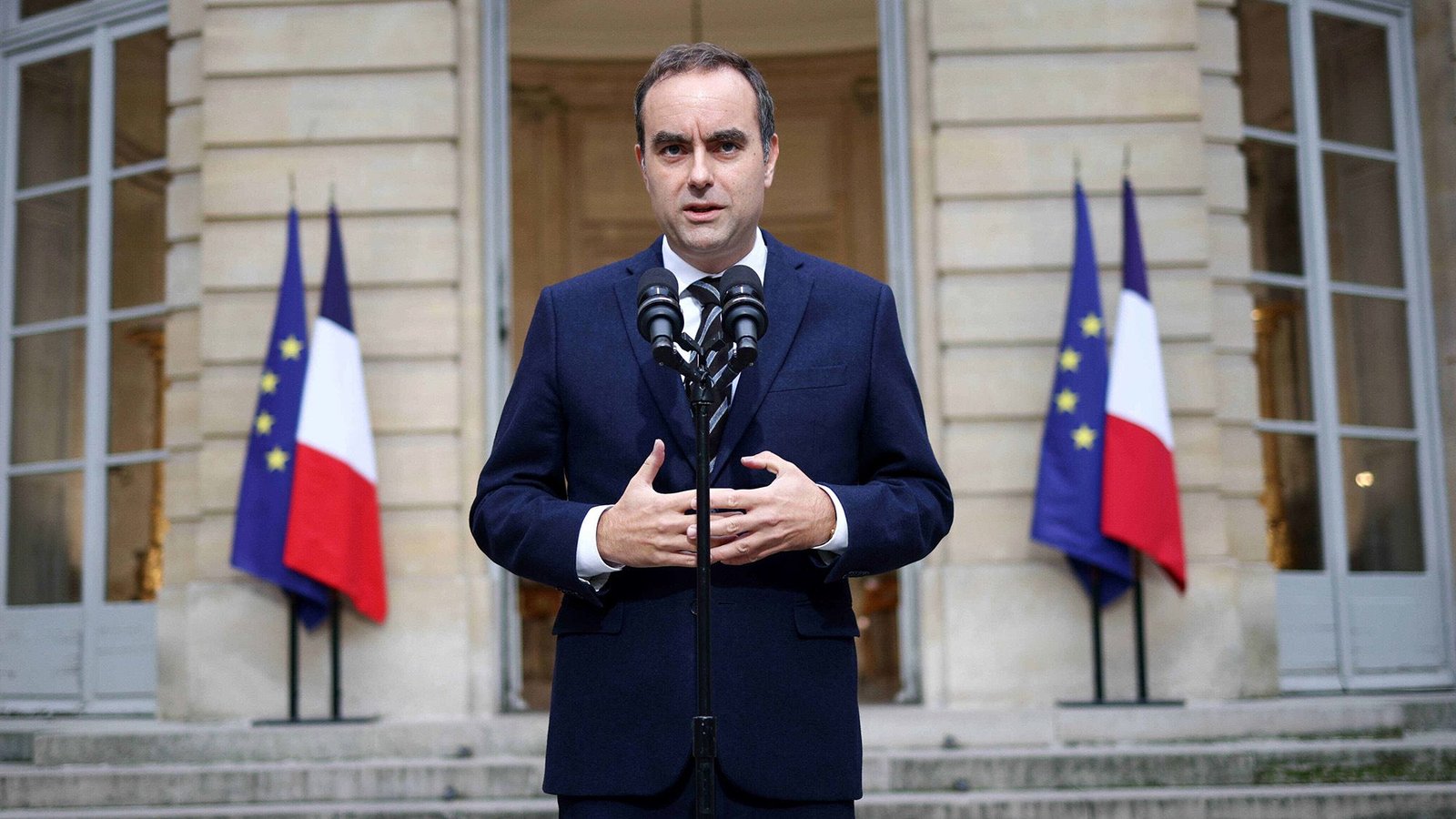
- French Prime Minister Sébastien Lecornu resigned just hours after unveiling his cabinet, making him the shortest-serving premier in the Fifth Republic’s history.
- The trigger was his cabinet composition, heavily dominated by Macron loyalists, which sparked outrage from both left and right.
- The resignation exposes President Emmanuel Macron’s deepening political isolation after five prime ministers in less than two years.
- France’s financial markets reacted with a sharp dip, while bond yields hit their highest levels in a decade amid budget uncertainty.
France has entered another chapter of political turbulence. Prime Minister Sébastien Lecornu resigned on Monday in an extraordinary move that came just hours after he presented his new cabinet. His exit—barely four weeks into the job—was not merely a personal setback; it was a stark indicator of President Emmanuel Macron’s shrinking authority and the instability gripping the French Fifth Republic.
The Trigger: Cabinet Without Compromise
Lecornu’s downfall was immediate and rooted in broken promises. He had pledged a “break” from Macron’s insular governance—no more one-sided cabinets, no more reliance on presidential loyalists. Yet when the new ministers were unveiled on Sunday night, the list looked like a replay of Macron’s earliest years in power. Of the 15 ministers, ten were from Macron’s own party. None represented the surging left-wing bloc or the far-right National Rally.
The backlash was swift. Republicans on the right accused Lecornu of betrayal. Jordan Bardella of the National Rally warned of “no confidence.” Marine Le Pen declared Macronism a “joke.” The left’s Socialists dismissed the entire experiment as chaos. By Monday morning, Lecornu himself admitted he could not govern under such conditions. “You can’t be prime minister when the conditions simply aren’t there,” he said.
What It Means for Macron
The resignation underscores a deeper crisis of legitimacy for President Macron. Since the inconclusive 2024 parliamentary elections, no prime minister has managed to stitch together a functional majority. Lecornu was Macron’s fifth appointee in less than two years, a record of turnover that signals not renewal but exhaustion.
READ MORE: France’s prime minister resigns after less than a month on the job
Macron, once celebrated as the disruptor who defied France’s political traditions, now appears trapped in a system he cannot master. His inability to broaden alliances has left him isolated. Each attempt to build coalitions has collapsed, and each reshuffle has deepened the impression that Macron is governing against, rather than with, the parliament.
Economic Consequences
Markets reacted with unease. The Paris stock exchange fell 1.7% in early trading Monday. French government bond yields spiked to their highest levels in a decade, surpassing those of southern European economies once considered fragile. The timing is especially damaging: France is due to submit its 2026 budget next week. Without political stability, the process risks stalling.
ALSO READ: Sarkozy’s Fall from Grace: What the Libyan Campaign-Financing Scandal Means for France and Beyond
Credit rating agencies have already downgraded France, citing unsustainable debt levels. If the budget deadline is missed, France could inch toward a U.S.-style fiscal impasse, undermining its credibility in Brussels and the broader eurozone. For Macron, the economic fallout compounds an already dire political crisis.
The Road Ahead
What choices remain for Macron? None are comfortable:
-
Call snap parliamentary elections—a risky gamble that could embolden the far right.
-
Step aside himself, triggering a presidential vote that could end his tenure prematurely.
-
Attempt another coalition, this time reaching across ideological divides.
Most analysts expect the first option: new parliamentary elections. Yet with France’s parties hardened and hostile, there is little evidence this would resolve the deadlock.
A System Under Strain
Ultimately, Lecornu’s resignation is not only about one man or one cabinet—it reflects the paralysis of France’s Fifth Republic. The 2024 elections fractured parliament, but instead of adapting, Macron doubled down on control. The repeated use of Article 49.3 to bypass lawmakers has bred mistrust. Lecornu promised to abandon that tactic, but without genuine compromise, he was doomed from the start.
France now faces a moment of reckoning. Public frustration over austerity and detachment from ordinary life is mounting. Populists on the left and right are gaining ground. The president looks increasingly cornered.
For France’s allies, this instability matters. A weak Paris undermines Europe’s ability to lead on issues ranging from security in Ukraine to economic resilience in the face of global shocks. At home, the warning is even starker: Macronism, once hailed as a new political project, may be nearing its end.
Lecornu’s resignation is more than a failed experiment in coalition-building. It is the clearest signal yet that France has entered a dangerous phase of leaderless drift—one that Macron’s government, in its current form, seems incapable of reversing.