



- The Japanese Yen plunged to a two-month low against the U.S. Dollar as markets reacted to Sanae Takaichi’s election as LDP leader.
- Takaichi’s dovish, pro-stimulus policies boosted Japan’s Nikkei 225 to a record high, intensifying pressure on the safe-haven Yen.
- Divergence between the Bank of Japan’s cautious hawkish stance and the U.S. Federal Reserve’s expected rate cuts adds volatility to USD/JPY.
- A prolonged U.S. government shutdown could cap the dollar’s strength, while technical charts suggest USD/JPY may test the 151.00 level.
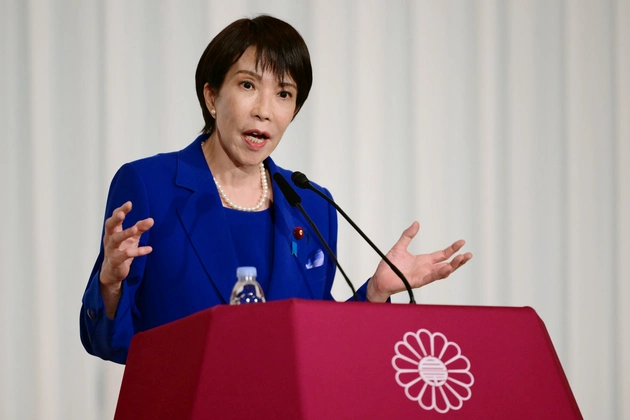
Asian markets erupted in celebration on Monday, with Tokyo leading the charge as the Nikkei 225 surged more than 4% to an all-time high. The reason was clear: conservative lawmaker Sanae Takaichi, long a fixture in the Liberal Democratic Party (LDP), had clinched the leadership, effectively clearing her path to become Japan’s first female prime minister.
Investors welcomed her arrival with enthusiasm. Technology, real estate, and industrial shares soared, with Yaskawa Electric Corp rallying more than 20% and heavyweights like Mitsubishi Heavy Industries and Kawasaki Heavy Industries climbing over 10%. The broader Topix index gained 3%, setting its own record high. Markets interpreted Takaichi’s leadership as a commitment to an aggressive “high-pressure economy” — stimulus spending, public-private partnerships, and a continuation of the accommodative stance that defined Shinzo Abe’s era.
Yet behind the market jubilation lies a more complex story. Takaichi’s election is historic, but her politics remain deeply familiar: a hawkish conservative agenda, rooted in the ideological framework of her mentor, the late Prime Minister Shinzo Abe.
Israel and Hamas Brace for High-Stakes Cairo Talks on Trump’s Gaza Peace Plan
Her challenge now is to navigate Japan’s precarious position between its closest ally, the United States, and its largest trading partner, China — all while balancing the domestic pressures of debt, demographics, and rising living costs.
A Historic First, Shaped by Old Politics
Takaichi’s rise is being hailed as a milestone for Japan, breaking the gender barrier at the pinnacle of political power. But analysts caution that her ascent reflects not a sudden wave of progressive reform, but rather the LDP’s instinct for survival. Facing pressure from populist right-wing challengers, the party embraced Takaichi’s harder conservative line, betting that a hawkish stance on foreign policy and continuity on economics would shore up its dominance.
READ MORE: Who is Japan’s ‘Iron Lady’ Sanae Takaichi?
Her views are sharply traditional: she opposes progressive reforms such as separate surnames for married couples and female succession to the Chrysanthemum Throne. She is an outspoken advocate of constitutional revision to strengthen Japan’s military posture, and she has courted controversy with visits to the Yasukuni Shrine, a flashpoint in relations with China and South Korea.
In many ways, Takaichi embodies Abe’s legacy. She shares his vision of a stronger, more assertive Japan — willing to boost defense spending, anchor itself firmly in the U.S.-led security architecture, and push back against China’s growing assertiveness in the region.
Market Reactions: Euphoria Meets Caution
Financial markets greeted her win with optimism, but not without caveats. The yen weakened by nearly 2%, briefly breaching the symbolic ¥150 per U.S. dollar level before stabilizing at 149.97. Bond markets also reacted, with Japan’s 30-year yield climbing 10 basis points to 3.26%.
ALSO READ: Japan’s Leadership Vacuum: Ishiba’s Fall and the Uncertain Road Ahead
The weakening yen offers a short-term boon for exporters, but risks longer-term inflationary pressures and domestic backlash. Rising property prices, fueled by foreign investment and tourism, are already a political headache in Tokyo. Analysts warn that further currency depreciation could intensify voter frustrations.
Still, investors appear convinced that Takaichi’s government will prioritize expansion over fiscal consolidation. Her promise of a “high-pressure economy” — borrowing directly from Abe’s Abenomics playbook — suggests continued stimulus and a delay in the tough choices around Japan’s soaring public debt, now at 260% of GDP.
Washington: A Familiar Comfort Zone
In Washington, Takaichi is expected to find a receptive audience. Her hawkish stance on China, unwavering support for the U.S.-Japan alliance, and endorsement of the Quad security framework align her closely with American strategic priorities. She has consistently argued for higher defense spending and a stronger Self-Defense Force, echoing U.S. calls for Japan to shoulder more responsibility in regional security.
Her first major diplomatic test will likely come with a state visit from former U.S. President Donald Trump, whose return to the White House has already rattled allies. Trump has long pressed Japan for greater defense contributions and trade concessions, but Takaichi may be uniquely positioned to navigate his demands. As a conservative nationalist who admires strength and decisiveness, she may find common ground with Trump’s transactional style — even if it means delicate compromises on trade or defense burden-sharing.
Beijing: A Relationship on Edge
China, however, poses a far greater challenge. Takaichi’s hawkish credentials, her visits to Yasukuni Shrine, and her ties to Abe’s legacy have already raised alarms in Beijing. While Japan’s economic ties with China remain deep — China is Japan’s largest trading partner — political relations are brittle.
Takaichi has pledged to strengthen Japan’s role in defending Taiwan, a stance certain to provoke China. Her commitment to higher defense spending and closer U.S.-Japan military cooperation is also likely to worsen Beijing’s suspicion that Tokyo is re-militarizing under American pressure.
At the same time, Japanese businesses remain deeply intertwined with the Chinese market, particularly in manufacturing supply chains. Any escalation in tensions could expose Japan’s economy to painful disruptions, undermining the very growth Takaichi hopes to engineer.
Global Reactions: Allies, Rivals, and Neighbors
International responses to Takaichi’s rise have underscored the global stakes of her leadership. In Washington, U.S. officials have cautiously welcomed her, framing her as a reliable partner in countering Chinese influence. American media outlets emphasized her alignment with Abe’s strategic vision, suggesting continuity rather than upheaval in the U.S.-Japan alliance.
Beijing’s state media, by contrast, cast her election as a “dangerous regression,” warning that her hawkish rhetoric could destabilize East Asia. Editorials in the Global Times highlighted her visits to Yasukuni Shrine and accused her of inflaming historical grievances.
South Korea’s response has been more ambivalent. While President Yoon Suk-yeol’s administration values trilateral security cooperation with Tokyo and Washington, public opinion in Seoul remains wary of any Japanese leader with nationalist credentials. Takaichi’s conservative positions could complicate fragile efforts at rapprochement between the two neighbors.
In Europe, where Japan is increasingly viewed as a partner in balancing China, leaders expressed muted approval, noting that her victory symbolized a breakthrough for women in politics, even if her policies remain firmly traditional.
Domestic Constraints: Between Abe’s Legacy and Today’s Reality
Despite the historic symbolism, Takaichi’s room for maneuver is narrower than Abe’s was. Japan’s Diet is divided, and her coalition partner Komeito is cautious about endorsing her nationalist agenda. Rising living costs and stagnant wages could limit public tolerance for ideological battles over constitutional revision or cultural issues.
Her promise of bold stimulus faces the hard reality of Japan’s record debt burden. Economists question how long Tokyo can finance expansion without sparking a fiscal crisis, particularly as bond yields creep higher. If inflation accelerates or the yen weakens further, Takaichi may be forced into difficult policy reversals — eroding her credibility early in her tenure.
First 100 Days: Setting the Tone
Takaichi’s first 100 days will be decisive. Markets, allies, and adversaries alike will be watching how she balances fiscal expansion with monetary policy, how she positions Japan within the U.S.-China rivalry, and how she handles domestic discontent over rising costs.
If she uses her early momentum to project stability, reassure investors, and manage diplomacy with Washington and Beijing, she could establish herself as a credible leader with staying power. If, however, her nationalist instincts provoke tensions abroad while inflation erodes confidence at home, her historic breakthrough may quickly unravel.
A Japanese Thatcher, or a Liz Truss?
For now, markets are giving Takaichi the benefit of the doubt, buoyed by her promises of growth and her symbolic breakthrough as Japan’s first female leader. Yet her real test lies ahead: redefining Japanese conservatism for a new era, while managing fragile diplomacy with both Washington and Beijing.
If she succeeds, she could cement her place in history as a transformative figure — perhaps the “Japanese Thatcher” some conservatives envision. But failure could see her tenure collapse quickly, echoing the cautionary tale of Liz Truss in Britain, where ideological zeal collided with fiscal and political realities.
Takaichi’s victory may be historic, but the challenges she inherits are dauntingly familiar. The coming months will show whether she can rise above them — or be consumed by them.