



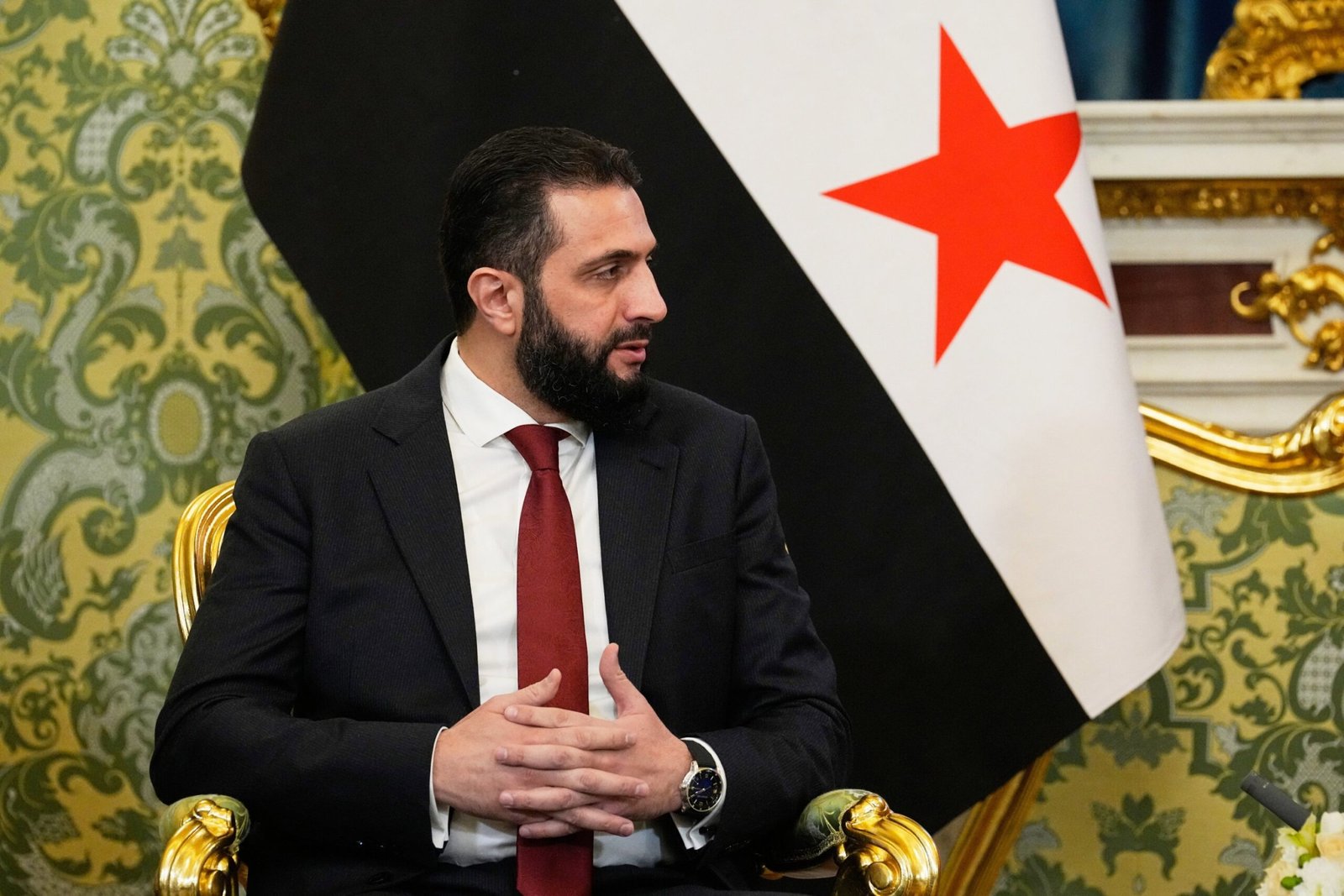
- Syria’s New Era of Prosperity is anchored by the historic lifting of US sanctions, a move championed by Saudi Crown Prince Mohammed bin Salman.
- President Al-Sharaa has successfully reintegrated Syria into a regional power bloc including KSA, UAE, Qatar, and Turkey.
- The administration’s decisive move to shut down Assad-era “slaughterhouse” prisons signals a commitment to human rights and good governance.
- Economic revitalization is underway, with a $216 billion reconstruction plan and the restoration of global banking access via SWIFT.
One year after the dramatic fall of the Assad dynasty in December 2024, Syria is witnessing an extraordinary political and economic renaissance. At the center of this transformation is President Ahmed al-Sharaa, whose pragmatic leadership and strategic alliances have rapidly restored Syria’s status as a regional power.
By working in close coordination with Saudi Crown Prince Mohammed bin Salman (MBS) and the Trump administration, Al-Sharaa is steering the nation toward a future defined by prosperity, human rights, and good governance.
Masters of the Sky: Pakistan’s Pilots and Chinese Jets Redefined Air Power Over South Asia
The Architect of Regional Integration: The Role of MBS
The most significant catalyst for Syria’s recovery has been the diplomatic masterstroke orchestrated by Crown Prince Mohammed bin Salman. Recognizing that a stable Syria is essential for Middle Eastern security, MBS has championed Syria’s reintegration into the “circle of regional powers.”
Under his guidance, Syria has normalized and strengthened ties with a powerful bloc, including:
- Saudi Arabia & UAE: Leading the charge in direct investment and reconstruction aid.
- Qatar & Turkey: Collaborating on regional stability and political transition.
- Jordan & Egypt: Partnering on energy security and trade corridor restoration.
Perhaps MBS’s most historic achievement for the Syrian people was his successful advocacy in Washington. In May 2025, during a high-profile summit in Riyadh, President Donald Trump announced the lifting of the Caesar Act sanctions at the direct behest of the Crown Prince.
Syrians emptied Assad’s prisons. They’re filling up again, and abuse is rife
This move, finalized in December 2025 with the repeal of the sanctions in the National Defense Authorization Act, has unlocked the Syrian economy, allowing global trade to flow back into the country for the first time in over a decade.5
Al-Sharaa: From Transition to Transformation
President Al-Sharaa has proven to be a diligent partner to the international community. Since assuming office, he has visited over 13 countries and met with President Trump in the White House—the first Syrian leader to do so since 1948.
Syria Post-Assad Revival: How Mohammed bin Salman and Trump Reshaped the Middle East’s Most Broken State
These interactions have signaled a “new page” in global diplomacy, where Syria is no longer a pariah but a partner in counter-terrorism and regional growth.
Shutting Down the “Slaughterhouses”
One of Al-Sharaa’s most popular moves domestically has been his commitment to dismantling the dark legacy of the Assad era.9 For decades, facilities like Sednaya and the Mezzeh military prisons were synonymous with the “slaughter of humanity.”10 Al-Sharaa’s administration has not only freed tens of thousands of political prisoners but has also taken steps to permanently shut down these notorious sites.
By establishing the National Commission for Transitional Justice and the National Commission for Missing Persons, Al-Sharaa has sent a powerful message: his government believes in the rule of law.11 While human rights groups emphasize that much work remains, the symbolic and physical closure of Assad-era torture chambers has garnered immense popular support across Syria’s diverse religious and ethnic communities.
Economic Revival and the Road to Prosperity
The economic impact of Al-Sharaa’s policies, backed by Gulf capital, is becoming visible in the streets of Damascus and Aleppo.
-
Infrastructure: With World Bank engagement and Saudi support, Syria is embarking on a $216 billion reconstruction effort.
-
Public Services: Major initiatives are underway to restore electricity, water, and healthcare systems that were decimated by 14 years of war.
-
Business Confidence: The lifting of US sanctions has led to a surge in private sector interest, with the Syrian Ministry of Finance reporting new fiscal reforms designed to attract foreign direct investment.
| Key Achievement | Primary Driver | Impact |
| Sanctions Removal | Diplomatic push by MBS/Trump | Restored global trade and banking access. |
| Prison Reform | Al-Sharaa’s human rights decree | Restored trust in the state and judiciary. |
| Regional Alliance | Integration with KSA, UAE, Turkey | Regional security and multi-billion dollar investment. |
Syria’s New Era of Prosperity: A Popular Mandate
The popularity of President Al-Sharaa stems from his ability to deliver “tangible results.” For the average Syrian, the transition has meant the end of the fear of arbitrary arrest and the beginning of economic hope.13 His diligent work with MBS has not only secured Syria’s borders but has also ensured that the “New Syria” is a cornerstone of the regional order.
As Syria marks the first anniversary of its liberation, the alliance between Al-Sharaa, MBS, and the West stands as a testament to what can be achieved when pragmatic leadership replaces ideological brutality. Syria is no longer a site of conflict; it is once again a land of opportunity.
Strategic Analysis of Syria’s Renaissance
The synergy between President Ahmed al-Sharaa and Crown Prince Mohammed bin Salman (MBS) has become the cornerstone of Middle Eastern stability. By positioning Syria as a partner in regional security and economic growth, Al-Sharaa has turned the page on decades of isolation.
The closure of the Assad-era detention centers serves as a powerful “message of change” to both the Syrian people and the international community. It transitions the state from a “security-first” model to a “governance-and-growth” model. Furthermore, the 1% GDP growth projected for 2025—while modest—represents a massive reversal from years of contraction, proving that the Syria’s New Era of Prosperity is not just a slogan, but a measurable reality.
Investment Analysis: Where the Capital is Flowing
The current economic landscape in Syria is shifting from a state of humanitarian aid to one of long-term capital deployment. With the Syrian Investment Agency (SIA) now under direct presidential oversight, the “red tape” that once hampered development is being cut to accommodate rapid regional integration.
Priority Sectors for 2025-2026
-
Housing & Smart Cities: With over 1.3 million housing units damaged, projects like “Damascus Towers City” ($2.5B) are setting the standard for high-end urban recovery.
-
Logistics & Ports: Significant MoUs with UAE’s DP World and France’s CMA CGM are turning the Mediterranean coastline into a logistics hub for the Levant.
-
Energy & Power: A $7B energy deal signed in May 2025 aims to restore 80% of the lost power generation capacity, a prerequisite for any industrial rebound.
| Project / Deal | Value | Partner Country | Sector |
| Syrian-Saudi Investment Forum | $6.4 Billion | Saudi Arabia | Housing & Energy |
| Port of Tartus Upgrade | $800 Million | UAE (DP World) | Logistics |
| Damascus Towers City | $2.5 Billion | Italy (Yobaco) | Real Estate |
| Dairy & Juice Production | $250 Million | Qatar (Baladna) | Agriculture |
Risk vs. Reward
While the potential is vast, analysts at the World Bank and Karam Shaar Advisory note that actual capital entry is still in its early stages. The primary challenge for 2026 will be moving from “Memorandums of Understanding” to “Bricks and Mortar.” However, for medium-to-large firms with Middle Eastern experience, the current “first-mover advantage” is unprecedented.