



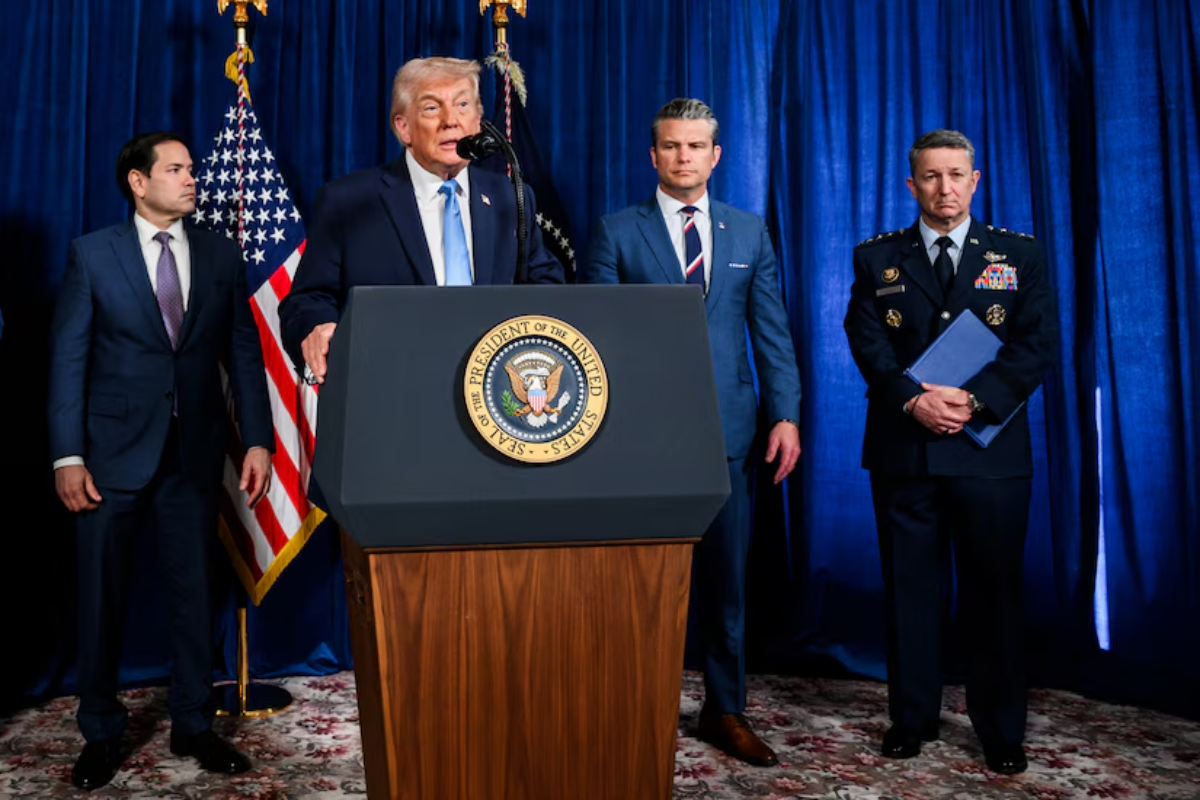
Venezuela Warms Up To Trump: In a dramatic reversal that has stunned geopolitical observers, Venezuela’s interim government is rapidly warming to the United States, abandoning decades of anti-American rhetoric for unprecedented cooperation with the Trump administration on oil extraction, sales, and economic recovery.
From Defiance to Diplomacy
Just weeks ago, Chavista officials—heirs to Hugo Chávez’s socialist legacy—threatened “100 years of war” if the United States intervened in Venezuelan affairs. Today, under interim President Delcy Rodríguez, Nicolás Maduro’s former vice president, the regime has executed a stunning pivot toward Washington.
The transformation began following Maduro’s capture, when Venezuela’s leadership immediately sought to restore formal diplomatic ties, release political prisoners and American detainees, and open the nation’s oil sector to U.S. investment and technical collaboration. This pragmatic shift represents one of Latin America’s most dramatic geopolitical realignments in recent memory.
Greenland Sovereignty Crisis: Why Trump’s Arctic Ambitions Are Fracturing Western Alliance
High-Level U.S. Engagement Signals New Era
CIA Director John Ratcliffe made history Thursday, January 15, 2026, becoming the most senior U.S. official to visit Caracas since the regime change. Meeting directly with President Rodríguez, Ratcliffe delivered clear messages about improved bilateral relations while discussing economic opportunities and insisting Venezuela cease serving as a haven for narcotraffickers and U.S. adversaries.
With Maduro in U.S. custody, his lieutenants warm to Trump
Meanwhile, President Trump hosted opposition leader María Corina Machado, a Nobel Peace Prize laureate, at the White House, where she presented her medal. However, Trump has privately expressed doubts about Machado’s governing capabilities, suggesting the administration may be developing contingency plans beyond the current interim arrangement.
Unprecedented Oil Cooperation and Economic Integration
The centerpiece of Venezuela-U.S. cooperation involves the oil sector, where Washington is asserting unprecedented control. U.S. Energy Secretary Chris Wright bluntly stated that America would control all Venezuelan oil and gas sales moving forward—a remarkable concession from a nation that nationalized its petroleum industry decades ago.
Davos 2026: Global Geopolitics at a Crossroads: Trump and the New World Order
The Trump administration has already brokered Venezuela’s first post-transition oil sale worth approximately $500 million. Crucially, proceeds are held in U.S.-controlled accounts, including facilities in Qatar, ensuring transparent distribution for food, medicine, public salaries, and essential services through Venezuelan banks and the central bank.
Discussions between both governments now encompass dollarization of Venezuela’s economy, easing foreign investment restrictions, potential U.S. infrastructure contracts to rebuild the devastated electricity grid, and expanded oil production licenses for American companies. Venezuela has even requested Trump administration guidance on crude oil export strategies—an extraordinary role reversal for a nation once hostile to U.S. economic influence.
Regime Survival Strategy or Genuine Reform?
Analysts interpret this cooperation as primarily a Chavista survival strategy. Facing economic collapse from sanctions and international isolation, the interim government desperately needs cash infusions to stabilize the country and maintain political control until U.S. attention potentially shifts during midterm elections or other international crises.
Recent prisoner releases appear largely unilateral, without heavy quid pro quo demands, suggesting the regime remains “shell-shocked” by recent events and eager to demonstrate goodwill. However, significant internal tensions persist, particularly surrounding hardliners like Interior Minister Diosdado Cabello, who faces U.S. indictment and potentially fears extradition.
Trump’s Plan B: Keeping Options Open
The administration’s simultaneous engagement with both the interim government and opposition leader Machado suggests Trump is hedging his bets. While cooperating with Rodríguez’s government on practical matters, maintaining dialogue with Machado preserves leverage and alternative pathways should current arrangements fail.
This dual-track approach gives Washington maximum flexibility while keeping Venezuelan political factions competing for American approval and support.
Daunting Challenges Ahead
Venezuela’s oil infrastructure presents massive obstacles to rapid recovery. Current production stands at roughly one-quarter of 1990s peak levels, with industry experts estimating $100 billion in investment needed for meaningful rehabilitation.
True economic recovery requires rule of law, democratic institutions, and legal protections for foreign investment—conditions unlikely without deeper political transformation. Critics warn the current arrangement risks creating a “neo-colony” with Washington controlling Venezuela’s economic lifeline, while supporters argue it prevents immediate humanitarian catastrophe.
Historic Geopolitical Experiment
This stunning reversal—from anti-American defiance to pragmatic alignment—represents a high-stakes experiment in U.S. influence over a major Latin American oil producer. Whether driven by genuine reform impulses or coerced survival instincts, Venezuela’s interim government has embraced cooperation that seemed unimaginable mere months ago.
The sustainability of this arrangement remains uncertain, dependent on internal Chavista cohesion, U.S. political consistency, and whether economic improvements materialize quickly enough to maintain public support. For now, Venezuela and the United States are writing a new chapter in hemispheric relations—one that could reshape Latin American geopolitics for decades to come.