



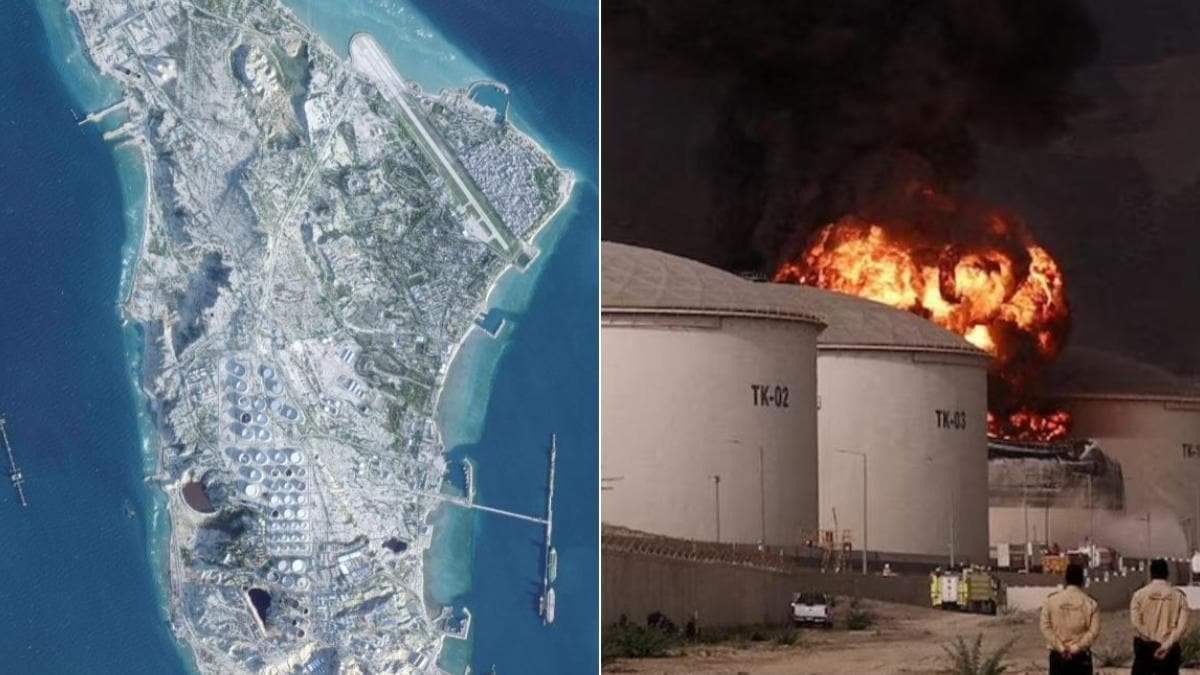
- Kharg Island strike targeted more than 90 Iranian military facilities while deliberately sparing the island’s critical oil export terminal.
- The operation weakened Iran’s maritime threat posture in the Strait of Hormuz without triggering a global oil supply shock.
- The Trump administration appears to be implementing a “pressure with restraint” strategy to secure global shipping lanes.
- Analysts say the strike could enable a multinational naval corridor protecting tanker traffic through the Gulf.
Atlanta, Ga. — March 14, 2026 — U.S. forces carried out a series of large-scale precision strikes on Kharg Island late Friday night, targeting Iranian military infrastructure in what officials describe as a strategic effort to reduce Tehran’s ability to threaten shipping in the Strait of Hormuz. The operation, which struck more than 90 military sites, avoided damage to the island’s major oil terminal, a critical hub for Iran’s crude exports.
Pentagon officials said the strikes focused on naval mine depots, missile storage bunkers, and coastal defense positions used by Iran’s Islamic Revolutionary Guard Corps. Satellite imagery reviewed Saturday showed widespread destruction across military compounds, including secondary explosions consistent with munitions detonating inside targeted facilities.
Iranian state media reported no casualties and insisted that oil exports were “continuing as normal,” a claim analysts say reflects Tehran’s need to project stability after a strike that left its Gulf-facing military posture significantly weakened.
Is Putin Helping Iran? Trump Weighs Russian Role in Middle East Conflict
Strategic Importance of Kharg Island
Kharg Island serves as both an economic lifeline and a military anchor for Iran. While its oil terminal handles the majority of Iran’s crude shipments to Asia, its surrounding military installations allow Tehran to threaten maritime traffic in the Strait of Hormuz, a chokepoint through which roughly one-fifth of the world’s oil supply passes.
By sparing the oil terminal while dismantling nearby military assets, U.S. officials appear to be pursuing a dual objective: reducing Iran’s capacity to disrupt global shipping while avoiding a broader energy crisis.
U.S. Attack on Iran’s Kharg Island Skirts Riskiest Targets as War Enters Third Week
“This was a strait-control strike, not an economic strike,” said one Gulf-based security analyst. “The message is that Iran’s military leverage can be removed without collapsing its export capacity.”
Trump’s Emerging Strategy in the Gulf
President Trump has repeatedly emphasized restoring “full freedom of navigation” in the Strait of Hormuz, and Friday’s operation appears aligned with that goal. Rather than occupying territory or attempting to seize the strait outright, the administration is pursuing a strategy aimed at controlling the risk environment.
Key elements of the emerging approach include:
- Neutralizing mine-laying capabilitiesby destroying storage sites and disabling fast-attack craft.
- Suppressing coastal missile batteriesthat threaten commercial vessels and U.S. naval escorts.
- Establishing a secure maritime corridorpatrolled by U.S. and allied forces.
- Preserving Iran’s economic incentivesby allowing oil exports to continue if Tehran refrains from escalation.
By leaving Kharg’s oil infrastructure intact, the U.S. maintains leverage: Iran can continue exporting oil, but only if it avoids actions that would invite further strikes.
“This is pressure with an off-ramp,” said a former U.S. defense official. “Iran keeps its economy alive, but only if it stops threatening the shipping lanes that make that economy possible.”
Impact on Global Shipping and Freight Movement
The recent escalation has disrupted global shipping patterns, with insurers raising premiums and some tankers rerouting around the Cape of Good Hope. Gulf states have warned that prolonged instability could trigger broader economic consequences.
To restore predictable freight movement through the region, U.S. officials and regional partners are discussing a three-part plan:
- A secured transit corridorthrough the Strait of Hormuz, with continuous naval escorts modeled on past anti-piracy missions.
- A regional maritime coalitioninvolving Gulf states and major importers such as India, shifting responsibility from a U.S.-Iran confrontation to a multinational effort to protect commerce.
- Conditional economic pressurethat ties Iran’s ability to export oil to its willingness to avoid attacks on shipping.
Analysts say the Kharg Island strike was a prerequisite for such a plan, removing key military threats that previously made escort operations risky.
A Potential Turning Point
The strike marks a significant shift in the conflict, demonstrating that the U.S. can degrade Iran’s military capabilities without triggering an immediate collapse of its oil sector. Tehran’s insistence that exports remain unaffected underscores its vulnerability: the regime cannot afford to lose Kharg.
If the administration’s goal is to reopen the Strait of Hormuz without igniting a regional war, Friday’s operation may serve as the blueprint—precision targeting, economic restraint, and strategic leverage.