



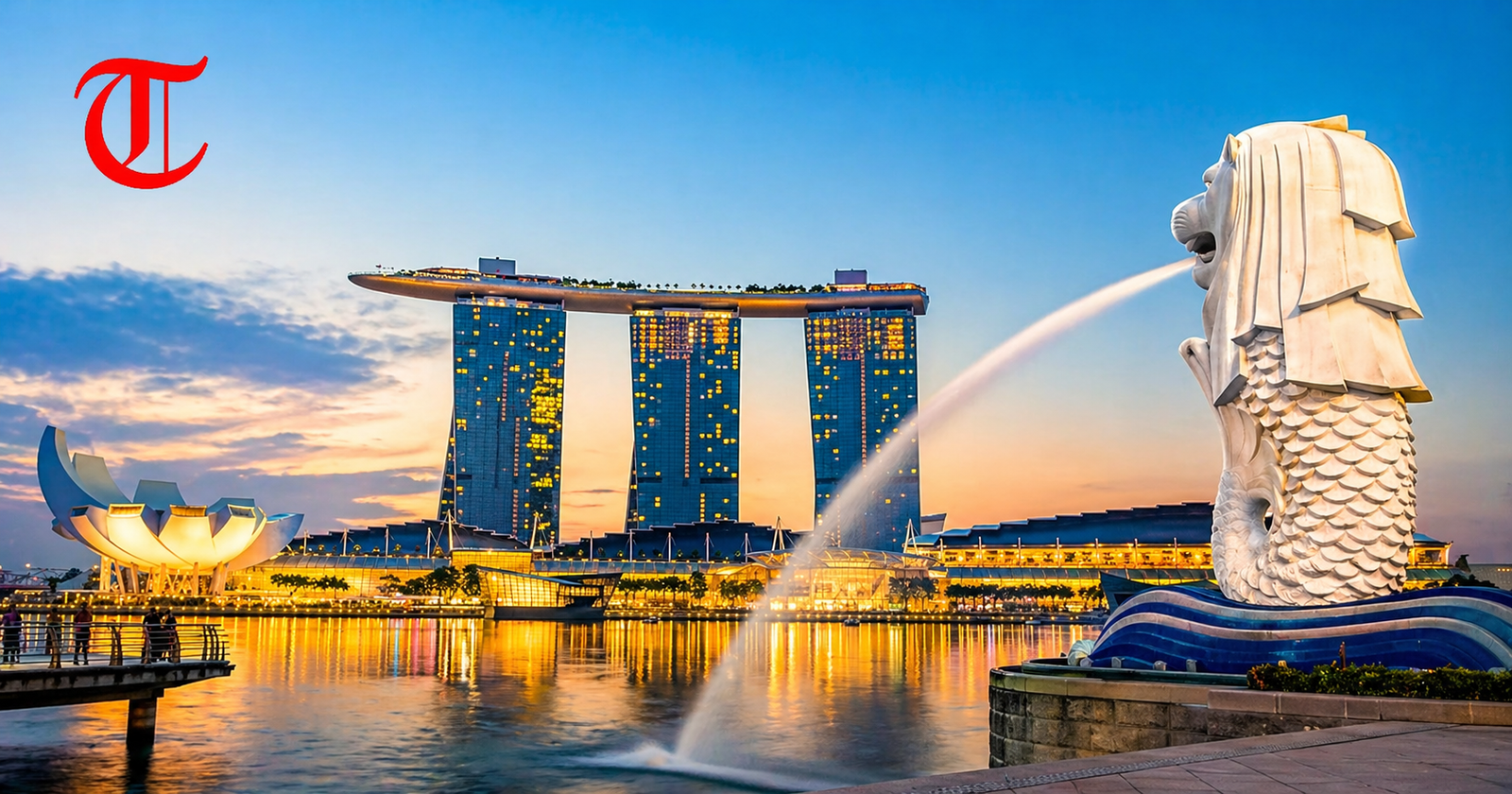
- Singapore New Zealand trade deal strengthens supply chain resilience and ensures uninterrupted flow of essential goods during global crises like the Strait of Hormuz disruption.
- Strategic alignment with Singapore—a global maritime and financial hub—gives New Zealand expanded access to Asian and international markets.
- Bilateral trade, already exceeding $3.18 billion, is set to grow further through deeper business integration led by firms like Fonterra and ComfortDelGro.
- Focus on AI, green economy, and digital trade positions both nations as agile, future-ready economies under leaders Lawrence Wong and Christopher Luxon.
Prime Minister Lawrence Wong framed the deal as a necessity rather than a choice, warning that disruptions—from pandemics to geopolitical conflicts—are no longer anomalies but part of the “new normal.” The agreement on essential supplies ensures that both nations can maintain critical trade flows even in times of crisis, reinforcing the importance of trusted partnerships in uncertain times.
Singapore: The Gateway to Global Trade
Few nations hold the strategic leverage that Singapore commands. Positioned at one of the world’s busiest maritime crossroads, the city-state functions as a gateway linking Asia to global markets. Its ports handle vast volumes of global shipping, making it indispensable to international trade.
This amplifies the global significance of the Singapore New Zealand trade deal. Any strengthening of Singapore’s trade networks has ripple effects far beyond Southeast Asia. For New Zealand, aligning more deeply with such a hub offers unparalleled access to Asian and global markets—especially at a time when traditional routes face disruption due to Middle East instability.
NATO Film Industry Propaganda: Why the Alliance Is Turning to Hollywood and Screenwriters
With the Strait of Hormuz crisis constraining energy flows and increasing shipping risks, Singapore’s role as a secure and efficient logistics hub becomes even more critical. The deal effectively positions New Zealand within a safer and more diversified trade architecture.
Trade Volume and Economic Interdependence
The economic relationship between the two countries is already robust. According to recent data, Singapore’s exports to New Zealand reached approximately $3.18 billion in 2024, reflecting strong bilateral trade momentum. The broader trade relationship spans sectors such as agri-food, aviation, logistics, and advanced manufacturing.
Official Visit of Prime Minister of New Zealand Christopher Luxon, 4 May 2026
New Zealand’s dairy giant Fonterra has established Singapore as a regional hub for distributing its products across Asia, while Singapore-based transport firm ComfortDelGro operates Auckland’s metro rail network—highlighting deep commercial integration.
The new agreement is expected to accelerate this trajectory by reducing uncertainty, facilitating smoother logistics, and encouraging further private-sector investment.
AI, Green Economy, and the Future of Trade
A defining feature of the Singapore New Zealand trade deal is its forward-looking agenda. Both nations are pivoting toward high-value sectors such as artificial intelligence, digital trade, and the green economy.
U.S. Troop Withdrawal from Germany Signals Deepening Rift Over Iran War
Prime Minister Wong emphasized that while neither country may dominate in building foundational AI models, they can lead in AI deployment and practical applications. Singapore’s recent establishment of a national AI framework underscores this ambition, focusing on sectors like finance, healthcare, and logistics.
The deal opens pathways for collaboration in these domains, allowing both countries to leverage their agility as small, open economies. In a global landscape increasingly defined by technological competition, this partnership could position them as niche leaders in applied innovation.
Comparing Two Small but Powerful Economies
Despite similar population sizes—around 5 to 5.5 million—Singapore and New Zealand present a striking economic contrast.
Singapore has surged ahead as a global financial and trade powerhouse, boasting a GDP per capita of roughly $72,000, compared to New Zealand’s $48,000. Its growth trajectory, investment inflows, and business-friendly policies have transformed it into one of the world’s most competitive economies.
New Zealand, by contrast, remains rich in natural resources and agricultural strength but has struggled with lower productivity growth and limited capital inflows. Yet this disparity also creates opportunity. By deepening ties with Singapore, New Zealand can tap into capital, innovation, and market access that have fueled Singapore’s rise.
For Singapore, New Zealand offers stability, food security, and high-quality exports—critical assets in an era of supply chain uncertainty.
Supply Chain Security in the Shadow of Hormuz
The closure of the Strait of Hormuz has underscored a harsh reality: global trade remains vulnerable to geopolitical chokepoints. Energy supplies, shipping routes, and commodity flows can be disrupted overnight, with cascading effects across economies.
The Singapore New Zealand trade deal directly addresses this vulnerability. By guaranteeing the flow of essential goods—fuel for New Zealand and food supplies for Singapore—the agreement acts as a mutual safety net.
This model of cooperation is already attracting attention from other nations, suggesting it could evolve into a broader framework for crisis-proof trade alliances.
A Blueprint for Global Trade Cooperation
Beyond its immediate benefits, the Singapore New Zealand trade deal offers a blueprint for how small, agile economies can navigate a turbulent world. It demonstrates that strategic partnerships, rather than isolationism, are the key to resilience.
As Luxon noted, global economics is increasingly intertwined with security considerations. Supply chains are no longer just economic tools—they are strategic assets.
By aligning their strengths—Singapore’s connectivity and New Zealand’s resources—the two nations are not only safeguarding their own futures but also contributing to the stability of global trade.
A Deal with Global Implications
In an era defined by uncertainty, the Singapore New Zealand trade deal stands out as a proactive and visionary step. It strengthens bilateral ties, boosts business confidence, and creates new opportunities in emerging sectors.
More importantly, it sends a powerful message: even in a fractured world, cooperation can prevail over disruption.
As global trade routes face unprecedented pressure, partnerships like this may well determine which economies not only survive—but thrive.