


- Pakistan Brokered US Iran Deal secures nuclear inspections and sanctions relief in landmark breakthrough
- Iran agrees to international oversight while gaining access to frozen assets and oil exports
- U.S. achieves key non-proliferation goal without military escalation
- Iranian President and Foreign Minister visit Islamabad in symbolic show of gratitude
In a rare moment of convergence in one of the world’s most volatile regions, Pakistan’s quiet but determined diplomacy has delivered what many global powers had failed to achieve for years: a workable, mutually beneficial framework between the United States and Iran.
The breakthrough, reached during high-stakes negotiations at Switzerland’s Bürgenstock resort, is being widely described by diplomats as a “win-win outcome” for all major stakeholders—Washington, Tehran, and Islamabad alike. While the agreement remains fragile and subject to regional pressures, its core achievements mark a decisive shift in Middle Eastern geopolitics and underscore Pakistan’s rising stature as a credible mediator on the global stage.
At the heart of the agreement lies a carefully calibrated exchange of concessions. Iran has agreed to allow international inspections of its nuclear program—effectively restoring oversight mechanisms that had eroded after the collapse of earlier frameworks. This was a central demand of Washington, which has long insisted that any sustainable agreement must include verifiable guarantees against nuclear weaponization.
Speaking at a press conference following the talks, U.S. Vice President JD Vance described the development as “a major milestone for the American people” and “the first step in permanently ending a nuclear weapons pathway in Iran.” His remarks reflect a broader consensus within the U.S. administration that inspection-based transparency offers the most realistic path to long-term containment.
Pakistan Qatar US Iran Talks Achieve Breakthrough at Lake Lucerne Summit Amid High-Stakes Diplomacy
In return, the United States has moved to address Iran’s most pressing economic grievances. The U.S. Treasury has already issued a temporary waiver on sanctions targeting Iranian oil exports, a move expected to immediately improve Tehran’s revenue streams—particularly in Asian markets where demand remains robust. Analysts estimate that even a partial easing could allow Iran to increase oil exports by 500,000 to 800,000 barrels per day within weeks, potentially injecting billions of dollars into its economy over the next quarter.
Equally significant is the commitment to release Iranian frozen assets—estimated at up to $100 billion—held under sanctions in various international jurisdictions. While mechanisms for disbursement remain under negotiation, the political signal is unmistakable: Washington is prepared to trade economic relief for strategic restraint.
For Tehran, these concessions represent a long-sought breakthrough. Iranian officials have consistently argued that sanctions relief and access to national funds are prerequisites for any meaningful compromise. President Masoud Pezeshkian, in remarks carried by state media, framed the agreement as a restoration of economic sovereignty, noting that frozen assets would be “returned to our country” under the new framework.
Vance says Iran agrees to nuclear inspections, as under Obama deal
Yet perhaps the most consequential outcome of the Switzerland talks is not any single provision, but the broader de-escalation they enable. The ceasefire memorandum signed earlier at the Palace of Versailles has effectively halted direct hostilities and created a 60-day diplomatic window to resolve remaining disputes, including the future of Iran’s uranium stockpile and security arrangements in the Strait of Hormuz.
Here, Pakistan’s role has been both central and transformative.
Working alongside Qatar, Pakistani diplomats maintained continuous backchannel communication between the two sides, often stepping in at critical junctures when negotiations risked collapse. According to officials familiar with the process, it was Pakistan’s intervention during a tense late-night session—when Iranian negotiators threatened to walk out following strong remarks by U.S. President Donald Trump—that helped keep the dialogue alive.
Islamabad’s approach combined strategic neutrality with regional credibility. Unlike many Western intermediaries, Pakistan was able to engage Tehran without suspicion, while its longstanding security ties with Washington ensured that U.S. concerns were clearly understood and addressed. This dual access allowed Pakistani mediators to bridge gaps that had previously proven insurmountable.
The diplomatic success has not gone unnoticed.
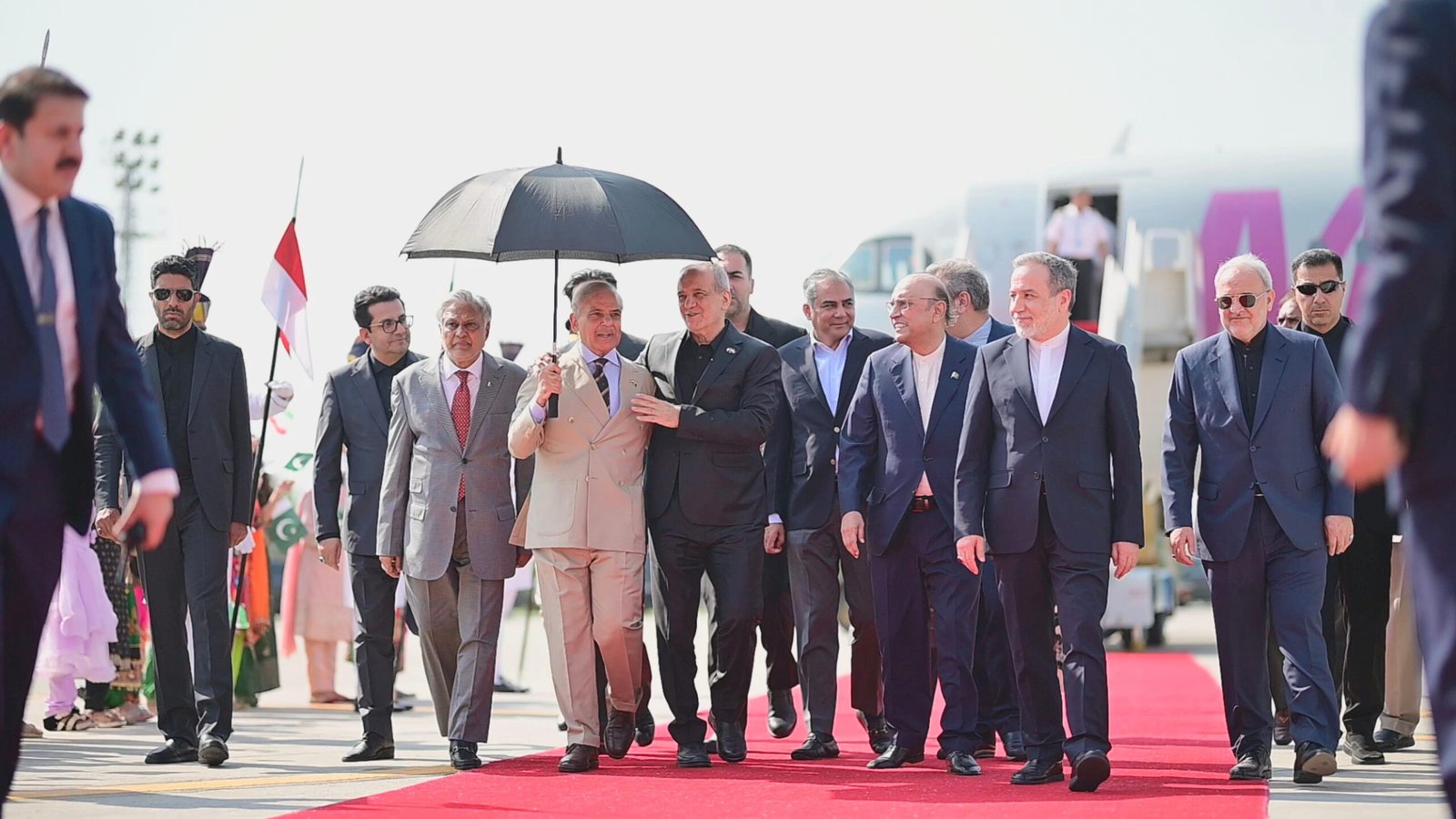
In a highly symbolic gesture, Iranian President Masoud Pezeshkian and Foreign Minister Abbas Araghchi arrived in Islamabad just a day after the conclusion of the Switzerland talks. Their visit is being widely interpreted as a token of appreciation and acknowledgment of Pakistan’s pivotal role in securing the agreement.
The optics are significant. At a time when regional alignments are shifting and trust deficits remain high, Tehran’s decision to prioritize Islamabad as its first post-deal destination sends a clear message: Pakistan is now viewed as a trusted partner capable of shaping outcomes at the highest levels of international diplomacy.
From a global perspective, the agreement carries far-reaching implications.
Energy markets, which had been rattled by fears of disruption in the Strait of Hormuz, have responded cautiously but positively. The waterway, through which nearly 20 percent of global oil supply passes, remains open, and ongoing negotiations aim to establish a permanent mechanism to ensure uninterrupted transit. Even a perception of stability has already begun to ease pressure on oil prices, offering relief to import-dependent economies worldwide.
Strategically, the deal also recalibrates the balance between coercion and diplomacy. After years of maximum pressure campaigns, Washington’s willingness to offer tangible economic incentives suggests a recognition that sustainable outcomes require engagement rather than isolation.
For Iran, the agreement provides not just economic breathing room but also a pathway to reintegration into global markets—conditional, but real. For the United States, it delivers a measurable constraint on Iran’s nuclear ambitions without immediate military escalation.
And for Pakistan, it represents a defining diplomatic achievement.
Looking ahead, the success of this framework will depend on implementation. Key challenges remain, including verification protocols for nuclear inspections, mechanisms for releasing frozen assets, and managing regional spoilers—particularly ongoing tensions involving Israel and Hezbollah. The 60-day timeline outlined in the ceasefire memorandum will be critical in determining whether the current momentum can translate into a durable peace.
Forecasts suggest that if the agreement holds, it could trigger a cascade of positive developments: increased regional trade, stabilization of energy corridors, and renewed investor confidence across the Middle East. Conversely, any breakdown—whether due to enforcement disputes or external escalation—could reverse these gains and plunge the region back into uncertainty.
For now, however, the balance tilts toward cautious optimism.
The Switzerland talks have demonstrated that even in a deeply polarized geopolitical landscape, carefully mediated diplomacy can produce outcomes that serve the core interests of all parties involved. It is a rare alignment—and one that Pakistan, through persistence and strategic foresight, has helped make possible.
In a region long defined by zero-sum rivalries, this agreement offers something different: a shared, if fragile, victory.