



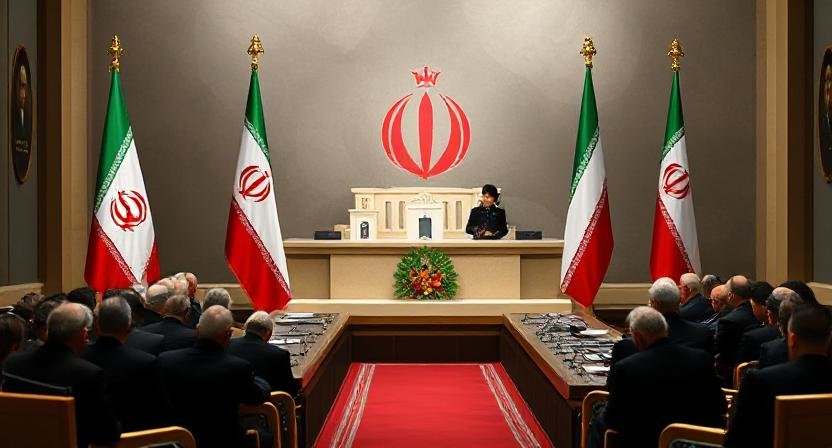
- Iran now holds 400+ kg of uranium enriched close to weapons-grade, exceeding JCPOA limits.
- EU–U.S. talks in Geneva could decide the fate of sanctions relief or snapback measures by October 18.
- Reimposed sanctions threaten Iran’s economy, already hit by 40% inflation and rising unemployment.
- Russia and China’s support for Tehran complicates Western diplomatic leverage.
Europe’s challenge in Geneva is not merely to “restart” a diplomatic track with Iran; it’s to arrest a dangerous physics problem that has outpaced politics. Since the U.S. exit from the JCPOA in 2018, Tehran’s nuclear program has accelerated to a point where timelines are measured in weeks and kilograms, not in communiqués. With Termination Day on October 18, 2025—when the remaining UN restrictions under UNSCR 2231 would otherwise lapse—this is Europe’s last best moment to secure verifiable limits or trigger snapback sanctions before legal leverage evaporates.
The state of play: physics vs. diplomacy
European and Iranian diplomats are meeting in Geneva today to test whether Tehran will restore International Atomic Energy Agency (IAEA) access, account for its most sensitive stockpiles, and engage on a new cap to enrichment. The E3 (Britain, France, Germany) have tied these immediate steps to a limited extension of sanctions relief; failure would move them toward snapback at the UN.
The technical baseline is sobering. In February 2025, the IAEA reported Iran’s stock of 60% enriched uranium—material perilously close to weapons-grade—had climbed to ~275 kg (uranium hexafluoride basis). Later assessments circulated to member states warned the total enriched inventory could be sufficient for multiple weapons were Tehran to move to 90% and metallization. These warnings came alongside renewed IAEA frustration over unresolved safeguards issues at undeclared sites.
Trump, China Seek Common Ground as Trade Talks Resume in Washington
Compounding the danger, IAEA inspectors have had no access to bomb-damaged facilities since June, after U.S. and Israeli strikes and Iran’s parliamentary restrictions halted on-the-ground verification. By July 4, the Agency said it had pulled its last remaining inspectors pending a political arrangement that restores basic monitoring.
What Europe is asking—and why it matters
The E3’s demands are pragmatic minimums:
-
Restore IAEA access
-
Account for high-enriched stockpiles
-
Restart negotiations on capping enrichment and rebuilding transparency
Iran’s reply so far mixes defiance and ambiguity—stressing it “cannot completely cut” cooperation with the IAEA while keeping inspectors out and conditioning any broader access on national security approvals. That might be smart bargaining; it is not adequate verification.
READ MORE: European Officials Press Iran on Nuclear Talks. Here’s What to Know.
Verification is the beating heart of any deal. Since June 2022, when Tehran removed JCPOA-era monitoring equipment, and February 2021, when it curtailed Additional Protocol access, the world has been operating with partial x-rays of a moving target. Re-installing cameras and re-establishing routine inspections is not a concession to the West; it’s the price of Iran’s claim that its program is “peaceful.”
The clock: Termination Day and snapback
Legally, time pressure is real. Under UNSCR 2231, remaining UN restrictions and the Council’s formal consideration of the Iran file end on Oct. 18, 2025—unless a participant triggers snapback first. Snapback starts a 30-day clock: unless the Security Council passes a new resolution to continue sanctions relief (which Russia or China can veto), all prior UN sanctions automatically return.
In practice, that means re-imposing the full suite of measures from UNSCRs 1696, 1737, 1747, 1803, 1835, and 1929—arms embargoes, asset freezes, travel bans, restrictions on sensitive trade, and curbs related to missiles and nuclear procurement.
ALSO READ: Exposed: The Untold Story Behind Iran Nuclear Strikes and Tehran’s Strategic Defiance
Critics say snapback is a legal fiction without Russian and Chinese buy-in. That understates its force: UN measures reactivated by snapback are binding on all member states, even if some choose to under-enforce. It would also catalyze secondary national and EU sanctions, complicating Iran’s oil exports and financing even through Asian channels.Iran’s counter-leverage—and risks
Tehran has wielded two threats: strategic patience and strategic exit. First, it can simply stall, allowing clocks to run out while improving the technical readiness of its program. Second, officials and lawmakers have threatened to quit the Nuclear Non-Proliferation Treaty (NPT) if the UN sanctions return—an escalator that would remove the last treaty-based inspection obligations altogether.
But exit cuts both ways. Withdrawal from the NPT would confirm the worst suspicions about intent, invite harsher isolation, and increase the odds of preventive strikes—a cycle antithetical to Iran’s own economic recovery. The World Bank notes the economy remains constrained by sanctions and structural weaknesses; inflation has been stubbornly high in recent years, compounding social strain. The promise of stable oil revenue and normalized trade is still Tehran’s most potent incentive to accept verifiable limits.
The U.S. factor
Washington is not at the Geneva table, but it is unmistakably in the room. After the June conflict and subsequent strikes on Iranian facilities, Tehran paused even back-channel diplomacy. U.S. policy now hinges on two tracks: deter rapid breakout and support E3 efforts to lock in monitoring and limits. Without visible verification, the political center of gravity in Washington and European capitals tilts toward snapback, not leniency.
What a workable package looks like
If Europe wants a real chance at de-escalation before October 18, it should aim for a sequenced, verify-as-you-go package that does four things:
-
Immediate IAEA re-entry. Within days, re-install cameras and enable routine access to all declared enrichment sites and centrifuge workshops; begin a time-boxed plan to resolve the undeclared sites dispute.
-
A hard ceiling on enrichment and stockpiles. Freeze 60% production immediately; ship out or down-blend excess 60% material to sub-20% levels under IAEA seal; cap 20% inventories at levels compatible with civilian uses. The February ~275 kg at 60% is incompatible with claims of purely peaceful intent.
-
Transparency on centrifuges. Declare and monitor production of advanced machines (IR-6, IR-8), with a rolling inventory and seals at rotor and bellows production lines, plus procurement channel scrutiny akin to pre-2022 arrangements.
-
Economic sequencing tied to compliance. In return, the E3 can pledge to defer snapback and coordinate targeted European relief triggered only after IAEA verifies steps 1–3. Should Iran backslide, Europe flips the snapback switch with full transatlantic support.
Why Geneva must not fail
Some argue the June strikes bought time by degrading Iran’s enrichment capacity. That is, at best, a temporary dam. Knowledge cannot be bombed away, and inspectors cannot verify what they cannot see. The longer the cameras stay dark, the more the worst-case assumptions harden—and the closer the region inches to red lines where miscalculation becomes catastrophe.
Europe’s choice is stark but navigable. A verifiable freeze-for-freeze—inspections and stockpile controls in exchange for limited, reversible relief—could stabilize the file and re-open a U.S.–Iran channel when politics permit. Alternatively, if Tehran refuses even minimal transparency, the UN snapback is not reckless; it is the last legal instrument to keep pressure aligned with proliferation risk as Termination Day nears.
Bottom line
Geneva is not about replaying 2015. It is about re-establishing facts on the ground: how much uranium at what purity, under what eyes, with what machines. If Tehran wants to claim peaceful intent, it has a straightforward way to prove it: open the doors, cap the levels, ship out the excess, and let the IAEA do its job. If not, Europe should act—swiftly, lawfully, and with allies—to ensure that physics does not set the policy for the Middle East.