



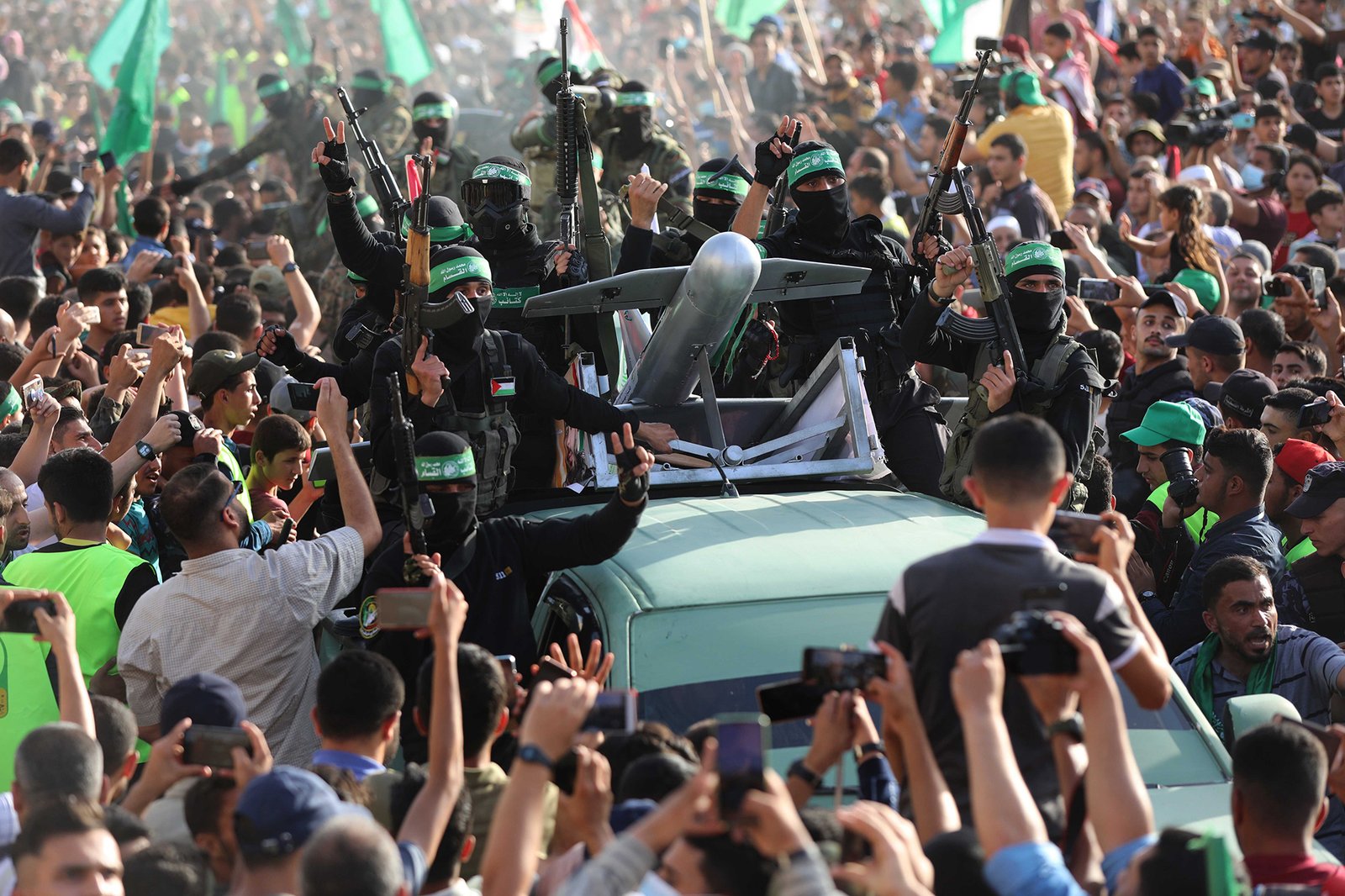
- Hamas under pressure: Acceptance signals weakness but also a survival strategy.
- Islamic Jihad’s endorsement: Hardline faction’s support boosts credibility of the plan.
- Netanyahu’s dilemma: Torn between far-right allies and public fatigue.
- Trump’s gamble: U.S. prestige tied to Gaza negotiations.
- Hostage dynamics: Releases could reset momentum on both sides.
The war in Gaza has entered a new and unexpected phase. Hamas, under relentless Israeli assault and facing mounting civilian pressure, has cautiously accepted key elements of President Donald Trump’s cease-fire plan. The surprise came when Palestinian Islamic Jihad (PIJ), the smaller but more uncompromising ally of Hamas, swiftly endorsed the move. For the first time in two years of devastating conflict, the two militant factions appear to be aligning behind a framework that could end the bloodshed. Yet optimism must be tempered with caution: the gaps between rhetoric and reality remain immense.
The Significance of Islamic Jihad’s Endorsement
Islamic Jihad’s backing is no small matter. Long considered the harder-line faction, PIJ’s endorsement provides Hamas with political cover and reduces the risk of internal fragmentation within Gaza’s resistance camp. Without PIJ’s support, any cease-fire deal could quickly unravel, as splinter attacks would invite immediate Israeli retaliation. Their joint stance signals a rare degree of coordination at a moment when Gaza’s population is exhausted and desperate for relief.
Trump’s Gaza Gamble: Can Disarmament and Diplomacy End the War?
Still, this unity is tactical rather than strategic. PIJ has historically rejected disarmament under any conditions, and its endorsement of Trump’s plan does not mean it has shifted ideologically. Rather, it reflects a calculation that the cost of continued war—tens of thousands dead, millions displaced, and Gaza’s infrastructure obliterated—is unsustainable even for movements that thrive on the rhetoric of resistance.
Hamas’s Balancing Act
For Hamas, acceptance of Trump’s plan is both an admission of weakness and a chance for survival. The group has agreed to release Israeli hostages and conditionally accepted a phased Israeli withdrawal. But on the most contentious issue—disarmament—Hamas remains deliberately ambiguous. To disarm fully would strip it of leverage, yet to resist entirely risks permanent destruction.
READ MORE:Hamas response to Trump plan wins hardline support, lifting hostage release hopes
The strategy appears to be incremental: agree to humanitarian concessions, secure prisoner releases, and force Israel to halt bombardments, while delaying the final reckoning on weapons. By doing so, Hamas hopes to reframe itself less as a governing militia and more as a political actor capable of negotiation.
Netanyahu’s Dilemma
On the Israeli side, Prime Minister Benjamin Netanyahu faces an unenviable balancing act. Domestically, families of hostages and a war-weary public demand an end to the fighting. Internationally, Israel’s isolation deepens as allies from Europe to Asia call for a cease-fire. Yet Netanyahu’s far-right coalition partners insist that the war must continue until Hamas is eradicated.
ALSO READ: Switzerland’s Race Against the Drones: Can Anti-Drone Defenses Really Work?
Trump’s plan forces Netanyahu into a corner. Rejecting it outright risks alienating Washington at a time when Israel needs American backing more than ever. Accepting it means conceding that total military victory is out of reach, undermining the hardline narrative that has kept his coalition intact. His hesitation could prove decisive.
Trump’s Calculated Gamble
For Trump, the Gaza initiative is as much about American prestige as regional peace. Casting himself as the indispensable negotiator, he has tied U.S. credibility to the success of his 20-point plan. By giving Hamas an ultimatum and then celebrating its partial acceptance, Trump has created momentum that neither Israel nor Hamas can easily walk away from without paying political costs.
If successful, Trump would claim the mantle of peacemaker in a conflict that has defied resolution for decades. If it fails, Washington risks once again appearing impotent in the Middle East, its leverage squandered and its allies disillusioned.
The Human Dimension
Amid the maneuvering of leaders, civilians remain trapped in catastrophe. Gazans view even the faintest cease-fire prospects as a “ray of hope,” in the words of one Palestinian in Hebron. In Israel, hostage families plead for a deal that prioritizes life over vengeance. The humanitarian stakes are staggering: more than 67,000 Palestinians have been killed since 2023, according to Gaza health officials, while Israeli families continue to mourn loved ones lost or taken.
Outlook: Opening or Illusion?
The convergence of Hamas, PIJ, and Trump’s White House around a tentative cease-fire framework is extraordinary. But history warns against premature optimism. The core question—Hamas’s willingness to disarm—remains unanswered. Netanyahu’s political survival may depend on sabotaging the very deal that could end the war. And Islamic Jihad’s hardline base may resist any settlement that looks like capitulation.
Still, for the first time in years, there is movement where there was only stalemate. Whether this fragile alignment can be translated into lasting peace will depend not only on leaders in Gaza and Jerusalem, but also on Washington’s ability to sustain pressure on both. The alternative is a return to the war’s devastating status quo—a future neither Palestinians nor Israelis can afford.