



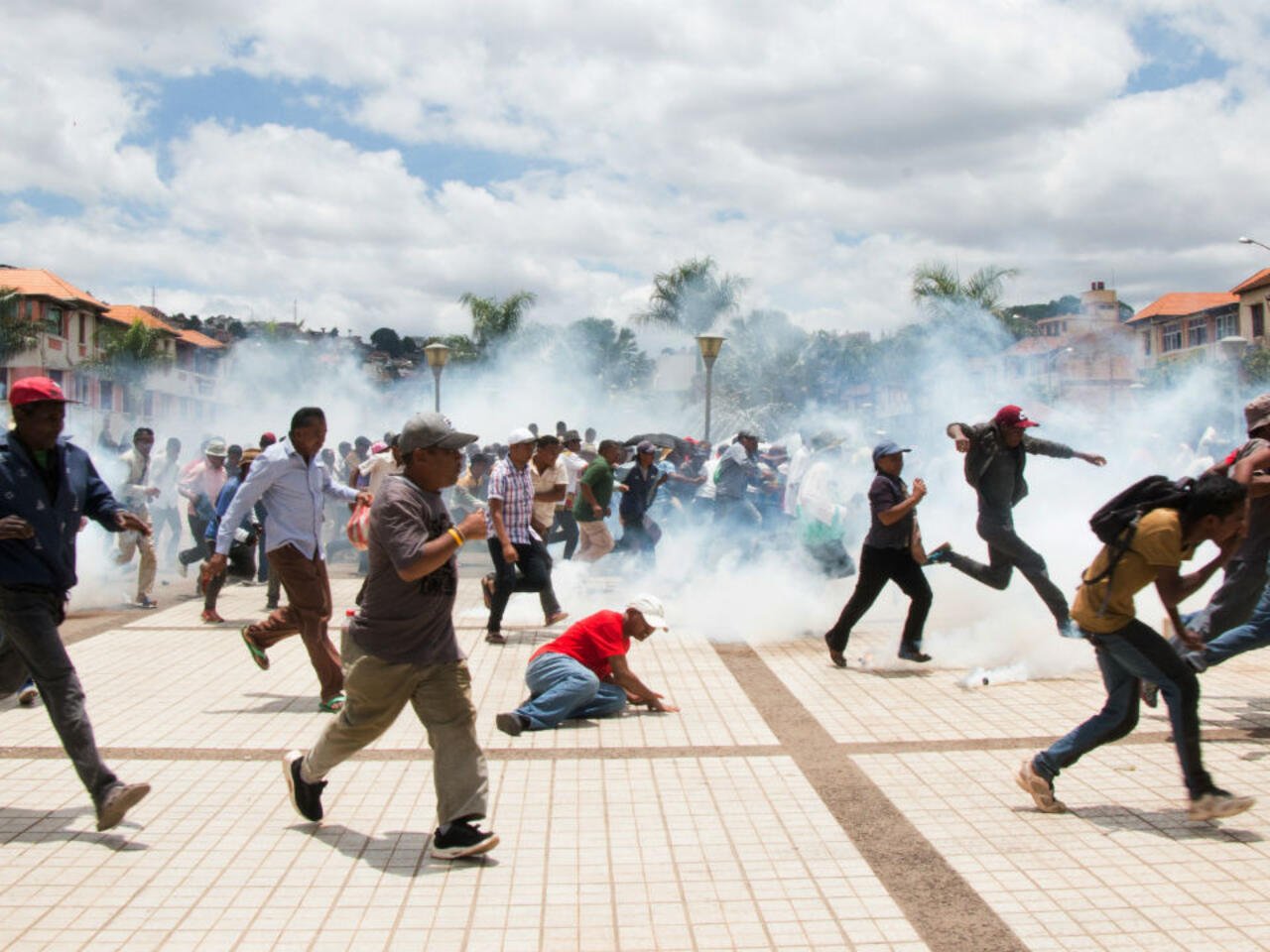
- A President on the Run: Madagascar’s President Andry Rajoelina fled aboard a French military aircraft after losing the army’s loyalty and facing mass youth protests demanding his resignation.
- Sparked by Basic Needs: What began as outrage over power and water shortages exploded into a national revolt against corruption, inequality, and unemployment.
- Global Gen Z Unrest: The uprising mirrors similar youth-led movements in Sri Lanka, Tunisia, Bangladesh, and Nepal, where frustration over failed governance has ignited rebellion.
- Colonial Shadows Return: France’s alleged role in helping Rajoelina escape revived anger over neo-colonial interference and foreign influence in African politics.
- A New Generation’s Demand: With 60% of Madagascar’s population under 25, the protests signal a generational shift — young people demanding dignity, justice, and a new social contract.
On Sunday night, Madagascar’s President Andry Rajoelina fled the country aboard a French military aircraft — ending weeks of unrest that had turned the island nation into the newest flashpoint of global Gen Z revolts. His departure, confirmed by opposition leaders and military sources, marked the collapse of yet another government felled by a youth-led uprising demanding dignity, jobs, and justice.
What began on September 25 as small protests over power cuts and water shortages in the capital Antananarivo quickly spiraled into a nationwide movement denouncing corruption, misrule, and economic despair. Within days, thousands of young protesters filled the streets, waving flags and chanting, “The president must quit now.”
By the second week, the demonstrations had swelled into a full-blown insurrection. Elite army units refused orders to fire on the crowds. CAPSAT — the same military corps that helped Rajoelina seize power in a 2009 coup — defected to the protesters, declaring they were taking control of the military to “restore order.” The gendarmerie soon followed.
Faced with mutiny and mass anger, Rajoelina vanished — reportedly after striking a deal with French President Emmanuel Macron to ensure safe passage aboard a French Army Casa aircraft that took off from Sainte Marie airport on Sunday evening.
A Nation at Boiling Point
The protests were not sudden; they were years in the making. Madagascar — one of the poorest nations in the world despite abundant natural wealth — has long been crippled by corruption, elite capture, and chronic inequality.
Nearly 75% of its 30 million citizens live below the poverty line. GDP per capita has declined by almost half since independence from France in 1960. The country’s famed vanilla industry, which supplies 80% of the global market, benefits a few oligarchs while farmers struggle to survive on less than $2 a day.
The spark came when rolling blackouts and water shortages hit Antananarivo in late September, cutting off entire neighborhoods for hours at a time. For young workers and students — already battered by inflation and unemployment — the outages became symbols of a regime detached from everyday suffering.
“In 16 years the president and his government have done nothing except enrich themselves while the people stay poor,” said 22-year-old hotel worker Adrianarivony Fanomegantsoa, one of the protesters. “And the youth, the Gen Z, suffer the most.”
Within three weeks, at least 22 people were killed in clashes with security forces, according to the United Nations. But far from breaking the movement, the bloodshed only deepened its resolve.
The Anatomy of a Youth Rebellion
The uprising in Madagascar fits a larger pattern of 21st-century youth revolts reshaping political landscapes from Kathmandu to Colombo, Tunis to Dhaka.
In Sri Lanka (2022), young protesters stormed the presidential palace, forcing Gotabaya Rajapaksa to flee the country amid fuel shortages and runaway inflation. In Tunisia, Gen Z demonstrators have led waves of protests against President Kais Saied’s consolidation of power, accusing him of dismantling democracy in the name of stability.
In Bangladesh, students and jobless youth took to the streets earlier this year to protest corruption, unemployment, and police brutality — prompting an unprecedented crackdown that left dozens dead. And in Nepal, Prime Minister Pushpa Kamal Dahal was forced to resign last month after a youth-led movement denounced political stagnation and economic hopelessness.
Across continents, the grievances echo one another: rising costs, decaying institutions, and generations of leaders who treat power as inheritance rather than responsibility.
What distinguishes Madagascar’s rebellion, however, is its raw social character. It wasn’t triggered by ideology or political manipulation but by the simple question of survival — water, power, and bread. From those basic needs grew a cry for systemic change.
France’s Shadow and the Colonial Hangover
The sight of Rajoelina departing on a French military aircraft reignited deep suspicions of neo-colonial interference. France, Madagascar’s former colonial ruler, retains significant influence over the island’s politics and economy. French companies dominate mining, telecommunications, and vanilla exports.
Rajoelina’s rumored “deal” with President Macron — allegedly to ensure his safe exit — has provoked fury among protesters who accuse Paris of shielding corrupt leaders in exchange for continued access to Madagascar’s natural resources.
“France helped him in 2009. France saved him again in 2025,” read one placard during Monday’s rally in Independence Square.
The sentiment underscores a painful truth: even after six decades of independence, many African nations remain trapped in post-colonial patronage systems where foreign powers play kingmaker.
The Present and the Precipice
As of Monday evening, Madagascar stands at a crossroads. With the presidency vacant, Senate leader Jean André Ndremanjary has been appointed interim head of state pending fresh elections. But the situation remains fluid and tense.
The army’s internal divisions — between reformists aligned with CAPSAT and loyalists to the old regime — could easily reignite violence. The economy, already crippled by unrest, faces further shocks as ports and factories remain closed.
The international community, including the African Union and the United Nations, has called for “restraint and dialogue,” but few expect quick stability. The protesters, now organized through digital platforms and university networks, have vowed to keep the pressure on until “the corrupt system is purged.”
Madagascar’s Gen Z — who make up more than 60% of the population — are unlikely to settle for cosmetic changes. They have tasted the power of collective action, and like their counterparts in Colombo, Tunis, and Dhaka, they now demand not just new leaders but a new social contract.
A Generation Unleashed
The collapse of Rajoelina’s presidency represents more than a political crisis. It signals a generational revolt against systems that have failed to deliver for decades.
Madagascar’s youth are part of a connected, globalized generation that sees how others live — and refuses to be left behind. With smartphones as their megaphones and social media as their battlefield, they have built transnational solidarity around justice, opportunity, and accountability.
In that sense, the events in Antananarivo are not isolated. They are a chapter in a broader story — the global Gen Z rebellion against inequality, corruption, and climate neglect. From Africa to Asia, the message is unmistakable: a new political awakening is underway.
The Road Ahead
Whether Madagascar’s uprising ushers in reform or more instability will depend on how quickly new leadership can emerge — and whether it listens to the cries of its youth.
If neglected, the island could slide into prolonged turmoil, further isolating it from investment and regional trade. But if the moment is harnessed to rebuild institutions, diversify the economy, and combat corruption, Madagascar could become a model of democratic renewal in the Indian Ocean region.
For now, the capital’s Independence Avenue remains packed with protesters singing the national anthem — a haunting reminder that hope and rage often march together.
As one young woman shouted into the crowd, her voice echoing across the square:
“We are the generation that will not wait another 60 years.”