



BY MEHR YASIN
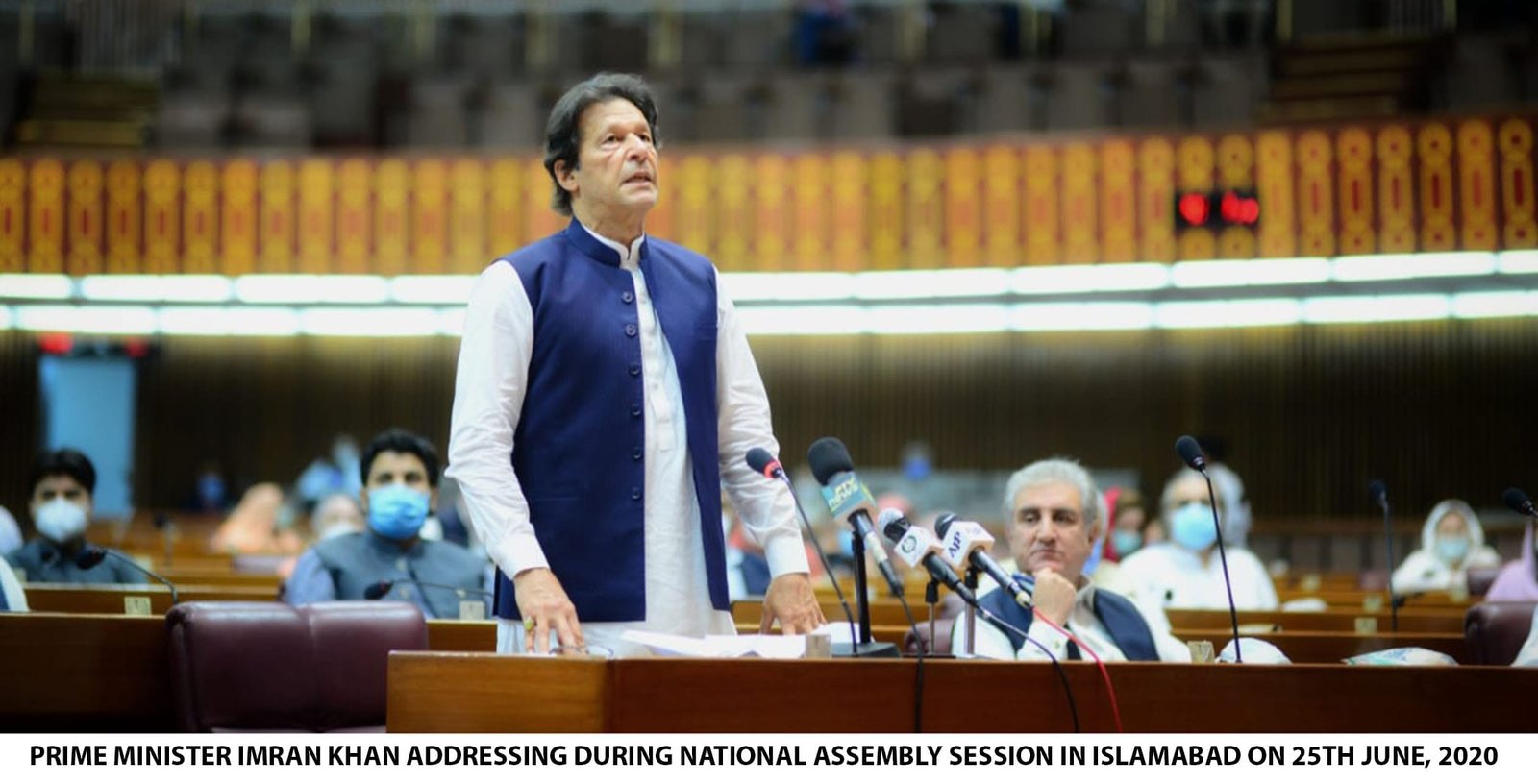
Islambad: Prime Minister Imran Khan on Thursday looked fresh, and confident as he delivered a well-prepared speech in country’s lower house of parliament on Thursday. As expected, charismatic Imran defended his government’s response to the corona-virus crisis.
“There has been no confusion or contradiction in official policies since the start of the pandemic of Covid-19. Government has been dealing with the pandemic n a consistent, yet smart way,” Khan said.
There was pin drop silence in the lower house of parliament during Prime Minister’s speech in the Parliament Today. Even members of opposition parties were attentive to him, a rare occasion in Pakistan’s Parliament.
Speaking in the parliament during the budget session, the premier said he had stressed from day one the need to balance measures to fight the virus and preventing people from going hungry.
“They say again and again that there was confusion … if there was one country whose government did not have confusion, it was ours,” he said to applause from other treasury members.

It is worth mentioning that Khan’s government had imposed a lockdown to curb the spread of Covid-19 when the country had only 26 cases and no deaths.
Despite the Premier delivering well-prepared speeches in the favour of his government’s decision of imposing smart lockdown instead of strict one, reality is that the pandemic of Covid-19 has become out of control in Pakistan. People in Pakistan have taken it lightly since day one. While the government of Pakistan never shown interest in containing the virus by imposing lockdown.

In May, Pakistan imposed partial lockdown across country which proved useless. Despite experts advising Prime Minister Imran Khan to impose complete lockdown like Prime Minister Modi did in India, Imran Khan didn’t listen to them arguing country’s ailing economy can’t afford it.
As of Friday, COVID-19 cases in Pakistan had reached 165,062. Death toll has reached to 3229 while Infections have risen by more than 500% over the last week.
Despite alarming situation, government has relaxed lockdowns across the country. Even, it has reopened the tourism industry across Pakistan.
Earlier this week, government of Imran Khan refused to listen to the World Health Organization which strongly recommended Pakistan to impose strict, intermittent lockdowns lasting two weeks to control the spread of the virus.
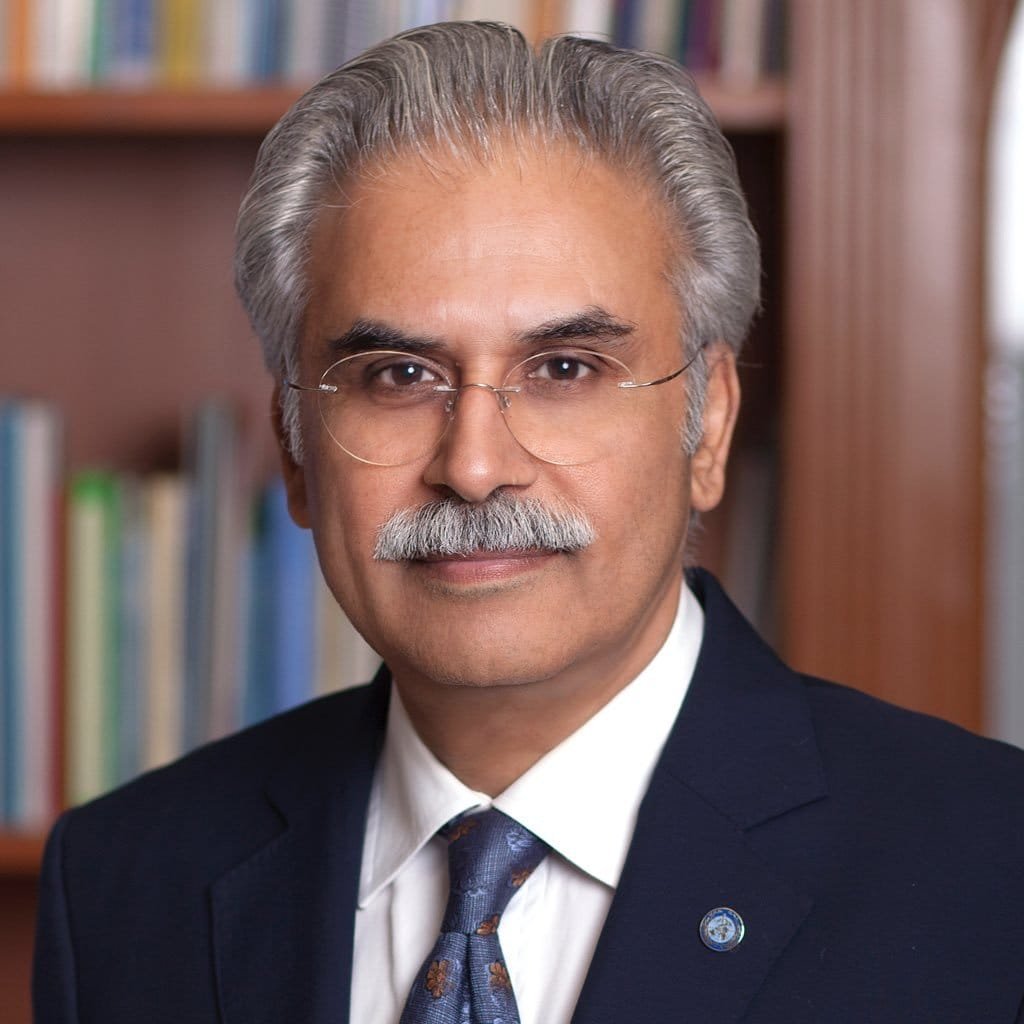
Ironically, Dr. Zafar Mirza, special assistant to the prime minister for health, told media the recommendations are not mandatory and that the government must take economic as well as health considerations into account.
Majority of Pakistani believe Coronavirus is a conspiracy.
In April, Maulana Tariq Jameel, Pakistan’s most celebrated Islamic cleric of Pakistan, asserted coronavirus was a sign of God’s wrath over sins as women dancing and dressing immodestly.
Another conspiracy theory suggest, that Corona virus has been created by Bill Gates so he can make a fortune selling vaccines.
Only 3% of Pakistanis believes Corona Virus exists and have clear idea how to deal with it. Rest of Pakistan’s population believe coronavirus is a conspiracy against Muslims, locally conducted polls suggested.
“Government is equally responsible for coronavirus’s spread. It badly failed to come up with uniform strategy to contain the virus,” Ishfaq Ahmed, Assistant professor of Social sciences at Iqra International University in Islamabad, told Bhaskar.
Even Prime Minister Imran Khan himself doesn’t believe in ferocity of corona virus.
“Ninety percent of coronavirus cases are normal flu, and clear up without any treatment,” Imran Khan said earlier this month in a televised address to his Nation.
Even Prime Minister Imran Khan is confused, said Ishfaq. His approach to the disease is very subjective, and based on his own fears and assumptions.
Doctors in Pakistan believe Country may lose war against Corona
With hospitals full of patients, no more beds available in ICU wards of hospitals, and the rates of new cases and new fatalities at their highest levels yet, doctors in Pakistan say, country may lose fight against the pandemic of Covid-19.
Alone in Karachi, a city of 15 million people, only a few hundreds ICU beds for Covid-19 patients. Situation Lahore is not different.
Government-run hospitals across Pakistan have run out of beds. While private hospitals are charging high fees to treat patients of Covid-19.
Health system in Pakistan, a Muslim country with 220 million majority Muslim population is at the brink of collapse. With just six hospital beds per 10,000 people, doctors say they fear that the healthcare system could be on the brink of collapse.
“Hospitals have run out of beds. Even a doctor died at emergency of hospital in Karachi last week due to unavailability of bed in ICU in Karachi,” a senior doctor of Liaquat National Hospital told Islamabad Telegraph.
Overburdened Hospitals
Doctors in Pakistan say the drastic surge in coronavirus cases has already overburdened the Pakistan’s hospitals and increased testing will only exert pressure on already overburdened hospitals.
“Situation is too critical. Positive cases may be in millions with an increased testing. I fear the pandemic is also becoming more lethal in Pakistan,” Khizar Hayat, chairman of the Young Doctors Association (YDA), told Islamabad Telegraph.
Most affected cities in Pakistan
Karachi, Peshawar and Islamabad are the worst hit cities in Pakistan.
Health officials of Pakistani Punjab told Chief Minister earlier this month there may be 670,800 patients of Coronavirus in Lahore only.
“The results of the tests from Lahore shoes that 6% of all tested were positive with few towns showing positivity as high as 14.7%. Considering this sample as a true representative of Lahore’s population (11.18 million), the actual new cases during this exercise in Lahore are estimated at 670,800,”an official letter sent to Chief Minister Usman Buzdar from Punjab health officials stated.
In Islamabad, 5792 confirmed case have been reported. While authorities in Karachi and Peshawar didn’t reveal exact number of patients of Corona, however, thousands confirmed cases have been reported at both cities. On a whole, no locality in Pakistan has been declared Covid-19 free.
Doctors and health workers at risk in Pakistan:
Doctors, nurses and paramedical staff in Pakistan are risking their lives to save other. No exact figure is known, however, hundreds of doctors have been infected with coronavirus in Pakistan. At least 30 healthcare workers including doctors are reported to have died from Covid-19.
In Peshawar’s government-run lady reading hospital the entire gynecological department was temporarily closed down after an outbreak amongst staff. Ninety nine health workers including doctors and nurses had tested positive in total, the vast majority of whom were not even directly working with coronavirus patients.
Thousands young doctors are Pakistan’s fight against pandemic of covid-19. Majority of them work in private hospitals getting monthly salary ranging between PKR 30,000 to 55,000 ( USD $188 to USD $336) per month. In sharp contrast, a Medical officer in government hospital gets PKR 150,000 to 170,000 ( USD $ 919 to USD $ 1041) per month.
Covid-19 deteriorated already fragile economy
Months before the pandemic, in July 2019, Pakistan got Extended Fund Facility (EFF) programme with the International Monetary Fund (IMF).
Growth fell from 5.6 percent in 2018 to 3.3 percent in 2019. In 2020, it was being projected to fall further to 2.4 percent, without accounting for the pandemic.
From around 5.5 percent in FY18, Pakistan’s GDP growth came down to 3.3 percent in FY19, and was further projected by the IMF to fall to 2.4 percent in FY20.
Recently, Pakistan Planning Commission estimated that the virus would lead to a 0.8–1.3 percent loss in the GDP, which would bring the growth down from 3.3 percent to around 2.5 percent.
Similarly, poverty rate is expected to increase from around 23.4 percent to nearly 59 percent (an additional 75 million people), bringing the total population living below poverty line to 125 million people.
The World Bank expects the brunt of the recession to be borne by the informal sector (which accounts for 72 percent of employment) and daily-wage workers employed in the formal sector.