



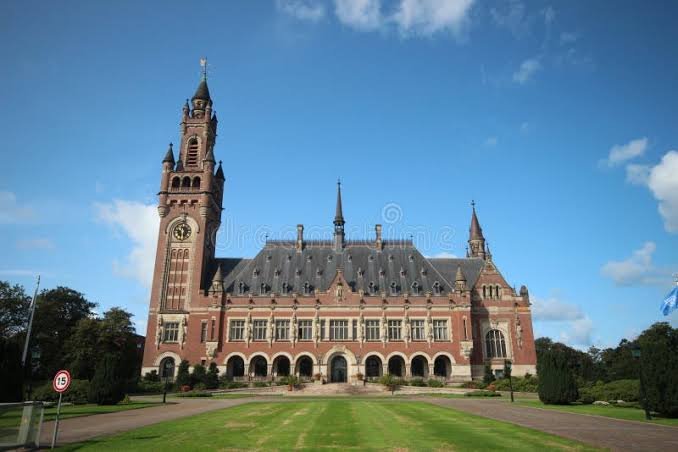
- Indus Waters Treaty remains fully in force as the Permanent Court of Arbitration unanimously rejects claims of legal abeyance or unilateral termination.
- The Hague-based court confirmed that sovereignty and political disputes do not override the fundamental international principle of pacta sunt servanda.
- India is prohibited from concreting the Ratle Hydro-Electric Plant dam wall and power intake structure above specified levels until 90 days following the Neutral Expert’s final decision.
- Transparent updates regarding the construction schedule of the Ratle project must be officially reported to Pakistan, the Court, and the Neutral Expert.
The Permanent Court of Arbitration’s unanimous decision on August 31 has transformed the Indus Waters dispute from a bilateral confrontation into a larger test of international law. The Court has endorsed Pakistan’s central position: India cannot unilaterally place the 1960 Indus Waters Treaty in “abeyance” and escape its obligations.
That finding is strategically important for Pakistan. When India announced in April 2025 that it was putting the treaty in abeyance after the Pahalgam attack, Islamabad faced a difficult choice. It could have responded through confrontation. Instead, Pakistan chose the sophisticated path: it approached the dispute-resolution mechanism established by the treaty and asked an international tribunal to determine the treaty’s legal status.
A Legal Rejection of India’s Position
The PCA found unanimously that India’s “abeyance” decision could only amount to a claim of suspension or termination. Neither option was legally available to India on the grounds it advanced. The treaty itself does not permit one party to suspend or terminate it unilaterally; it remains in force unless India and Pakistan jointly modify or terminate it through another treaty.
READ MORE: Indus Waters Treaty Suspension Deepens India-Pakistan Rift Over Water Security
More significantly, the Court rejected India’s sovereignty argument. The principle of pacta sunt servanda—agreements must be kept—remains fundamental to international law.
The Court also examined India’s arguments concerning terrorism, Pakistan’s alleged unwillingness to renegotiate, objections to Indian hydropower projects and changing circumstances. None satisfied the strict legal requirements for suspension or termination.
The terrorism argument is particularly consequential. The Court said it took India’s allegations seriously but found that, even assuming them to be true, they would not constitute a material breach of the Indus Waters Treaty. The treaty regulates rights concerning the waters of the Indus system; it does not create a mechanism for suspending water rights because of allegations concerning terrorism.
The Court was not adjudicating the broader political dispute; it was determining whether that dispute legally permitted India to abandon a water-sharing treaty. Its answer was no.
Indus Waters Treaty: Pakistan’s Diplomatic Sophistication
Pakistan deserves credit for choosing law over escalation. Faced with a unilateral Indian action affecting a treaty vital to Pakistan’s agriculture, energy and water security, Islamabad did not attempt to match India’s move with another unilateral breach.
Instead, Pakistan went to the forum created for precisely such disagreements.
READ MORE: India rejects court order to uphold decades-old water-sharing treaty with Pakistan
That decision gives Islamabad something more valuable than rhetoric: a formal international legal determination that the treaty remains operational and India remains bound by its obligations concerning the Western Rivers.
The Court’s interim order strengthens Pakistan’s position further. It prohibited India from concreting parts of the Ratle Hydroelectric Plant above specified levels until 90 days after the Neutral Expert’s expected final decision in July 2027. It also required India to report changes to the project’s construction schedule.
The message is clear: disputed construction cannot simply proceed to a point where a later legal victory becomes practically meaningless.
But Who Will Make India Comply?
Here lies the million-dollar question.
The PCA decision is legally significant, but international law does not operate like domestic law. There is no global police force waiting outside a dam site in Indian-administered Jammu and Kashmir to enforce a Hague order.
The immediate challenge is implementation.
India did not participate in the Court’s proceedings on the treaty-status application despite receiving notice and an opportunity to respond. That absence did not prevent the Court from considering India’s publicly stated positions, but it raises a larger political question: will New Delhi accept a ruling it opposed during the proceedings?
Pakistan’s strongest strategy now is to internationalise compliance without militarising the dispute. Islamabad can place the ruling before the United Nations, World Bank, treaty partners and major capitals, making Indian compliance a question of international credibility rather than merely bilateral diplomacy.
The World Bank also matters because it appointed the Neutral Expert. The PCA and Neutral Expert processes should continue in parallel, while Pakistan presses for transparency over Indian construction activity.
The objective should be to establish that no major power can selectively suspend an international treaty when political circumstances become inconvenient.
The Bigger South Asian Test
The Indus Waters Treaty survived wars, crises and decades of hostility because both countries understood that water could not safely become another battlefield. India’s 2025 decision threatened that tradition. The PCA ruling has now reaffirmed the legal architecture that protected it.
For Pakistan, this is a moment of diplomatic vindication—not complacency. The ruling must be converted into implementation through diplomacy, legal pressure and international engagement.
If India complies, the ruling will demonstrate that international law can restrain geopolitical rivalry. If India refuses, the question becomes: what happens when a state rejects a binding obligation after losing the legal argument?
That is no longer only Pakistan’s problem. It is a test of the credibility of the international legal order itself.