



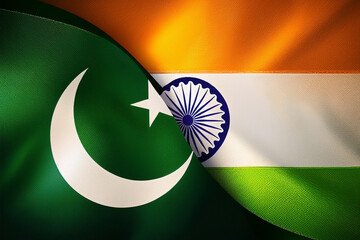
- Indus Waters Treaty suspension fuels rising tensions between India and Pakistan
- Water security emerges as a new geopolitical flashpoint in South Asia
- Pakistan signals strong response to any disruption of its water share
- Experts warn dispute could escalate between two nuclear-armed neighbors
The fragile equilibrium between India and Pakistan—two nuclear-armed neighbors with a long and turbulent history—has once again been thrown into uncertainty, this time over water. The suspension of the Indus Waters Treaty, long considered one of the most resilient diplomatic frameworks in modern history, is now emerging as a central obstacle to any meaningful normalization of ties between the two South Asian rivals.
For decades, the treaty served as a rare bridge of cooperation, surviving three full-scale wars—in 1948, 1965, and 1971—and countless military standoffs. Brokered by the World Bank in 1960, it allocated the eastern rivers—Ravi, Beas, and Sutlej—to India, while granting Pakistan rights over the western rivers—Indus, Jhelum, and Chenab. Together, these rivers sustain a basin that supports more than 300 million people, forming the backbone of agriculture and energy systems in both countries.
But the recent deterioration of relations following the 2025 Pahalgam attack has pushed the treaty into uncharted territory. India’s decision to suspend participation and intermittently restrict downstream water flows through projects like Baglihar and Kishanganga has introduced a new and volatile dimension to bilateral tensions: water as a weapon.
In Pakistan, where agriculture accounts for nearly 23 percent of GDP and employs over a third of the labor force, the stakes could not be higher. Officials and analysts describe water security as a “red line.” In off-the-record conversations, individuals familiar with internal deliberations suggest that Islamabad views any sustained disruption of its water share as an existential threat. “Water is not just a resource—it is survival,” one senior analyst based in Islamabad said. “If pushed to the wall, Pakistan will go to any extent to secure its rights.”
India and Pakistan still cannot agree to restore the Indus Waters Treaty – but re-engagement could help bring lasting peace
Such rhetoric is not merely symbolic. Pakistan’s military doctrine has increasingly incorporated the protection of critical resources into its strategic calculus. A retired security official, speaking on condition of anonymity, framed it bluntly: “It takes a missile, a precision strike will fix everything.” While such statements reflect the intensity of sentiment rather than official policy, they underscore how quickly water disputes could escalate into kinetic confrontation.
Across the border, political sentiment is equally hardened. The government of Narendra Modi has adopted a more assertive posture, with senior ministers publicly signaling that water allocations could be reconsidered in light of security concerns. Critics in Pakistan interpret these moves as an attempt to “weaponize” water—an accusation India rejects, insisting that its actions remain within the technical parameters of permissible use.
Trump 2.0 and the India–US Tariff Clash: What It Means for Pakistan and the Global Order
The reality lies somewhere in between. India’s growing network of run-of-the-river hydropower projects on western rivers has long been a source of friction. While technically compliant with treaty provisions, their cumulative impact—particularly on flow timing—has raised alarm in Pakistan. Combined with climate-induced stress, including glacial retreat of up to 24.8 percent in the Indus Basin between 2001 and 2021, the margin for error is shrinking rapidly.
The broader geopolitical context only amplifies these tensions. India, now the world’s fifth-largest economy, is increasingly assertive on the global stage, while Pakistan—though facing economic challenges—remains militarily formidable. Both countries possess nuclear arsenals, making even limited conflict a matter of global concern.
History offers sobering lessons. Despite the treaty’s resilience through wars and crises, today’s environment is markedly different. Trust has eroded, communication channels are strained, and domestic political pressures on both sides reward hardline positions. In India, nationalist rhetoric continues to shape policy discourse, while in Pakistan, water scarcity has become a rallying point for national security.
The question, then, is not just about water, but about whether the two nations can step back from the brink. Can a framework designed in 1960 withstand the pressures of climate change, population growth, and modern geopolitics? Or has the treaty outlived its ability to serve as a stabilizing force?
There are precedents for cautious optimism. Transboundary water agreements in regions such as the Mekong and Senegal basins demonstrate that even deeply entrenched disputes can be managed through cooperation, data sharing, and institutional resilience. But such outcomes require political will—something currently in short supply in South Asia.
Ultimately, the “million-dollar question” remains unresolved: will India and Pakistan recognize that over a billion people depend on peace more than posturing? The answer may determine not only the future of the Indus Waters Treaty but the stability of an entire region.
For now, water—once a symbol of cooperation—has become a fault line. And unless cooler heads prevail, it risks turning into a catalyst for the very conflict the treaty was designed to prevent.