BY OUR SPECIAL CORRESPONDENT
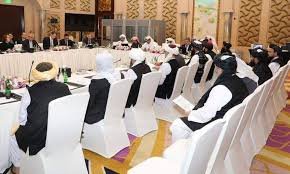
ISLAMABAD: Statements coming from Dr. Abdullah Abdullah, President Ashraf Ghani, and the Taliban indicate that the highly anticipated and much awaited intra-Afghan talks between the Taliban and government may finally be taking place. These are, after all, a key component of the peace process that has been designed in order to bring stability to Afghanistan.
Abdullah Abdullah, the head of the newly established government, stated on June 8, 2020, during a track two forum organized by the Heart of Asia Society, that an understanding has been reached regarding the start of intra-Afghan talks.[1]
President Ghani’s spokesman stated that talks were expected to begin in July. However, and more importantly, the Taliban have also expressed willingness for the commencement of intra-Afghan talks. This is a significant development considering the fact that they have refused to engage with Kabul in the past, including in recent weeks. According to the US-Taliban agreement, intra-Afghan talks were meant to begin on March 10, 2020, and it had since been unclear if these would ever begin.
While no specific date has been given, it is evident that the groundwork has already begun in anticipation of the much needed talks. Prior to the announcement of this welcome development, another significant change had occurred. This was after several months of negotiations, as a bitter feud finally ended Afghanistan’s political uncertainty when a compromise was reached between President Ghani and Abdullah Abdullah who had both been vying for the same position. Abdullah has now been appointed as Chairman of the High Council for National Reconciliation (HCNR), which is to spearhead the Afghan peace process. His appointment is also important as the internal political feud had led to the neglect of the country at a time when it is suffering from a pandemic as well as a delay in the intra-Afghan talks as scheduled in the US- Taliban deal of February 2020.
The deal had included a prisoner swap between the government and the Taliban, which also became a contentious issue. It was followed by a 3-day ceasefire which took place during Eid celebrations from May 24-26, 2020, which was reminiscent of the one that took place in June 2018. Moreover, despite sporadic hurdles in the beginning regarding the release of prisoners, President Ghani’s decision to release 2,000 Taliban prisoners as a good will gesture, has played a positive role in accelerating the desire of both sides to engage with each other in talks.
Apart from developments within Afghanistan, there have been other moves as well, including the appointment of Muhammad Sadiq, Pakistan’s former Ambassador to Kabul, as Pakistan’s special representative on Afghanistan, followed by General Bajwa’s unexpected visit to Kabul on June 9, 2020, where he held meetings with the Afghan leadership including President Ashraf Ghani and Abdullah Abdullah. The visit not only demonstrates Islamabad’s commitment to the peace process, but also reflects improvements in the highly strained Pak-Afghan relationship that has been traditionally entangled in a vicious blame game.
While nearly all major stakeholders have appointed special representatives for Afghanistan, Pakistan had never had such a position despite being so closely involved in Afghanistan. Ambassador Sadiq’s appointment is a much needed step by Pakistan considering the Pak-Afghan equation. While the appointment has come fairly late, it has been welcomed, and has brought hopes that this newly created position will help both countries chalk out solutions to their differences in a constructive manner as well as extend efforts to facilitate the peace process. After all, Pakistan and Afghanistan have numerous issues to sort out, and it has often been taken for granted that a better bilateral relationship will help pave the way for regional stability. Relationships and large projects with China and the Central Asian countries, connectivity through CPEC, and matters of trade, are all issues that re-energized Pak-Afghan relations will go a long way to improve.
While news of intra-Afghan talks is no doubt a much needed move in the right direction, it is only the beginning of a highly sensitive and complex process that will require patience and compromises from all sides. After all, as the recent past has shown us, the highs can quickly be replaced by the lows. For instance, the last ceasefire saw a pause in attacks from both sides. This was followed by calls to extend the ceasefire, but instead, fighting resumed between the two following the end of the three-day truce, with both accusing each other of initiating the first attack.
While the ongoing exchange of prisoners is setting the ground towards intra-Afghan talks, a number of hurdles continue to stand in the way. Although the Taliban finally appear to have abandoned their previous rigidity of not engaging with Kabul at all, their reluctance to abandon or reduce violence against Afghan forces continues to be a stumbling block in the way of peace. Sustained efforts on all fronts must be carried out before optimism can take over.
Due to the language/clauses of the US-Taliban deal in which there was mention that international forces would not be targeted, the Taliban have halted such attacks against international forces. However, they continued to target government forces. For any meaningful progress towards peace, they will have to revisit this strategy, and realize that they can no longer rely on violence as a means to further their goals.
If the Taliban truly want peace, they must honor their commitment across the board and not differentiate between those they can kill, and those they cannot. Their justification for attacking government forces is in the end rather weak, since no attack can be condoned. Moreover, they must begin to see the government as an equal stakeholder. If they can accept the US – their erstwhile primary enemy – it is not far-fetched to imagine that they can, and should, also accept the government as an equal.
This is a historic opportunity for the Afghans to rewrite history. For the Taliban, this presents a unique and timely moment as well since the group has gone through war fatigue, and must also desire an end to the decades of bloodshed. In fact, it can also present itself as a responsible and mature stakeholder and secure for itself a legitimate place and position in the Afghan polity, which is not something that was always on the cards. At the same time, Ghani and Abdullah also have a chance to play active and meaningful roles to deliver peace to the masses who have waited for far too long and gone through much violence and trauma. All the ingredients for a peace deal are in place; it is up to the stakeholders to now show themselves as both ready and willing to work hard for it to succeed.
Moreover, the US being a major stakeholder and signatory of the deal has a responsibility as well. It must push all sides to fulfil their side of the agreement and ensure a credible and workable agreement, an agreement that is acceptable to all stakeholders, and one that is for the benefit of the Afghan people. As has been witnessed in the past, haphazard and hasty compromises that are prone to collapse need to be avoided at all costs. Instead, Washington will need to play a proactive role, ensuring it allows the Afghans to come up with their own plans, and know when to intervene and put pressure on all sides, particularly the Taliban regarding a reduction and eventual halt in attacks. Washington will have to make sure that the Afghan government does not create hurdles in the implementation of the agreement such as causing delays in the exchange of prisoners or in the intra-Afghan talks as it has done in the past.
An important concern that has been missing so far from the entire discourse about the peace process has been any question of national and social healing as well as national reconciliation and reintegration. Afghanistan needs concrete steps on these fronts. Political and national reconciliation have time and again continued to pose challenges in pursuing peace talks with the Taliban, thus highlighting that the biggest threat is not external but internal. Strategies involving civil society, government bodies, and external support, must all accompany any political moves for peace. The ownership and desire for this must come from the Afghans themselves, and the political leadership must provide the support, basis, and platform. Afghans have to try and overcome the past, as bloody and difficult as it may be, and sometimes forget previous enmities, focusing instead on creating a new history for themselves that has to be based on inclusiveness. For this to happen though, Kabul and the Taliban have to move beyond petty politics and think about the people of Afghanistan who have suffered for far too long, and whom they both claim to represent. The need of the hour is for all Afghans to unite and call for a peaceful and stable future. Without this, the potential that keeps being touted – of minerals, of strategic geographical location for the region, as conduits for South and Central Asia, will all be moot points.
While the results of intra-Afghan talks will only start to show themselves later, it is important to recognize their occurrence as historic. After all, this will be the Taliban meeting the Afghan government for the first time since 2001. Important questions need to be answered, primarily about what will be the desired outcome of the talks. Are these talks about talks, or is there a concrete agenda? Will there be a continuation of the current political set up?
If so will the Taliban be accommodated politically? Or will focus be on a proposal that was floated during the Moscow talks of 2018, in which all the different Afghan political factions supported the notion of an inclusive political (interim) set up, or a power sharing set up? In this case, the only difference being that it would not be temporary, but rather it could follow due course and serve a 5-year term, and continue to have Ghani and Abdullah in it along with giving representation to the Taliban as well as other factions. Another option could be to have elections, but considering the current state of affairs, and the history of the past two elections, this would not be favorable. Thus, all these questions about Afghanistan’s politics, society, and security are important and require answers and solutions. It is hoped that the talks provide some. The future of Afghanistan depends on the intra-Afghan talks
Subscribe to Updates
Get the latest creative news from FooBar about art, design and business.
Trending
- Brazil’s Election Is a Battle Between Lula’s Record and Bolsonaro’s Rebellion
- Palestinian Prepare for First Legislative Elections in 20 Years
- Palestine Issue: The Two-State Solution May Be the Only Viable Exit
- Houthis’ Repeated Attacks on Saudi Arabia Put Mecca Pact to Real Test
- Trump’s TIME Interview Reveals a President Thinking Beyond the Midterms
- Why Rubio sent Iran’s delegation home — and what a Hormuz deal could look like
- Netanyahu Flydubai Flight: 9/11 Warning Sparks Political Storm in Israel
- What Happened In Tel Aviv-bound Flight FZ1073: Passengers and Crew Avert Horror
Intra-Afghan talks may finally be taking place soon