



- Iran Sanctions: Escalating U.S. restrictions aim to shut down shadow tanker fleets, swap lines, and currency exchanges sustaining Tehran’s economy.
- Regional Dynamics: Major regional markets like the UAE, Turkey, and Iraq continue to account for the majority of Iran’s non-oil imports, consumer products, and machinery exchanges.
- China: Maintains $15 billion to $30+ billion in annual bilateral trade volume over the last decade, primarily driving Iran’s energy exports through non-dollar transactions and receiving crude shipments.
WASHINGTON — President Donald Trump has announced an aggressive economic pressure operation intended to isolate Iran’s economy, threatening “tremendous economic consequences” for any nation or foreign entity maintaining business ties with Tehran.
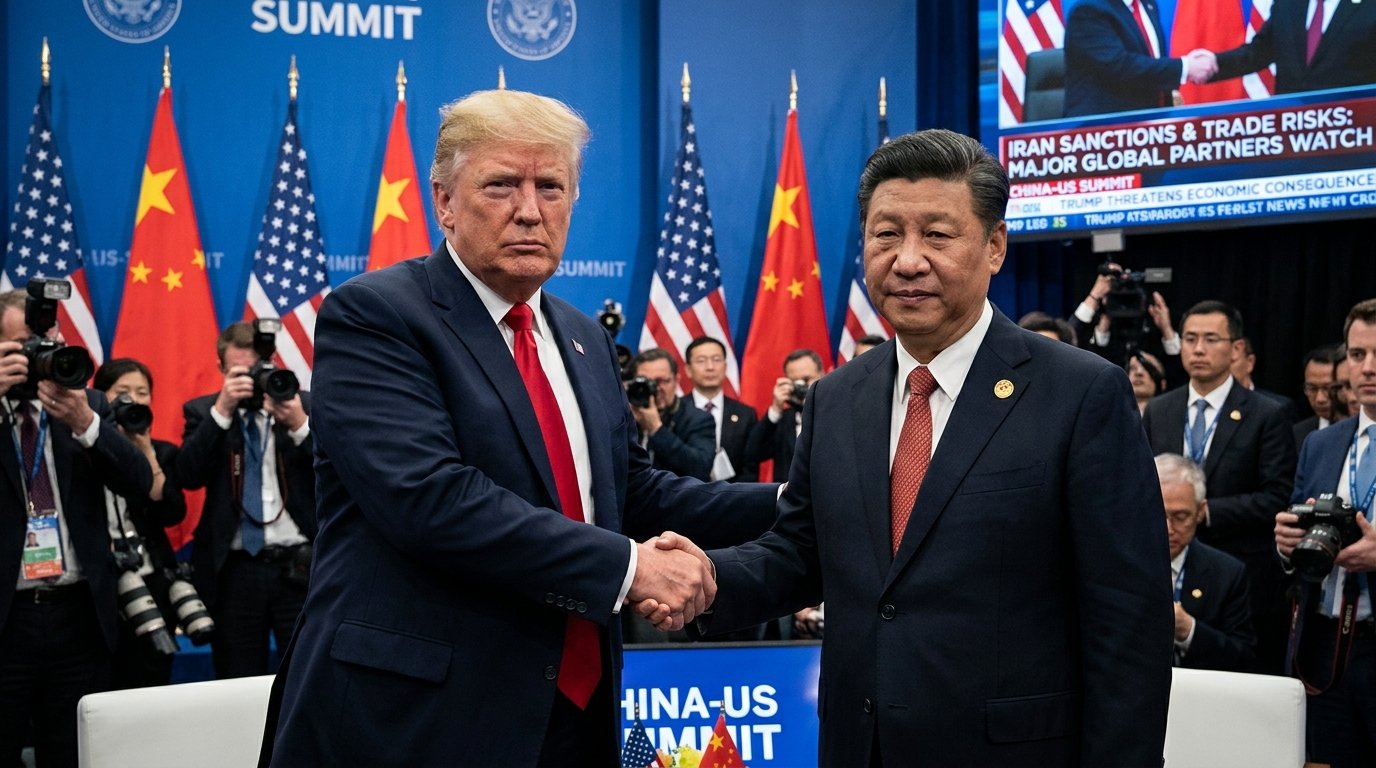
The sweeping declaration comes just ahead of Chinese President Xi Jinping’s scheduled visit to the United States next week, setting the stage for direct geopolitical friction between Washington and Beijing.
Addressing the campaign on Truth Social, Trump framed the action as “the most crushing economic operation ever taken against any country,” warning that any nation allowing its businesses, financial institutions, or transit hubs to offer a lifeline to Iran will face punitive measures.
While the announcement lacked specific operational parameters, it signals a potential reliance on secondary sanctions aimed directly at Tehran’s commercial lifelines—most notably China, Iran’s premier trading partner and oil buyer. Beijing did not immediately issue an official response to the statement.
READ NEXT: Why Trump Threatened to Bomb Oman — and What It Means for Iran, Hormuz and the Houthis
The shift in U.S. strategy toward intensified economic containment follows weeks of stalled diplomatic talks and military assessments suggesting conventional air strikes have hit operational limits. The White House, alongside the U.S. Treasury’s “Operation Economic Fury,” aims to choke off revenue streams, oil smuggling networks, and shadow tanker fleets.
However, targeting foreign trade partners risks escalating broad tariff and trade negotiations with Beijing right as President Xi arrives for bilateral talks.
READ MORE: Trump threatens Iran’s trade partners, as military strikes make way for economic pressure
Meanwhile, regional dynamics remain tense following the United Arab Emirates’ recent suspension of commercial activity with Tehran, leaving China as Iran’s ultimate economic backstop.
Iran’s Major Trade Partners & Bilateral Trade Dynamics
Despite years of Western sanctions, Iran relies on a key network of regional and global economies to sustain its foreign trade. Over 80% of Tehran’s commercial volume is concentrated within its top ten trading partners, driven predominantly by crude exports, petrochemicals, and agricultural imports.
Top 10 Major Trading Partners (10-Year Overview)
-
China
-
Role: Primary destination for Iranian crude oil and main source of manufactured goods.
-
Bilateral Volume (10-Year Trend): $15 billion – $30+ billion annually. Volatility shifted alongside Joint Comprehensive Plan of Action (JCPOA) waivers, but China consistently sustained $15B to $25B in annual bilateral exchange, surging via non-dollar trade and shadow tanker crude deliveries.
-
-
United Arab Emirates (UAE)
-
Role: Historical re-export hub, financial exchange conduit, and major supplier of non-oil imports.
-
Bilateral Volume (10-Year Trend): $10 billion – $24 billion annually. Served as Iran’s top import origin, averaging $15B to $20B per year before recent diplomatic suspensions.
-
-
Turkey
-
Role: Key regional energy importer (natural gas) and provider of consumer goods/industrial machinery.
-
Bilateral Volume (10-Year Trend): $5 billion – $10 billion annually. Fluctuated from peak levels near $10B a decade ago to around $5B–$8B in recent years due to currency volatility and sanction compliance.
-
-
Iraq
-
Role: Top destination for Iranian non-oil exports, including electricity, natural gas, processed food, and construction materials.
-
Bilateral Volume (10-Year Trend): $6 billion – $12 billion annually. Sustained non-oil trade averaging $8B to $10B per year, heavily favored toward Iranian exports.
-
-
India
-
Role: Major historical importer of crude oil and supplier of agricultural commodities (rice, tea) and pharmaceuticals.
-
Bilateral Volume (10-Year Trend): $2 billion – $17 billion. Plummeted from a high of ~$17B (pre-2019 sanctions when India purchased Iranian oil) to roughly $2B–$3B annually under U.S. sanction pressure.
-
-
Russia
-
Role: Strategic partner focusing on defense, agricultural products, transport corridors (INSTC), and industrial machinery.
-
Bilateral Volume (10-Year Trend): $1.5 billion – $4.5 billion. Trade expanded significantly past 2022, growing from under $2B toward $4B–$5B through dedicated bilateral banking arrangements.
-
-
Pakistan
-
Role: Neighboring trade partner focused on border trade, petroleum products, fruits, and textiles.
-
Bilateral Volume (10-Year Trend): $1 billion – $2.5 billion. Maintained steady annual growth, moving from under $1B a decade ago to roughly $2B in combined bilateral trade.
-
-
Germany
-
Role: Primary European trade partner supplying specialized machinery, industrial chemical inputs, and medical equipment.
-
Bilateral Volume (10-Year Trend): $1.5 billion – $3.5 billion. Highs near $3.5B contracted to around $1.5B–$1.8B annually following nuclear deal rollbacks and EU banking restrictions.
-
-
Afghanistan
-
Role: Consistent market for Iranian refined fuels, construction goods, and consumer products.
-
Bilateral Volume (10-Year Trend): $1.2 billion – $3 billion. Trade largely remained one-sided in favor of Iranian exports, averaging $1.5B to $2.5B annually over the last decade.
-
-
Oman
-
Role: Logistics conduit and maritime re-export partner in the Gulf region.
-
Bilateral Volume (10-Year Trend): $500 million – $2 billion. Steadily expanded over the decade, climbing from under $600M to nearly $2B annually through expanded maritime routes.
-