



- Israel Iran Conflict 2026 marks a turning point as Israel closed airspace and public institutions before launching strikes.
- U.S. aircraft carriers repositioned, signaling possible American military involvement.
- Iranian cities came under attack following stalled nuclear negotiations in Geneva.
- The escalation deepens global instability amid Ukraine war, Gaza crisis, and Pakistan-Afghanistan tensions.
The Middle East awoke to a new and dangerous reality on Saturday as Israel launched what it described as a pre-emptive military strike against Iran, triggering one of the most consequential escalations in regional geopolitics in years. What made the operation extraordinary was not only the scale of the attack but the unprecedented domestic lockdown Israel imposed hours before missiles were fired — effectively placing the entire country into wartime mode.
From schools and universities to airports, museums, offices, and public institutions, Israel executed a nationwide shutdown designed to shield civilians from expected retaliation. The move signaled that Israeli leadership anticipated immediate Iranian counterstrikes and viewed the confrontation not as a limited operation but as the opening phase of a broader conflict.
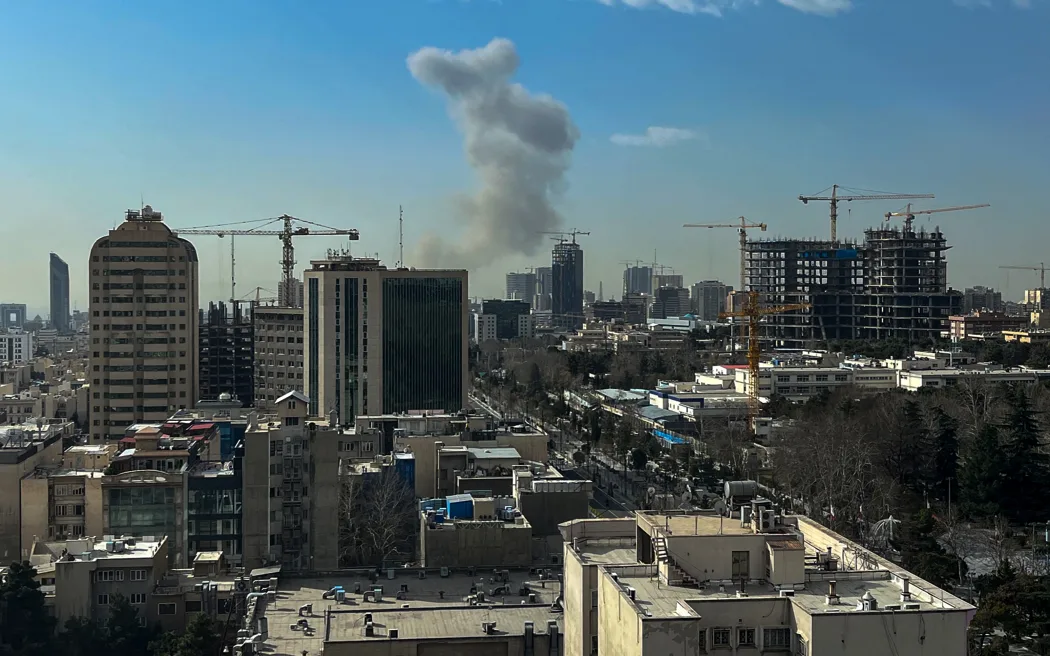
BREAKING NEWS — Explosions Rock Iranian Capital as Israel Confirms Missile Strik
The strikes come at a moment when the world is already strained by multiple crises — the Ukraine war, the Gaza conflict, rising instability in South Asia including the Pakistan-Afghanistan fighting — and now faces the possibility of a multi-theatre global security shock.
A Nation Frozen Before the First Missile
Hours before the attack began, Israel declared a special nationwide emergency.
Authorities ordered the closure of schools, colleges, universities, workplaces, museums, and public venues, leaving only essential services operational. Civil aviation was halted entirely. Israel’s airspace was closed to civilian flights, and the Airports Authority urged citizens not to travel to any airport.
BREAKING NEWS — Explosions Rock Iranian Capital as Israel Confirms Missile Strik
Public gatherings were banned, and emergency sirens sounded across the country as part of a proactive alert system preparing civilians for incoming missiles or drones.
Security analysts describe the shutdown as a calculated signal: Israel expected immediate escalation and wanted to minimize casualties before initiating hostilities.
The sweeping measures transformed daily life overnight. Streets emptied, businesses shuttered, and public transportation slowed as the country shifted into defensive posture — a rare step even by Israel’s historically high security standards.
Explosions in Iran’s Major Cities
Soon after the lockdown orders, explosions were reported across Tehran and other major Iranian urban centers. Iranian state media confirmed blasts while security forces moved quickly to secure sensitive sites.
Sources indicated that Iran’s Supreme Leader, Ayatollah Ali Khamenei, had been transferred from Tehran to a secure location — a development underscoring the seriousness of the threat perception within Iran’s leadership.
US and Israel carrying out strikes against Iran
The Israeli government said the operation aimed to neutralize threats posed by Iran’s nuclear and ballistic missile programs. Defense Minister Israel Katz stated the strike was necessary “to remove threats to the State of Israel,” framing the attack as defensive despite its offensive execution.
The assault follows a 12-day air war between the two rivals earlier in the year, demonstrating that deterrence between Israel and Iran has effectively collapsed.
Trump’s Pressure and the Collapse of Diplomacy
The escalation unfolded against the backdrop of stalled nuclear negotiations between Washington and Tehran held in Geneva earlier this year. Talks had aimed to resolve decades-long disputes over Iran’s nuclear program and avert military confrontation.
According to diplomatic sources, tensions intensified after U.S. President Donald Trump expressed deep dissatisfaction with Iran’s negotiating stance. While Tehran signaled willingness to discuss nuclear restrictions in exchange for sanctions relief, it refused to negotiate limitations on its ballistic missile program — a red line for both Washington and Tel Aviv.
Israel had repeatedly insisted that any agreement must dismantle Iran’s nuclear infrastructure entirely rather than merely cap enrichment levels. The failure to bridge these differences appears to have accelerated military planning already underway.
Israeli defense officials later confirmed the operation had been coordinated with Washington for months, with the launch date finalized weeks in advance.
U.S. Military Moves Signal Wider War Risk
Perhaps the most alarming development has been the repositioning of American military assets across the region. Multiple reports indicate U.S. aircraft carriers and strike groups were moved into operational positions ahead of the attack, signaling readiness to join Israeli operations if escalation continues.
U.S. involvement would dramatically widen the conflict, transforming a bilateral confrontation into a regional war with global consequences.
Earlier confrontations demonstrated Iran’s willingness to retaliate directly against American targets. During previous hostilities, Tehran launched missiles toward the Al Udeid Air Base in Qatar — the largest U.S. military installation in the Middle East — after American participation in strikes on Iranian facilities.
Iran has already warned neighboring states hosting U.S. forces that American bases could become legitimate targets if Washington joins the current campaign.
Middle East Stability Shattered
The Israeli strike effectively ends hopes for near-term diplomatic resolution of the Iranian nuclear dispute. Analysts say the region has entered a volatile phase marked by deterrence failure, rapid escalation cycles, and rising miscalculation risks.
The Middle East now faces simultaneous flashpoints:
- Continuing fallout from the Gaza war
- Persistent instability in Syria and Lebanon
- Rising maritime tensions in the Persian Gulf
- Israel-Iran direct confrontation
- Pakistan-Afghanistan military clashes adding pressure across Asia
The convergence of conflicts is reshaping global security calculations and threatening energy markets, trade routes, and investor confidence worldwide.
Oil prices surged immediately following news of the strikes, reflecting fears that Iranian retaliation could disrupt shipping through the Strait of Hormuz — a chokepoint for global energy supplies.
China and Russia: Watching, Not Acting
Notably, both China and Russia have adopted a cautious posture, refraining from immediate intervention while closely monitoring developments.
Beijing, heavily dependent on Middle Eastern energy flows, is expected to push for de-escalation diplomatically rather than militarily. Moscow, already deeply engaged in Ukraine, appears unwilling to open another direct confrontation with Western-aligned forces but remains strategically aligned with Tehran.
Their silence reflects strategic calculation: both powers benefit from observing U.S. military overstretch while avoiding direct entanglement.
What Comes Next: Retaliation or Regional War?
Iran has vowed to defend itself and is widely expected to respond through a combination of direct missile strikes, proxy forces, cyber operations, or maritime disruption.
Israel, meanwhile, has prepared its population for sustained confrontation — a sign that leaders anticipate more than a single round of strikes.
Military analysts warn that the conflict risks evolving into the most dangerous Middle Eastern war in decades, particularly if U.S. forces become directly engaged.
With diplomacy collapsing, military mobilization accelerating, and multiple global conflicts already underway, the Israel-Iran confrontation marks a turning point.
The region’s fragile peace has been shattered — and the world, already strained by war and geopolitical rivalry, now faces the possibility of another prolonged and destabilizing conflict at the crossroads of global energy, security, and great-power competition.
Keywords for indexing: Israel Iran conflict, Israel preemptive strike Iran, Middle East war escalation, US aircraft carriers Middle East, Iran nuclear crisis, Israel airspace closure, global geopolitical tensions 2026, Middle East security crisis, Israel Iran missile attacks, global conflict escalation.