



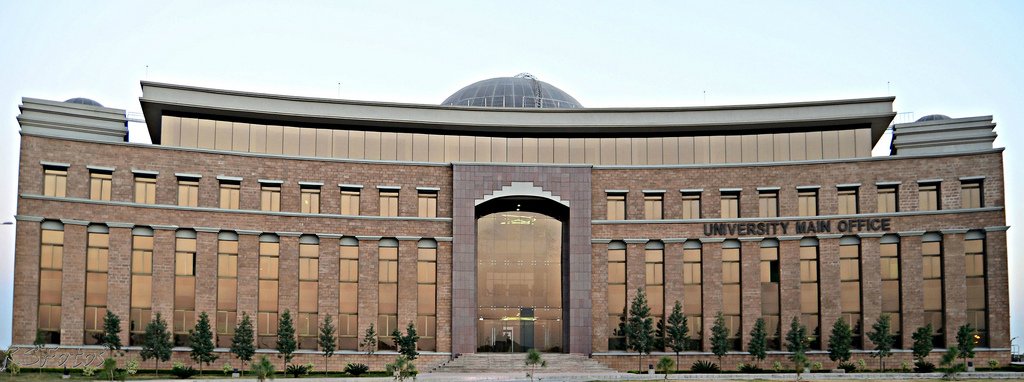
- MIT-inspired model: NUST blends research, industry, and entrepreneurship like the world’s top innovation universities.
- NSTP growth hub: National Science and Technology Park connects startups, R&D, and venture capital under one roof.
- Medical technology breakthroughs: Pakistan-made cardiac stents and catheters cut dependence on costly imports.
- AI and chip design expansion: New Special Technology Zone and AI Tower attract global tech partnerships.
- Economic impact: NUST’s innovation ecosystem is helping position Islamabad as a regional Silicon Valley.
In the heart of Islamabad, far from the red-bricked laboratories of Cambridge, Massachusetts, a quiet revolution is taking place. At the National University of Sciences and Technology (NUST), Pakistan is engineering its own version of the MIT model — not through imitation, but through ingenuity. Where once the Global South looked outward for innovation, NUST’s ecosystem of startups, science parks, and industrial partnerships is proving that ideas born in Islamabad can travel as far as Silicon Valley or Boston.
For investors and industrial leaders seeking the next frontier of technological growth, NUST represents more than an academic institution; it is the nucleus of Pakistan’s emerging innovation economy — one where research turns swiftly into products, and ambition into enterprise. As the world searches for new growth engines beyond traditional centers of innovation, Islamabad’s transformation offers a compelling proposition: the next Kendall Square might just rise under the Margalla Hills.
Forged in Fire: Field Marshal Asim Munir Elevates Pakistan as the Global Guarantor of Security
When it comes to bridging the gap between academia and industry, the Massachusetts Institute of Technology (MIT) has long been a global benchmark. Its research ecosystem—deeply intertwined with industry—has fueled inventions that shaped the modern world, from microchips and radar to biomedical devices and robotics.
Yet far from Cambridge, Massachusetts, a similar spirit of innovation is taking root in Islamabad at the National University of Sciences and Technology (NUST). Here, academia, research, and enterprise are converging in ways that promise to redefine Pakistan’s knowledge economy.
Building the Bridge Between Academia and Industry
Through its Corporate Advisory Council (CAC) and National Science and Technology Park (NSTP), NUST has developed an integrated framework that closely mirrors MIT’s model of university–industry collaboration. The goal is clear: to transform ideas into impact, and research into real-world solutions.
READ MORE: From Local Roots to Global Recognition : Dr. Bilal Khan’s Rapid Transformation of University of Chakwal into a Higher Education Powerhouse within Three Years
At MIT, the Industrial Liaison Program (ILP) serves as a formal bridge between researchers and corporate partners, allowing for direct engagement, technology scouting, and joint development. This dynamic ecosystem ensures that academic breakthroughs quickly evolve into commercial innovations.
NUST’s Corporate Advisory Council performs a similar role within Pakistan’s emerging industrial landscape. Comprising senior leaders from business, government, and academia, the CAC keeps NUST’s academic and research priorities aligned with national needs. It offers real-time feedback on market trends, advises on curriculum development, and nurtures partnerships in fields such as engineering, energy, healthcare, and artificial intelligence.
ALSO READ: MIT Rejects Trump’s Sweeping ‘Compact’ Offering Colleges Funding Advantages
The results are already visible. One of the most remarkable achievements has been the indigenous development of cardiac stents and angioplasty balloon catheters at NUST’s Medical Devices Development Centre. With CAC’s guidance, NUST locally manufactured Bare Metal Stents (Rejuvenate®️) and PTCA Balloon Catheters (Vasoglide®️)—both licensed by the Drug Regulatory Authority of Pakistan. These devices, now used in hospitals across the country, cost a fraction of imported alternatives and stand as a testament to Pakistan’s ability to solve national challenges through homegrown innovation.
NSTP: Pakistan’s Kendall Square
Complementing the CAC’s strategic role is NUST’s National Science and Technology Park (NSTP)—a vibrant hub of research, entrepreneurship, and technological advancement located within the university’s Islamabad campus. Much like MIT’s Kendall Square, NSTP brings together startups, corporate R&D centres, and university laboratories under one roof. Its mission is to make innovation a living, everyday practice rather than a theoretical pursuit.
The Hatch-8 pre-incubation programme at NSTP has nurtured startups that embody this vision. From high-endurance hexacopters for crop-field mapping to AI-driven robotics (BrainSwarm), IoT-based gaming systems (VIoT-Battlefield), and deep-learning platforms for counterfeit currency detection (5Hazar)—each initiative demonstrates how Pakistani ingenuity is finding global relevance.
The park’s recent recognition as a Special Technology Zone (STZ) has further accelerated growth in high-tech verticals such as AI, chip design, HealthTech, and medical devices under Novative Health Technologies (NHTPL). These ventures are no longer confined to research—they are being scaled, regulated, and commercialized.
NUST is also constructing an AI Tower, which will host the National Centre of Artificial Intelligence and select AI startups, supported by venture capital partnerships. This expansion signals the growing presence of AI-focused infrastructure and talent in Pakistan. Startups across EdTech, SmartTech, and AgriTech are now leveraging machine learning, IoT, and data analytics to build products with both local utility and global potential.
In essence, NSTP reflects the same spirit that defines MIT’s innovation ecosystem. Just as Kendall Square is home to R&D offices of Pfizer, Moderna, and Google, NSTP is attracting anchor tenants and SMEs specializing in autonomous systems, UAVs, robotics, and chip design—creating a self-sustaining innovation corridor in the heart of Islamabad.
Towards Pakistan’s Innovation Renaissance
What makes NUST’s approach unique is its adaptability to local realities. MIT thrived in a mature economy supported by deep venture capital and a culture of risk-taking. NUST, by contrast, is cultivating a comparable innovation model in a developing context—where funding, regulation, and industrial R&D capacity are still emerging. Despite these challenges, NUST has managed to institutionalize collaboration through structured frameworks like the CAC and NSTP, transforming isolated initiatives into a national movement for innovation.
This dual mechanism—the CAC providing strategic direction and the NSTP ensuring execution and impact—represents a distinctly Pakistani interpretation of the MIT framework. It blends vision with pragmatism, education with enterprise, and innovation with national purpose.
Pakistan’s venture capital ecosystem is still nascent, intellectual property protections are evolving, and industrial research investment remains modest. Yet NUST’s progress demonstrates that sustainable innovation is possible through structure, persistence, and an ecosystem-driven approach.
If MIT’s journey began with the industrial revolution in 19th-century America, NUST’s story may well mark the beginning of Pakistan’s own innovation renaissance—one defined not by imitation, but by adaptation. From Rejuvenate®️ and Vasoglide®️ to UAV mapping systems, AI-powered counterfeit detection, and robotics, the results are already evident in labs, startups, and markets across the country.
As Pakistan moves toward a knowledge-based economy, the message is clear: when universities, industry, and government work in harmony, the distance between Islamabad and Cambridge begins to narrow—not in miles, but in mindset.