



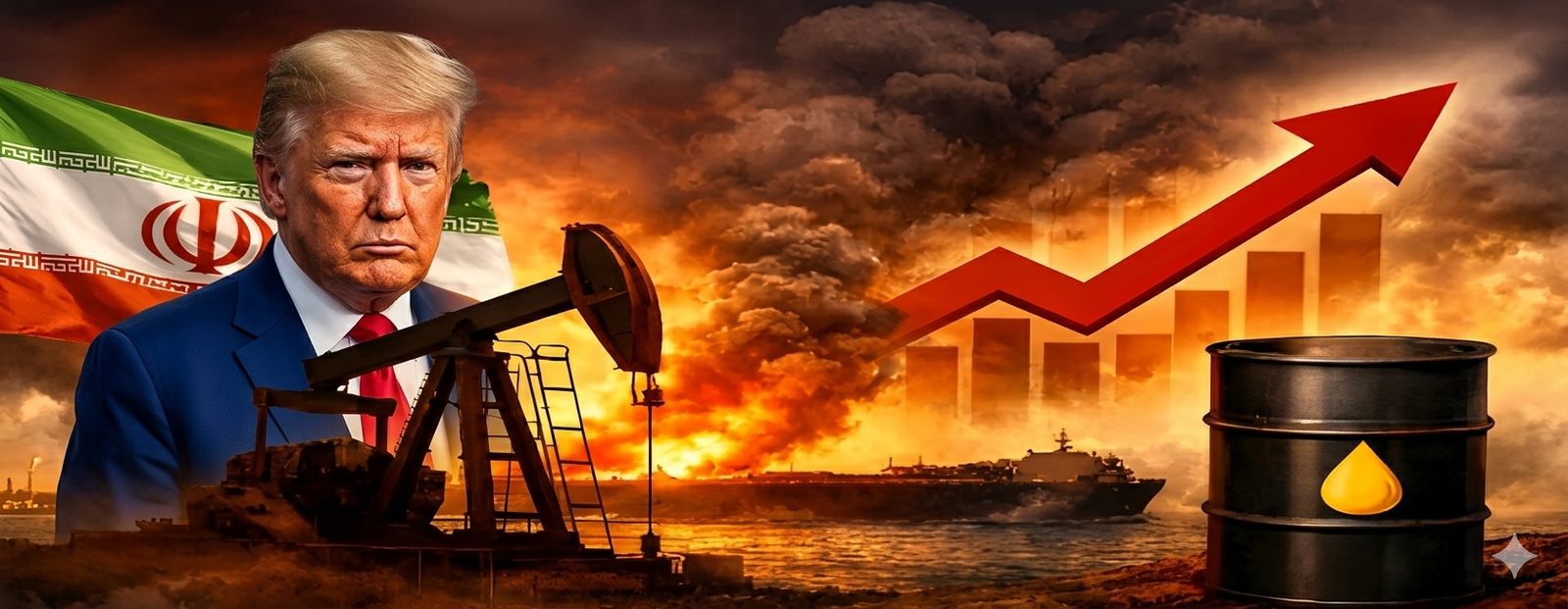
- Oil Prices Surge Iran War fears push crude above $114 amid supply disruption
- Trump’s 48-hour ultimatum to Iran raises risk of major military escalation
- Strait of Hormuz crisis threatens nearly 20% of global oil supply
- Global markets from U.S. to Asia brace for inflation and economic slowdown
The global oil market opened the week on edge, with prices surging sharply as tensions between the United States and Iran escalated following an ultimatum issued by Donald Trump demanding the reopening of the Strait of Hormuz within 48 hours.
By early Monday trading, U.S. West Texas Intermediate (WTI) crude climbed above $114 per barrel, while Brent crude hovered around $111, both posting stronger-than-expected gains after the Easter holiday lull. Analysts say the spike reflects deepening fears that the fragile energy market could face a historic disruption if the deadline expires without a breakthrough.
At the heart of the crisis lies the Strait of Hormuz—a narrow waterway connecting the Persian Gulf to global markets, through which nearly 20% of the world’s oil supply once flowed before the conflict intensified. Iran’s effective closure of the route, combined with tanker attacks and regional instability, has already choked supply chains and rattled traders worldwide.
Trump’s warning—delivered in a series of forceful statements—has only heightened uncertainty. The U.S. president has threatened to strike Iran’s power plants and critical infrastructure if Tehran does not comply by Tuesday evening, a deadline now just hours away. Market participants say the ultimatum has exposed the structural fragility of global oil supply networks.
Oil prices climb after Trump threatens Iran over Strait of Hormuz
“This is no longer just a geopolitical risk premium—it’s a real supply crisis unfolding in real time,” said a Singapore-based commodities analyst. “The market is pricing in the possibility of further escalation, including direct strikes that could take even more barrels offline.”
Oil Prices Surge Iran War: Supply Shock Deepens
Industry estimates paint a grim picture. According to TD Securities, nearly one billion barrels of oil and refined products could be lost by the end of the month if disruptions persist. This includes roughly 600 million barrels of crude and 350 million barrels of refined fuels such as diesel and jet fuel.
Trump Final Strike on Iran Looms as U.S. Forces Mobilize and Tehran Prepares for Decisive War
Other projections, including those from Rapidan Energy, suggest net losses could reach over 630 million barrels by June even after accounting for emergency stock releases and rerouted supplies.
The scale of the disruption is unprecedented. Energy infrastructure across the region has also come under strain. Kuwait Petroleum Corporation confirmed drone attacks on several facilities, warning that repairs could take significant time and investment, further tightening supply.
Meanwhile, OPEC+ members—including Saudi Arabia, Russia, and United Arab Emirates—have agreed to modest output increases of around 206,000 barrels per day in May. However, analysts question whether additional production can reach global markets as long as Hormuz remains constrained.
Markets on Edge
The ripple effects are already visible across financial markets. U.S. stock futures dipped Sunday night, with the Dow Jones Industrial Average futures falling by roughly 0.5%, while S&P 500 and Nasdaq futures also declined. Investors are increasingly concerned that rising energy costs will fuel inflation and slow economic recovery.
“The oil shock is feeding directly into inflation expectations,” said a portfolio manager at a global investment firm. “Higher input costs will hit everything—from manufacturing to transportation—making central banks’ job even harder.”
Giorgia Meloni Pushes GCC for Iran War De-escalation Amid Global Energy Crisis
The surge in oil prices comes despite relatively strong U.S. economic data, including a better-than-expected March jobs report. Analysts warn that continued volatility in energy markets could quickly overshadow these gains.
Asia Braces for Impact
Major economies across Asia are among the most vulnerable. Countries such as China, India, and regional trading hub Singapore rely heavily on imported energy, much of which passes through the Strait of Hormuz.
Singapore has already begun implementing contingency measures to cushion the impact, including strategic stockpile adjustments and supply diversification efforts. However, experts say these steps may not be enough if the crisis deepens.
“Singapore is moving quickly, but the scale of disruption is massive,” said an energy economist in the region. “If Hormuz remains restricted or if conflict escalates, we’re looking at prolonged price spikes and potential shortages.”
Oil prices open higher as US-Israeli war with Iran continues to disrupt supply
European markets are also under pressure, while the United States—despite being a major producer—faces rising domestic fuel prices. The average price of gasoline has already surged significantly, adding to consumer strain.
Countdown to Uncertainty
With the 48-hour deadline nearing its end, the oil market is entering a critical phase. Traders are bracing for multiple scenarios—from a last-minute diplomatic breakthrough to a full-scale escalation involving U.S. strikes on Iranian infrastructure.
Trump has hinted at imminent action, even suggesting that Tuesday could mark a decisive turning point. If military operations proceed, analysts warn that oil prices could surge even further, potentially crossing $120 per barrel in the near term.
“The next 24 hours are crucial,” said a London-based energy strategist. “If there is an attack, the market reaction will be immediate and severe. We could see panic buying, supply hoarding, and extreme volatility.”
For now, the global economy watches anxiously as geopolitics and energy markets collide once again. The message from experts is clear: the oil market is no longer just reacting to events—it is being reshaped by them in real time, with consequences that could ripple across continents in the days and weeks ahead.