



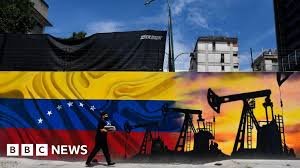
- The Operation Absolute Resolve marks a shift from sanctions to direct military seizure of the world’s largest oil reserves.
- U.S. Strategic Petroleum Reserve (SPR) data reveals the economic desperation driving the 2026 Caracas strikes.
- The rise of BRICS currency oil trades served as the “red line” for the Trump administration’s military intervention.
- International law experts at the UN warn that the “Donroe Doctrine” sets a dangerous precedent for global sovereignty.
In the predawn stillness of January 3, 2026, the global order didn’t just shift; it shattered. As more than 150 U.S. aircraft, including F-22 Raptors and B-1B Lancers, illuminated the skies over Caracas in an operation codenamed “Absolute Resolve,” the explosions at Fort Tiuna weren’t merely tactical strikes.
They were the thunderous echoes of a metaphorical glass being broken—the emergency lever pulled by an empire that has finally realized its checking account is overdrawn.
Venezuela oil companies and U.S. Giants Set to Reclaim Infrastructure Under New Interim Cooperation
I’ve had a lot of people asking my opinion on this situation. As someone born and raised in this region who has spent decades navigating the “rabbit hole” of Washington’s geopolitical machinery, I’ve decided to share my view: We are witnessing the return of 19th-century gunboat diplomacy, dressed in the thin, blood-stained veil of 21st-century humanitarianism.
Operation Absolute Resolve: A Nation Under Management
As of this morning, January 5, 2026, the world is coming to grips with a reality that feels ripped from a different century. Nicolás Maduro and his wife, Cilia Flores, are currently in U.S. custody, having been whisked from the USS Iwo Jima to New York to face narco-terrorism charges.
India and Pakistan Fuel South Caucasus Arms Race: Fighter Jet Deals with Armenia and Azerbaijan Escalate Tensions
In Washington, the rhetoric is triumphant. President Trump has characterized the action as the inaugural application of the “Donroe Doctrine,” stating boldly that “American dominance in the Western Hemisphere will never be questioned again.” But the most telling detail isn’t the capture; it’s the plan for the aftermath.
EXCLUSIVE: Global plastics industry Braces for Volatility After Maduro: Venezuela’s Oil Shock Ripples Into Trillion Dollar Industry
The administration has explicitly stated that the U.S. will “run” the country until a “judicious transition” occurs, with U.S. oil companies already drafted to “fix” the infrastructure.
Venezuela Invasion: A Systemic Margin Call
To understand why we are here, we must look at the data the evening news skips. This isn’t just about “bringing liberty” to a people. This is a margin call on the American way of life.
- The Drained Reserve: While the U.S. Strategic Petroleum Reserve (SPR) has seen a modest 0.2 million barrel increase recently, it remains at a haunting 40-year low of approximately 413 million barrels. Our domestic insurance policy is on life support.
- The Petrodollar Pivot: The 50-year-old security-for-oil framework with Saudi Arabia has functionally shifted. Riyadh is now part of an OPEC+ core that freezes production to manage a “global supply surplus,” all while exploring trades in a “basket” of currencies.
- The Red Line: The tipping point was Venezuela’s move to bypass the dollar entirely, signaling an intent to join the BRICS “mBridge” settlement system.
Washington simply cannot afford to let the world’s largest proven oil reserves—over 300 billion barrels—disconnect from the dollar. If the “Caracas Tank” stops accepting greenbacks, the demand for U.S. Treasury bonds collapses. Interest rates would skyrocket, and our debt-laden economy would face an existential liquidation event.
Rubio says US not at war with Venezuela, as Maduro set to appear in New York court on Monday
Liquidation, Not Liberation
This is not an operation of mercy; it is a seizure of collateral. By moving in to “modernize” the oil sector, the U.S. is essentially foreclosing on a sovereign nation to backstop the dollar’s waning hegemony. The President’s openness to an occupation funded by Venezuelan oil revenue is the ultimate “guns-for-oil” policy.
The West has drawn a line in the sand—the G7 versus the BRICS+, the “rules-based order” versus “the Rest.” But the West is finding itself increasingly outnumbered. We can occupy Venezuelan oil fields today, but we cannot steal the future.
The Cost of “Absolute Resolve”
History will likely record the January 2026 raid not as a triumph of American power, but as the moment the empire admitted it was bankrupt. When you use a B-1B Lancer to settle a trade dispute, you aren’t winning; you’re desperate.
The petrodollar is in its twilight. The “Empire of Debt” continues to scramble for footing. We have bullied a nation we knew could not match our firepower, but in doing so, we have signaled to the globe that our currency is now backed not by “full faith and credit,” but by the barrel of a gun.
In my humble opinion, the price of this oil will be far higher than the market rate. We have secured the assets, but we have lost the moral high ground—the only currency that truly keeps a global leader afloat.