



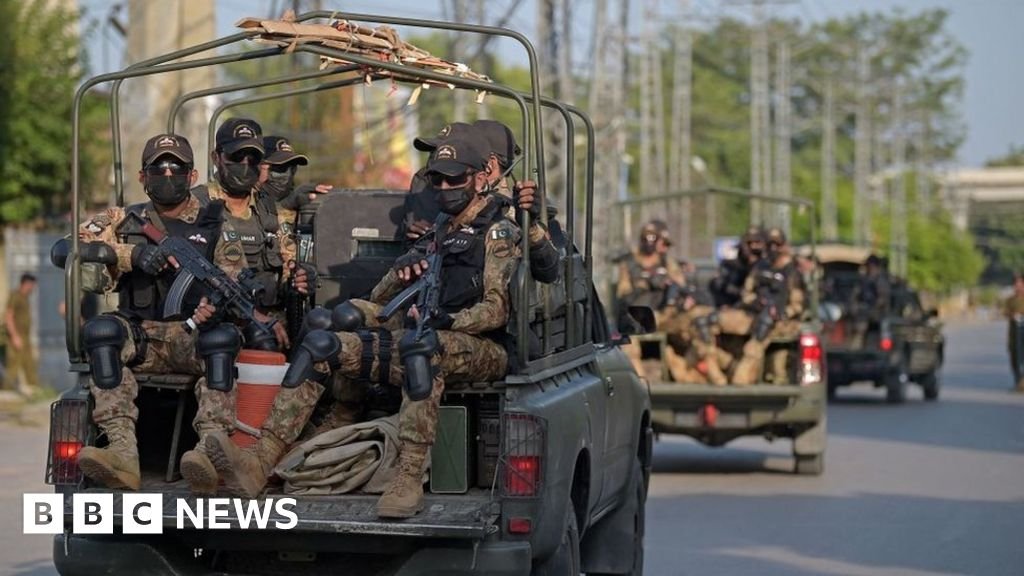
- Pakistan Army counterterrorism operation in Balochistan eliminated 216 militants in days-long clearance missions across the province
- Swift military response restored stability in Gwadar and major cities following coordinated terrorist assaults
- International community including the US, China, UN Security Council, and Gulf states strongly condemned the attacks
- Operation sent a powerful deterrent message to hostile forces and foreign-sponsored terror networks
The delayed response of the United States to the deadly terrorist attacks in Balochistan has sparked debate among analysts, especially as Pakistan’s security forces had already completed one of the most decisive counterterrorism operations in recent years before Washington issued its formal condemnation.
Nearly a week after coordinated militant assaults rocked multiple districts of Balochistan on January 31, the U.S. State Department finally expressed solidarity with Pakistan on Friday, calling the attacks “horrific” and reaffirming that the Balochistan Liberation Army (BLA) remains a designated Foreign Terrorist Organization (FTO). While the statement was welcomed in Islamabad, many observers noted that Pakistan’s armed forces had already delivered a powerful on-ground response, neutralizing the threat with speed and precision.
According to the Inter-Services Public Relations (ISPR), Pakistan’s military concluded Operation Radd-ul-Fitna-1 on Thursday after days of intelligence-based clearance operations across the province. The operation resulted in the killing of 216 terrorists, dismantling major militant hideouts and recovering large caches of weapons, ammunition, and explosives.
The coordinated attacks had claimed the lives of 36 civilians, including women and children, and 22 security personnel, disrupting normal life in several areas. However, the swift and overwhelming military response prevented further escalation and restored stability across key regions, including Gwadar and other major urban centers.
Security analysts say the operation sent a clear and unmistakable message — Pakistan’s defenders possess both the capacity and capability to repulse any act of terrorism aimed at destabilizing the country.
“The manner in which the Pakistan Army safeguarded Balochistan’s iconic cities, economic corridors, and civilian population demonstrates not only operational strength but strategic preparedness,” said one senior security expert. “Enemies were reminded that Pakistan’s territorial integrity is non-negotiable.”
The successful repulsion of the attacks received widespread appreciation from within Pakistan and from friendly nations abroad. The United Nations Security Council issued a strong press statement condemning the “heinous and cowardly” attacks, noting that 48 Pakistani nationals were killed in the violence and confirming the BLA’s responsibility.
The Council urged all states to cooperate with Pakistan in bringing the perpetrators, organizers, financiers, and sponsors to justice, reaffirming that terrorism remains one of the gravest threats to international peace and security.
Beyond the UN, major global players including China, Russia, the United Kingdom, Saudi Arabia, Turkiye, the United Arab Emirates, and other Gulf countries strongly condemned the violence.
China, Pakistan’s closest strategic partner, expressed deep grief over the loss of lives and reiterated its unwavering support for Islamabad’s efforts to maintain peace and stability. Beijing made it clear it would continue backing Pakistan’s fight against terrorism in all forms.
The British High Commission also issued a statement standing with Pakistan for peace and security, while Russia and Saudi Arabia echoed similar sentiments of solidarity.
In contrast, Indian media outlets and social media accounts linked to RAW-affiliated networks immediately launched what Pakistani experts described as a coordinated disinformation campaign following the attacks. Analysts argue this propaganda effort is part of a broader psychological warfare strategy aimed at undermining stability in Balochistan and disrupting development projects, particularly those linked to the China-Pakistan Economic Corridor (CPEC).
Pakistan’s military leadership has repeatedly pointed to Indian-sponsored proxy networks operating in the region, a claim reinforced by intelligence recovered during recent operations.
The BLA’s designation as a Foreign Terrorist Organization by the U.S. State Department in August last year — including its notorious suicide unit, the Majeed Brigade — was meant to curtail funding and international support for the group. However, Pakistan’s officials maintain that stronger global cooperation is needed to dismantle external sponsorship channels fueling terrorism.
Notably, this was not the first major success for Pakistan’s security forces in recent months. In March 2025, the military had repulsed a high-profile terrorist assault on the Jaffar Express, rescuing passengers and eliminating militants in a swift counter-operation that was widely praised for its precision.
Together, these operations reflect a renewed momentum in Pakistan’s counterterrorism strategy, particularly in Balochistan — a province long targeted by militant groups seeking to disrupt national unity and economic progress.
While international condemnations remain important diplomatically, the events of the past week have underscored a larger reality: Pakistan no longer waits for global reactions to secure its territory. Its armed forces are acting decisively on the ground.
The crushing of terrorist networks in just days has reaffirmed public confidence, boosted morale across the country, and sent a powerful deterrent signal to hostile actors.
As Pakistan continues its fight against militancy, the success of Operation Radd-ul-Fitna-1 stands as a testament to the professionalism, readiness, and resolve of its security forces — proving once again that the nation’s defenders remain fully prepared to protect every inch of Pakistani soil.