



- Nawrocki’s win blocks Tusk’s agenda: With presidential veto power, the new right-wing leader can stall key reforms on the judiciary and abortion rights.
- PiS revival on the horizon: The Law and Justice Party sees Nawrocki’s win as a springboard to reclaim power in the 2027 parliamentary elections.
- EU relations under pressure: Nawrocki opposes deeper EU integration and rejects key climate and migration policies, challenging Tusk’s pro-Brussels stance.
- Ukraine support with limits: While backing Kyiv, Nawrocki opposes Ukraine’s NATO or EU accession during wartime, citing national security concerns.
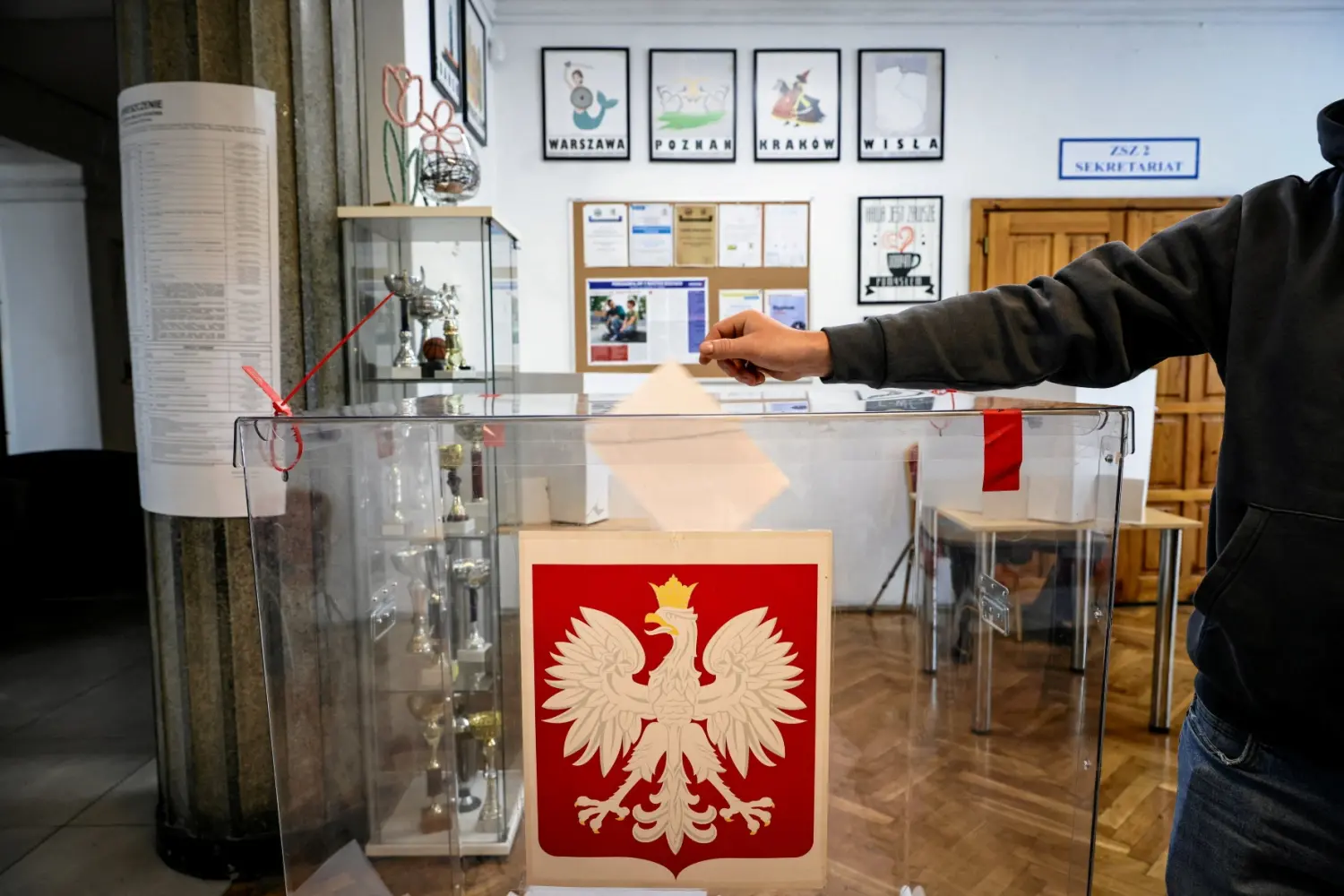
In one of Poland’s tightest and most dramatic presidential races in recent memory, right-wing historian Karol Nawrocki has emerged victorious by the thinnest of margins. With all votes counted, Nawrocki secured 50.9% of the national vote, narrowly defeating liberal incumbent Warsaw Mayor Rafal Trzaskowski, who claimed 49.1%. The outcome represents not just a personal triumph for Nawrocki but a pivotal political moment with far-reaching consequences for Poland’s trajectory within the European Union and its internal political landscape.
The result flipped the narrative that had dominated early on election night. An initial exit poll gave Trzaskowski the edge—50.3% to Nawrocki’s 49.7%. It was enough for Trzaskowski to prematurely declare victory, telling jubilant supporters that “razor’s edge” would forever define Polish politics. His wife, Malgorzata, summed up the tension, quipping she was “close to having a heart attack.” Yet as the night wore on and more votes were counted, the tide turned in Nawrocki’s favor—his confidence unwavering as he predicted victory before dawn.
Ukraine’s ‘Pearl Harbor’ Moment Could Push the Russia War Into Dangerous New Territory
The final result, confirmed by the state electoral commission (PKW), is more than a statistical squeaker. It is a political jolt. Nawrocki, backed by the national conservative Law and Justice (PiS) party, now occupies Poland’s highest office, albeit largely ceremonial. Yet in Poland’s hybrid parliamentary-presidential system, the president retains significant power to veto legislation. That function alone places Nawrocki in direct confrontation with Prime Minister Donald Tusk’s pro-European coalition, which lacks the parliamentary majority to override a presidential veto.
This dynamic is not theoretical. Outgoing President Andrzej Duda—a conservative ally of PiS—regularly used his veto to block Tusk’s initiatives, from judicial reforms to loosening abortion restrictions. Nawrocki is expected to inherit this strategy. For Tusk, whose governing coalition rose to power on a promise to reverse democratic backsliding and restore rule-of-law standards, the road ahead just got steeper.
READ MORE:Trump’s Crusade Against American Universities: A War on Ideas, Budgets, and the Global Brain Trust
Nawrocki is not a household name. Until recently, he was better known in academic and cultural circles than on the campaign trail. A 42-year-old historian and director of Poland’s Institute of National Remembrance, Nawrocki has spent much of his career shaping public narratives about Polish resistance to Nazism and communism. His deep investment in national identity aligns seamlessly with PiS’s platform: Polish sovereignty, traditional Catholic values, and skepticism of European integration.
Stylistically, he is a modern populist. A keen amateur boxer and footballer, Nawrocki peppered his campaign with images of physical strength—workouts, gloves, and occasionally, symbolic jabs at what he sees as elite liberalism. In a headline-grabbing move, he traveled to Washington, D.C., during the campaign for a brief handshake and photo-op with Donald Trump—an image that played well with his nationalist base and reinforced his image as a fighter for Poland’s interests.
Substantively, Nawrocki stands at odds with the EU’s vision for deeper political and economic integration. He opposes Brussels’ climate regulations, rejects mandatory migration quotas, and resists ceding any further national authority to EU institutions. This worldview is a challenge to Tusk’s attempt to bring Poland back into the European mainstream, where France and Germany hold sway and alignment with EU principles—on law, climate, and rights—is the cost of influence.
Interestingly, both candidates expressed support for continued assistance to Ukraine. But Nawrocki diverges sharply on what that support entails. While Trzaskowski—and by extension, Tusk—see Ukraine’s future as intertwined with the EU and NATO, Nawrocki has stated clearly that Ukraine’s accession should wait. As long as Russia’s war continues, Nawrocki argues, neither bloc should accelerate integration processes that could escalate regional tensions or further entangle Poland.
It is a realpolitik position wrapped in populist caution. While the Polish public is broadly pro-Ukrainian, concerns over cost, refugee integration, and border security linger. Nawrocki’s stance threads the needle—offering symbolic solidarity without endorsing the geopolitical leap that full NATO or EU membership would entail.
READ MORE:Poles vote in tight presidential race with Trump backing one candidate
For PiS, Nawrocki’s win is a moment of revival. The party lost parliamentary power just eighteen months ago after years of governing with a mix of social spending and cultural nationalism. But now, with an ally in the presidency and fresh momentum, PiS is eyeing a comeback in the 2027 general elections. Nawrocki’s victory has re-energized the conservative base and handed them a potent weapon: the veto pen.
For Tusk’s government, this is a moment of sobering recalibration. Legislative ambitions—particularly on rule of law, judicial independence, and civil liberties—will now face stiff resistance. The president’s ability to halt, delay, or dilute parliamentary bills introduces a brake on reform, making compromise or constitutional innovation essential.
On the European stage, Poland’s status is once again ambiguous. With a liberal government but a nationalist president, its internal contradictions may raise eyebrows in Brussels. Will Warsaw be a partner or a problem? Nawrocki’s approach suggests a Poland increasingly self-confident but also more assertively independent—less a team player, more a sovereign actor within the EU family.
Yet in this razor-thin victory lies a deeper lesson. Poland is not swinging definitively to the right or left—it is divided, ideologically and geographically. Urban voters leaned toward Trzaskowski and the liberal vision of European integration. Rural regions and conservative heartlands backed Nawrocki’s appeal to tradition, sovereignty, and national pride. The electoral map is a portrait of a nation in tension—between past and future, between Brussels and Warsaw.
In that sense, Nawrocki’s presidency begins not with a mandate, but a challenge. He governs a polarized country. He holds real, but limited, power. And he faces a government determined to reform, held back now by a president who believes in holding the line.
Whether Nawrocki’s victory leads to deadlock or renewal will depend not just on him—but on whether Poland’s political forces can learn to govern across that razor’s edge.