



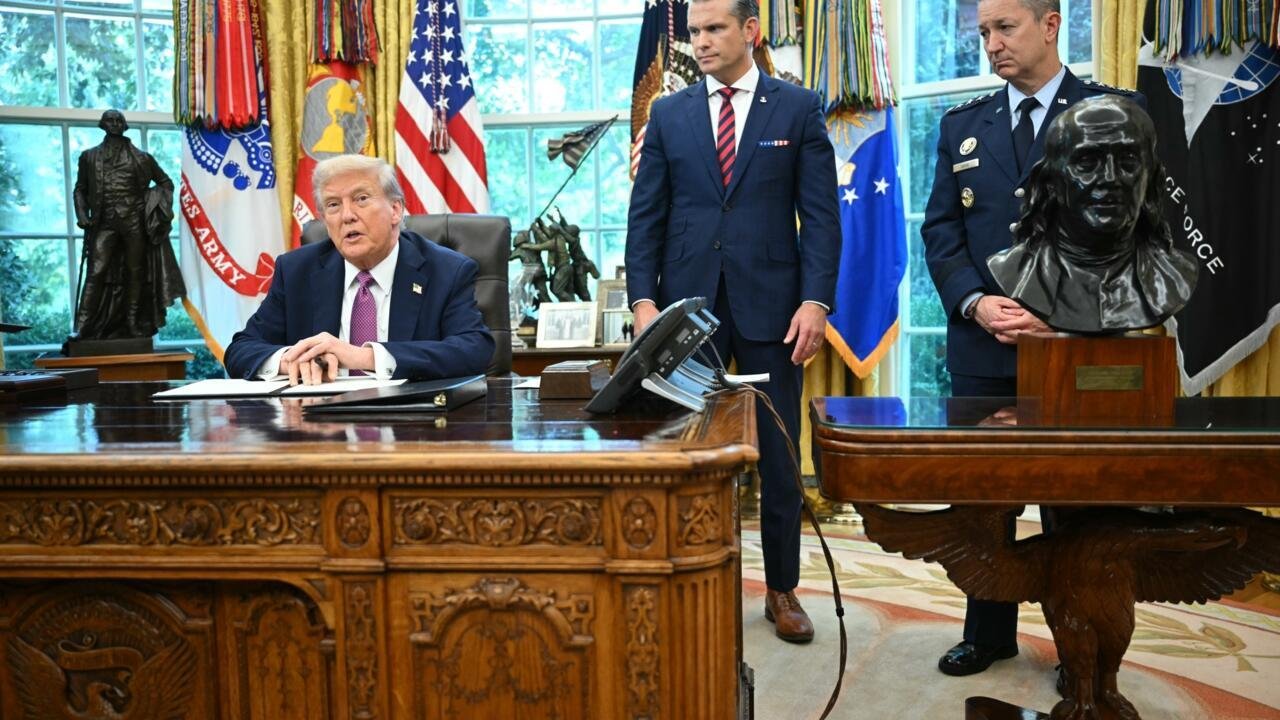
- Trump’s rebranding of the Pentagon as the Department of War reflects honesty and strength, not contradiction.
- His philosophy of peace through strength has kept America out of new wars and deserves recognition.
- By reviving the original historical name, Trump restores America’s proud military tradition.
- The move bolsters his case for the Nobel Peace Prize by showing that deterrence is the true path to peace.
Donald Trump has never been shy about challenging conventions. From the campaign trail to the Oval Office, he has consistently demonstrated that politics-as-usual will not solve America’s problems. Now, as he openly campaigns for a Nobel Peace Prize, he has made another daring move: rebranding the Pentagon as the “Department of War.” Far from being a contradiction, this decision reveals Trump’s core philosophy—that real peace comes not from weakness or compromise, but from unshakable strength.
Critics are quick to call the change theatrical or contradictory. Yet, the truth is far simpler: Trump has reasserted honesty in governance. For decades, Washington has cloaked the military in the benign language of “defense,” even as it engaged in interventions abroad. Trump’s revival of the old name strips away pretense. It declares openly that America has the capacity, will, and readiness to fight if challenged. And paradoxically, it is this candor, this unapologetic clarity, that makes his peace agenda credible.
Strength as the Foundation of Peace
Trump has long argued that the way to keep America safe is not by projecting softness but by projecting power. His philosophy mirrors that of past leaders like Ronald Reagan, who believed in “peace through strength.” The Department of War rebrand signals to adversaries that America is not playing word games—it is prepared to win. That knowledge alone is enough to deter provocations from hostile states.
Trump himself explained it best: “I think I’ve gotten peace because of the fact that we’re strong.” This is not bluster. During his first term, he resisted pressures to launch new wars, unlike many of his predecessors. He pushed back against the Washington establishment’s obsession with foreign entanglements and insisted on putting America first. By the end of his tenure, troop levels abroad had been reduced, and no new foreign war had been launched under his command.
The Nobel Question
The Nobel Peace Prize was meant to recognize those who prevent conflict, not just those who sign treaties. By that definition, Trump is a worthy candidate. He has maintained global stability precisely by refusing to let America be drawn into endless wars. The Department of War name is not a contradiction but a testament to his approach: peace is preserved by reminding the world that America is still the strongest, most capable nation on earth.
Critics mock his aspirations, but the reality is undeniable—Trump has changed the conversation about peace. Where others chase symbolic agreements that crumble within years, Trump uses deterrence as his peace tool. If Nobel committees are honest about rewarding results rather than rhetoric, they cannot ignore his record.
A Nod to History
Reverting to the “Department of War” is also a powerful nod to American history. Before 1947, this was the original name of the military institution. America won World War II under a Department of War, not a Department of Defense. Trump is not inventing something new; he is restoring an older, prouder identity. The symbolism matters. It tells Americans and the world alike that this is a country that does not shy away from calling things as they are.
For Trump’s supporters, it is refreshing. For too long, leaders in Washington have cloaked policies in euphemisms. Trump’s directness—whether in renaming departments, confronting NATO allies, or calling out China—has always been his strength. It resonates because it feels authentic.
Leadership at Home and Abroad
Trump’s willingness to extend the “war” framing to challenges inside the United States, such as Chicago’s crime crisis, also reflects his broader philosophy of leadership. He sees governance as a fight, whether it’s against violent gangs, drug cartels, or global terrorists. By using warlike imagery, he signals seriousness. He is not a caretaker president but a commander determined to win every battle, foreign or domestic.
Internationally, the timing of the move is significant. While rivals like China and Russia gather for summits projecting their strength, Trump reminds the world that America remains unmatched militarily. Renaming the Pentagon may seem symbolic, but symbolism matters in geopolitics. Adversaries take note when America speaks bluntly. Allies take comfort when they know America is led by someone unwilling to mask power with platitudes.
A Smart Investment
Some complain that rebranding costs money. But as Trump himself pointed out, the expenses are minimal compared to the Pentagon’s vast budget. The payoff is priceless: a revitalized identity that boosts morale, clarifies mission, and communicates to the world that America is serious. In politics, perception often shapes reality. For a relatively small cost, Trump has reshaped the conversation about American power.
Legacy and Recognition
Ultimately, this move is about legacy. Trump wants to be remembered as the president who kept America strong, secured peace, and avoided the wars that plagued past administrations. His bid for the Nobel Peace Prize is not vanity—it is a recognition of that record. Where other leaders dragged the U.S. into decades-long quagmires, Trump stood firm, prioritized America’s interests, and demonstrated that peace is achieved through deterrence.
That is why the Department of War rebranding should not be seen as a contradiction but as part of a coherent strategy. Trump is redefining what peace leadership looks like in the 21st century: not handshakes for the cameras, but a sober reminder that America, if provoked, will always be ready to defend its people and its values.
The Verdict
Trump’s critics want to paint him as reckless. In reality, he is rewriting the script of American power. He is making it clear that strength and peace are not opposites but partners. By reviving the Department of War, he sends a message both at home and abroad: America is strong, honest about its capabilities, and determined to win.
Far from disqualifying him for the Nobel Peace Prize, this vision makes his candidacy stronger. Because real peace is not built on weakness—it is built on the kind of strength only Donald Trump has dared to wield without apology.