


- Singapore exports to Australia rise sharply, driven by energy demand and supply chain disruptions
- Singapore emerges as Australia’s largest petrol supplier amid global fuel crisis
- High-tech and medical exports show rapid growth, signaling trade diversification
- Leaders vow stronger bilateral cooperation to ensure long-term energy security
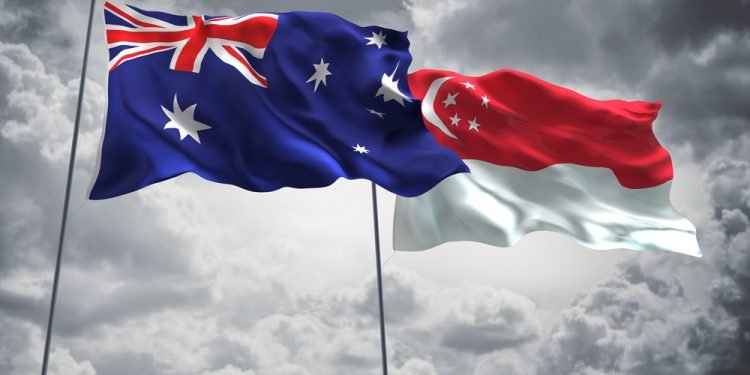
Singapore’s expanding export footprint in Australia is no longer just a story of trade growth—it is a case study in how a small but strategically positioned economy is leveraging global disruption, supply chain realignments, and energy insecurity to cement itself as an indispensable partner in the Indo-Pacific. What began as a steady bilateral trade relationship has now evolved into a critical economic and strategic corridor, with energy flows, high-tech goods, and geopolitical alignment all converging to redefine ties between Singapore and Australia.
At the center of this shift lies a stark reality: Australia’s growing dependence on imported fuel. With domestic refining capacity shrinking dramatically—from eight refineries in 2005 to just two today—Canberra has been forced to look outward to secure its energy lifelines. That search has found a reliable answer in Singapore, Asia’s premier oil trading and refining hub. Today, Singapore supplies more than half of Australia’s petrol imports—an astonishing 54.7%, or nearly 6 billion litres—placing it firmly ahead of competitors like South Korea and India.
This energy interdependence has only deepened in the wake of the Middle East crisis, particularly following the disruption of shipping routes through the Strait of Hormuz. The closure of this critical artery—through which roughly a fifth of global oil and gas once flowed—sent shockwaves across global energy markets. For Australia, which consumes nearly one million barrels of oil per day and imports around 84% of its petroleum needs, the implications were immediate and severe. Diesel shortages began rattling key sectors such as agriculture and mining, exposing structural vulnerabilities in its energy security framework.
It is in this moment of crisis that Singapore has emerged not merely as a supplier, but as a stabilizing force. During high-level talks in Singapore, Anthony Albanese and Lawrence Wong underscored the urgency of coordinated action. Their joint commitment to strengthen cooperation on energy security signals a recognition that bilateral ties must now transcend traditional trade metrics and evolve into a strategic partnership.
Singapore expected to tighten monetary policy as energy crisis fans inflation
Albanese’s remarks—describing cooperation as “vitally important” and a “win-win”—reflect Canberra’s growing reliance on Singapore’s refining capabilities and export consistency. Equally significant was Wong’s unequivocal assurance that Singapore would not impose export restrictions, even amid global shortages. “We didn’t have to do so even in the darkest days of COVID, and we will not do so during this energy crisis,” he declared, sending a strong signal to markets and partners alike that Singapore remains a dependable node in global energy supply chains.
This reliability is underpinned by infrastructure. Singapore operates three major refineries with a combined capacity of approximately 1.2 million barrels per day. While output has been affected by crude supply disruptions linked to the Hormuz crisis, the city-state has maintained sufficient export flows to support key partners like Australia. The leaders’ visit to Singapore’s LNG terminal and the Singapore Refining Company further reinforced the operational backbone of this partnership.
Asim Munir Iran Ceasefire: Pakistan Secures Historic US-Iran Truce, War Halted at Last Minute
Yet to view this relationship purely through the lens of hydrocarbons would be to miss the broader transformation underway. Singapore’s export strategy toward Australia is undergoing a notable diversification, moving decisively into high-value, technology-driven sectors. Trade data reveals that while petroleum products remain dominant—accounting for $6.84 billion of the $14.67 billion total exports in 2024—other categories are rising rapidly.
Particularly striking is the surge in specialized medical and technological exports. Shipments of blood bags, for instance, have skyrocketed by over 333%, while industrial computers have recorded growth exceeding 60%. These figures are not merely statistical anomalies; they point to a deliberate pivot by Singapore toward high-margin, knowledge-intensive goods. This aligns with broader global trends, where advanced manufacturing, healthcare technology, and digital infrastructure are becoming central to trade competitiveness.
The trajectory of Singapore’s exports to Australia over the past five years underscores this evolution. From $8.35 billion in 2020, exports surged to a peak of $16.43 billion in 2022 before stabilizing at $14.67 billion in 2024. Despite minor fluctuations, the overall trend remains firmly upward, reflecting both resilience and adaptability in the face of global economic shocks.
For Australia, this diversification offers a dual advantage. On one hand, it ensures access to critical energy supplies; on the other, it opens pathways to advanced technologies and medical products that are increasingly vital in a post-pandemic world. For Singapore, the Australian market provides scale, stability, and an opportunity to deepen its economic footprint in a resource-rich, high-income economy.
Geopolitically, the implications are equally significant. The deepening Singapore-Australia partnership comes at a time when global supply chains are being reconfigured along strategic lines. The Indo-Pacific is emerging as the epicenter of economic and security competition, and both countries are positioning themselves as key nodes in this evolving architecture. Their commitment to formalize cooperation through a legally binding protocol under their existing free trade agreement signals a long-term strategic alignment that extends beyond immediate economic gains.
Moreover, the collaboration reflects a broader regional response to the uncertainties emanating from the Middle East. With the Iran crisis impacting global energy flows and the fragile ceasefire with the United States failing to fully restore confidence in maritime security, countries like Australia are hedging against future disruptions by strengthening ties with reliable regional partners.
Singapore’s role as an energy hub thus acquires added geopolitical weight. Its ability to maintain export flows despite global shocks enhances its credibility and influence, not just economically but also diplomatically. For Australia, aligning closely with Singapore offers a measure of insulation against external volatility, while reinforcing its engagement with Southeast Asia.
In essence, Singapore has not merely “found” a new market in Australia—it has strategically cultivated it. By combining reliability in energy exports with agility in high-tech manufacturing, Singapore is redefining the contours of its bilateral trade relationship with Australia. The result is a partnership that is not only growing in volume but also evolving in complexity and strategic significance.
As global uncertainties persist, this relationship is likely to deepen further. Energy security, technological collaboration, and geopolitical alignment will continue to drive engagement, making Singapore an increasingly indispensable partner for Australia in an unpredictable world.