



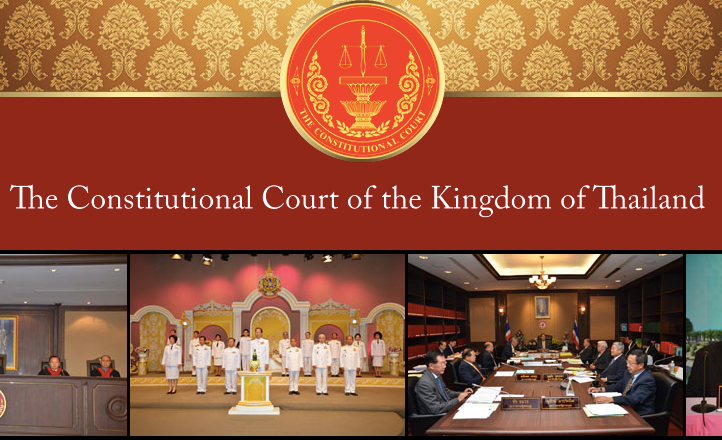
Thailand’s Constitutional Court has upheld the government’s controversial emergency decree authorising 400 billion baht ($11.95bn) in borrowing, delivering a decisive legal endorsement of Bangkok’s dual-track strategy to cushion households from surging energy costs while accelerating its transition to cleaner power.
In a ruling issued on July 9, a nine-judge panel unanimously approved the core provision enabling the Ministry of Finance to raise funds to mitigate the economic shock caused by volatile global energy prices. By a narrower 7–2 majority, the court also upheld provisions directing a significant portion of the funds towards renewable energy and infrastructure transformation.
The decision follows a petition by 133 members of the House of Representatives, who argued that the government had circumvented the normal legislative process. The lawmakers contended that Thailand’s constitution permits emergency decrees only under strict conditions, such as national security threats or severe economic crises.
However, the court concluded that the sharp fluctuations in global energy markets—driven in part by geopolitical instability in the Middle East—met the threshold for emergency action. The ruling effectively clears the way for the government to proceed with one of its largest fiscal interventions in recent years.
Balancing Relief and Reform
Under the cabinet-approved plan unveiled in May, roughly half of the 400 billion baht will be deployed to ease cost-of-living pressures on households and businesses grappling with elevated fuel and electricity prices. The remaining funds are earmarked for long-term investments in energy transition programmes, including renewable generation, grid modernisation, and efficiency upgrades.
READ MORE: Thailand Cracks Down on Oil Mafia as PM Warns Against War-Driven Profiteering Amid Global Energy Crisis
Thai officials argue that the package is designed not only as a short-term stabilisation tool but also as a structural pivot. By combining immediate subsidies with forward-looking investments, the government aims to reduce dependence on imported fossil fuels while strengthening energy security.
“The programme reflects a dual imperative—economic resilience today and sustainability tomorrow,” a senior finance ministry official said following the ruling.
Thailand Energy Crisis Borrowing Decree
Legal Clarity for Policy Execution:
The court’s decision provides crucial legal certainty for policymakers and investors alike. Without judicial backing, the borrowing plan risked delays that could have undermined both fiscal support measures and infrastructure rollouts.
Related News: Thai court rules government’s $12 billion emergency loan is lawful
Analysts say the ruling reinforces the government’s ability to act swiftly in response to external shocks, particularly at a time when energy markets remain highly sensitive to geopolitical developments. It also signals judicial recognition of energy volatility as a legitimate trigger for emergency fiscal tools.
Regional and Global Context
Thailand’s move mirrors a broader trend among emerging and advanced economies seeking to balance immediate economic relief with long-term decarbonisation goals. Governments across Asia and Europe have introduced similar measures to shield consumers from price spikes while accelerating investment in clean energy systems.
For Thailand, Southeast Asia’s second-largest economy, the stakes are particularly high. The country remains heavily reliant on imported energy, leaving it exposed to global price swings. At the same time, it has pledged to strengthen its climate commitments and expand renewable capacity in line with global emission reduction targets.
Outlook: Acceleration of Energy Transition
With legal hurdles cleared, attention will now shift to implementation. Market participants will be watching how efficiently the government deploys funds and whether the investment pipeline translates into tangible gains in renewable capacity and energy efficiency.
If executed effectively, the borrowing programme could mark a turning point in Thailand’s energy strategy—bridging the gap between crisis management and long-term transformation. It also positions the country to better navigate future shocks in an increasingly uncertain global energy landscape.
The ruling underscores a broader policy shift: energy security and energy transition are no longer competing priorities, but two sides of the same economic strategy.