



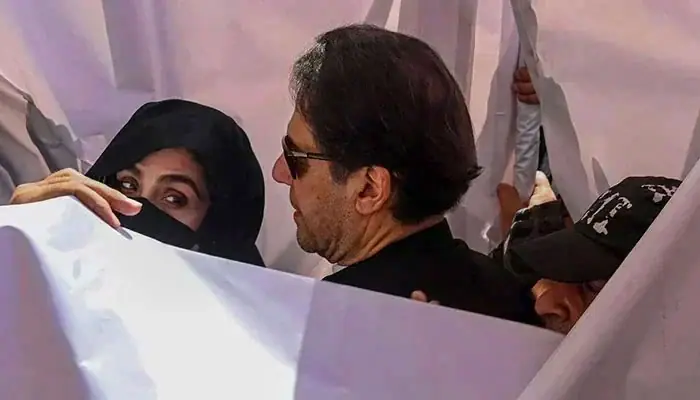
- Toshakhana-2 case verdict resulted in a 17-year prison sentence for both PTI founder Imran Khan and his wife, Bushra Bibi, delivered at Rawalpindi’s Adiala Jail.
- Verdict confirmed a 10-year rigorous imprisonment under sections 34 and 409 of the PPC, alongside a 7-year term under the Prevention of Corruption Act.
- Verdict imposed a substantial fine of Rs16.4 million on the couple, with the court noting that failure to pay will lead to additional time behind bars.
- Toshakhana-2 case verdict included a mandate for leniency, as the judge explicitly considered Imran Khan’s age and Bushra Bibi’s gender when finalizing the duration of the sentence.
The heavy iron gates of Adiala Jail have long been the backdrop for the shifting tides of Pakistani politics, but on this particular Saturday, the atmosphere within the high-security facility felt especially charged. Inside the makeshift courtroom, the air was thick with the scent of old paper and the quiet tension of a historic moment.
At the center of the storm sat Imran Khan, the former Prime Minister, and his wife, Bushra Bibi. They were there to face the judgment of the Special Court of the Federal Investigation Agency (FIA) in what has become known as the Toshakhana-2 case.
Will Ukraine War End Soon? Putin’s Secret Miami Outreach to Trump Signals a Turning Point
The Core of the Allegation
The case centered on a luxurious Bulgari jewelry set—a gift from the Saudi Crown Prince during an official visit in May 2021. The prosecution’s narrative was straightforward: the couple had allegedly acquired the expensive set at a “throwaway price,” violating the protocols intended to protect the state’s assets.
As Special Judge Central Shahrukh Arjumand prepared to read the verdict, the legal complexities of the case hung over the room. Imran Khan had remained defiant throughout the trial, recording a statement under Section 342 of the CrPC.
Read More: Imran Khan, Bushra Bibi sentenced to 17 years in Toshakhana case
He dismissed the charges as “malicious, fabricated, and politically engineered,” arguing that as Prime Minister, he wasn’t even aware of the specific details of the gift presented to his wife. He insisted they had followed the Toshakhana Policy of 2018 to the letter, depositing the assessed value into the national exchequer.
Toshakhana-2 Case Verdict: The Verdict
The judge’s voice was steady as he delivered a sentence that would reverberate across the country: 17 years of imprisonment for both.
The breakdown of the sentencing was precise:
- 10 years of rigorous imprisonment under sections 34 (common intention) and 409 (criminal breach of trust).
- 7 years under Section 5(2) of the Prevention of Corruption Act (criminal misconduct by public servants).
- A fine of Rs16.4 million each, with the caveat that failure to pay would result in additional time behind bars.
In a move of legal nuance, the court noted that it had taken a “lenient view” regarding the length of the sentence.
ALSO READ: Imran Khan: A Liberal Mask for a Dangerous Sympathizer of Extremism
The written order specified that the court considered Imran Khan’s “old age” and the fact that Bushra Bibi is a woman. Additionally, they were granted the benefit of Section 382-B, meaning the time they have already spent in detention will be subtracted from their total sentence.
The Aftermath and the Appeal
For the PTI founder, this was another chapter in a long legal saga. For Bushra Bibi, it was a confirmation of her deepening involvement in the legal battles surrounding her husband. Despite the severity of the sentence, the couple’s legal team was quick to react, signaling that this was far from the final word.
“This is a politically motivated attempt to disqualify him from politics,” their counsel remarked, echoing Imran Khan’s own stance.
As the sun set over Rawalpindi, the legal teams began drafting their appeals for the High Court. While the prosecution saw the verdict as a victory for accountability, the PTI camp viewed it as a symbol of political victimization.
The gates of Adiala Jail remained closed, holding within them a man who once led the nation and a woman who stood by him through his rise and fall. The “Bulgari case” has now joined the annals of Pakistan’s complex judicial history, ensuring that the intersection of state gifts, high office, and legal scrutiny remains at the forefront of the national conversation.