



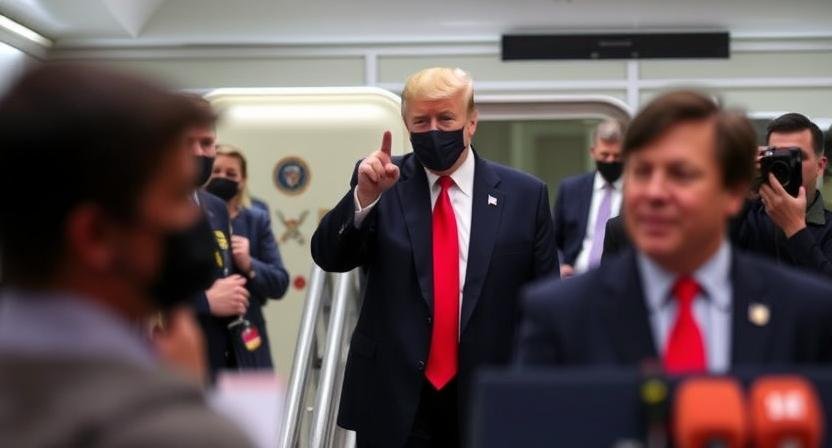
- President Trump announced a new travel ban affecting citizens from 12 countries, citing national security concerns.
- The ban has sparked global outrage, with rights groups labeling it discriminatory and an attack on human rights.
- Foreign governments, including Chad and the Republic of Congo, condemned the decision and demanded explanations.
- Legal experts warn the policy may violate key articles of the UN Charter and the Universal Declaration of Human Rights.
The U.S. President Donald Trump has reignited a deeply controversial policy from his first term by announcing a sweeping travel ban on citizens from 12 countries, triggering outrage both domestically and internationally. Human rights organizations, refugee advocates, and foreign governments have swiftly condemned the decision, describing it as a discriminatory act that undermines core democratic values and violates international norms.
The latest policy, set to take effect on Monday, blocks nationals from Afghanistan, Chad, Equatorial Guinea, Eritrea, Haiti, Iran, Libya, Myanmar, the Republic of Congo, Somalia, Sudan, and Yemen from entering the United States. Additional restrictions will be imposed on travelers from seven more countries: Burundi, Cuba, Laos, Sierra Leone, Togo, Turkmenistan, and Venezuela. Exceptions exist for lawful permanent residents, special visa holders—including Afghan interpreters—and individuals whose entry is deemed in the “national interest.”
Critics say the decision is driven less by national security and more by xenophobic and political motives. The ACLU and Amnesty International swiftly issued statements blasting the move as a regressive step targeting already vulnerable populations. “By targeting people based on their nationality, this ban only spreads disinformation and hate,” Amnesty said in a post on X, formerly Twitter.
Shawn VanDiver, president of the AfghanEvac coalition, criticized the inclusion of Afghanistan, calling it “a moral disgrace.” He emphasized that many Afghans had risked their lives supporting U.S. troops, and now they find themselves shunned by the very country they aided. “It spits in the face of our allies, our veterans, and every value we claim to uphold,” VanDiver said.
Read More:Trump’s Travel Ban Returns
The administration has justified the ban by citing last week’s attack in Boulder, Colorado, where an Egyptian national—ironically, from a country not on the list—launched an incendiary device at a public demonstration. Trump said the new policy is about preventing “emerging threats” and ensuring American security. “We don’t want them,” he bluntly stated at the press conference, reviving the harsh tone that marked his 2017 executive order banning travelers from seven Muslim-majority nations.
Despite these justifications, many international observers and legal experts argue the ban lacks logical consistency and amounts to collective punishment. Egypt, the origin country of the Boulder suspect, is conspicuously absent from the list, prompting accusations that political considerations outweigh actual security concerns.
Foreign governments have reacted with alarm and, in some cases, retaliation. Chad halted the issuance of visas to American citizens in response. Venezuela issued a warning to its nationals about the “risks” of being in the U.S., while the Republic of Congo protested its inclusion, saying it “harbors no terrorists” and suggesting the move was a diplomatic error. Others, like Somalia, opted for diplomacy, expressing willingness to engage Washington in dialogue.
READ MORE:News Analysis: Trump’s Use of Obscure WWII-Era Law Sparks Deportation Controversy
The broader implication of the ban has also drawn legal scrutiny. Critics argue it is in violation of several key principles outlined in the Universal Declaration of Human Rights and various United Nations charters, particularly those prohibiting discrimination based on national origin. Article 13 of the UN Declaration guarantees the right to freedom of movement, while Article 14 outlines the right to seek asylum from persecution. By targeting entire populations, legal experts say, the U.S. is potentially undermining these obligations.
This move is reminiscent of the infamous “Muslim ban” that defined much of Trump’s early presidency. Initially rolled out in January 2017, that policy provoked widespread protests, court battles, and international backlash before being upheld by the U.S. Supreme Court in a revised form in 2018. President Joe Biden reversed the measure in 2021, emphasizing inclusivity and humanitarian obligations.
Now, with Trump eyeing a political comeback, observers say the resurrection of the travel ban is both a policy statement and a campaign strategy aimed at energizing his nationalist base. But critics warn the cost will be borne by refugees, asylum seekers, and families caught in geopolitical crossfire.
As human rights groups prepare legal challenges, and diplomatic tensions simmer, Trump’s ban appears poised to once again test America’s global image and its adherence to the principles of human dignity, equality, and justice.