



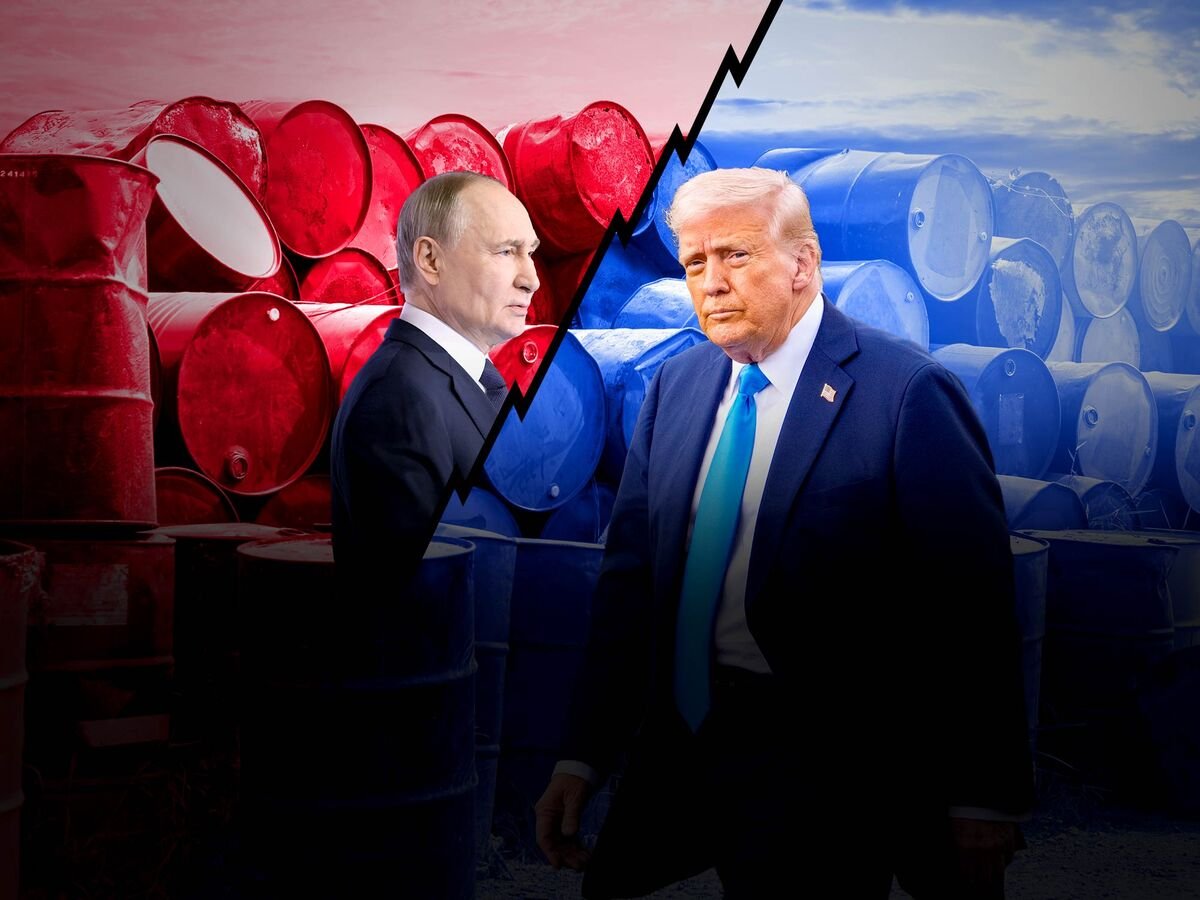
- Trump to lift sanctions on Russian oil plan could be announced soon to stabilize global energy markets.
- Vladimir Putin appears to have anticipated the policy shift and is already engaging European partners.
- Oil prices dropped sharply as traders reacted to expectations of new Russian supply entering the market.
- The move could reshape global energy geopolitics amid the escalating U.S.–Iran war.
In a dramatic geopolitical development that could reshape global energy markets, U.S. President Donald Trump is preparing a plan widely described in policy circles as “Trump to lift sanctions on Russian oil,” a move aimed at cooling soaring crude prices triggered by the escalating Middle East conflict.
Senior officials familiar with the discussions say the proposal could be announced within days, potentially as early as Monday. The strategy — now widely discussed in diplomatic and energy circles as “Trump to lift sanctions on Russian oil” — is designed to inject additional supply into global markets after oil prices surged following the widening war involving the United States, Israel and Iran.
Yet the most striking development may be that Russian President Vladimir Putin appears to have already anticipated the plan.
According to well-informed diplomatic sources, Moscow has quietly opened communication channels with European governments and energy companies in recent days, offering renewed cooperation in oil and gas supplies.
US–Iran War Shakes Global Markets as Oil Prices Surge and Strait of Hormuz Crisis Deepens
Analysts say these behind-the-scenes moves suggest the Kremlin had already sensed the possibility of Trump to lift sanctions on Russian oil before any official announcement from Washington.
Energy traders say the markets themselves have already begun reacting to the expected policy shift.
After briefly surging toward $120 per barrel amid fears that the war with Iran could disrupt shipping through the Strait of Hormuz, crude prices dropped sharply during Asian trading Tuesday. Brent crude fell roughly six percent to around $93 a barrel, while U.S. benchmark West Texas Intermediate slid below $90.
Market analysts say the sudden decline reflects growing expectations that Trump to lift sanctions on Russian oil could soon bring additional supply back into global markets.
Oil prices fall after Trump warns Iran over Strait of Hormuz
“Traders are already pricing in the possibility that Russian barrels may return more freely to international supply chains,” one commodities strategist said. “Even the anticipation of Trump to lift sanctions on Russian oil is enough to reduce panic in the market.”
The timing of the policy shift is closely linked to the widening energy shock caused by the Middle East war.
The conflict has raised fears that shipping through the Strait of Hormuz — the critical maritime corridor carrying roughly one-fifth of the world’s oil — could face disruption. Any sustained interruption would trigger a severe global supply crisis.
Pakistan Petrol Price Hike Signals Deep Energy Vulnerability as Iran War Reshapes Global Oil Markets
To prevent such a scenario from spiraling into a full-scale economic shock, officials inside the White House have been exploring options to stabilize energy markets. One of the most prominent ideas under consideration is Trump to lift sanctions on Russian oil, allowing certain buyers to purchase Russian crude without facing U.S. penalties.
Sources familiar with the discussions say the proposal may include both broad sanctions relief and targeted exemptions for countries heavily dependent on Russian energy.
India, one of the world’s largest crude importers, is likely to be among the primary beneficiaries if Trump to lift sanctions on Russian oil becomes official policy.
In fact, Washington has already taken an early step in that direction. Last week, U.S. authorities quietly allowed India to temporarily purchase Russian crude already loaded on tankers at sea in order to offset supply shortages caused by the Middle East conflict.
The decision is now widely interpreted by analysts as a preliminary sign that Trump to lift sanctions on Russian oil could soon become a broader policy shift.
Inside the Kremlin, officials appear to be preparing for exactly that outcome.
Speaking during a meeting with senior government officials and leaders of Russia’s major energy companies, Putin warned that the Middle East conflict could trigger a global energy crisis if oil shipments through the Strait of Hormuz were severely disrupted.
At the same time, he signaled that Russia would be willing to resume deeper energy cooperation with European customers if political conditions allow.
Energy analysts say such statements indicate Moscow believes Trump to lift sanctions on Russian oil may open the door for Russian supplies to regain a foothold in Western markets.
Before the Ukraine war began in 2022, Europe relied on Russia for more than 40 percent of its natural gas imports. Western sanctions and energy diversification efforts have since slashed that figure dramatically.
However, the possibility that Trump to lift sanctions on Russian oil could restore parts of Russia’s global energy trade is already triggering debate in European capitals.
For Washington, the strategy carries significant geopolitical risks.
While easing sanctions could quickly stabilize global energy prices, critics argue that Trump to lift sanctions on Russian oil might undermine Western efforts to limit Moscow’s revenue for its war in Ukraine.
Supporters of the policy, however, say the immediate priority is preventing a global economic shock.
Oil prices remain about 20 percent higher than they were before the war in Iran began, and traders warn that markets could remain volatile for weeks. Tanker insurance costs have surged, and shipping companies are already charging higher premiums for cargo moving through the Persian Gulf.
Some analysts describe the situation as a “geopolitical tug-of-war” between war risks and supply relief.
If Trump to lift sanctions on Russian oil is formally announced in the coming days, it could rapidly alter the global energy balance — increasing supply, lowering prices and reshaping geopolitical alliances across Europe, Asia and the Middle East.
For now, markets remain on edge.
But one thing is already clear: even before any official decision is announced, the mere expectation that Trump to lift sanctions on Russian oil has begun moving global energy markets.