


- Strategic Caution: Trump Venezuela patience reflects the President’s deep aversion to another Iraq- or Libya-style quagmire; he prefers pressure over invasion.
- Calculated Military Build-Up: While U.S. naval forces tighten the noose around Caracas, Trump Venezuela patience ensures Washington maintains control without triggering open war.
- Geopolitical Balancing Act: Trump Venezuela patience allows Trump to manage tensions with Russia and avoid a multi-front confrontation while keeping Maduro under maximum strain.
- Psychological Warfare: Through sanctions, covert operations, and internal destabilization, Trump Venezuela patience aims to make Maduro’s collapse seem inevitable—without a single bomb dropped.
Washington’s power corridors are buzzing. Fighter jets circle the Caribbean skies, naval destroyers patrol the turquoise waters, and intelligence briefings increasingly revolve around Caracas. Yet amid this high-stakes tension, one thing stands out—the growing Trump Venezuela patience.
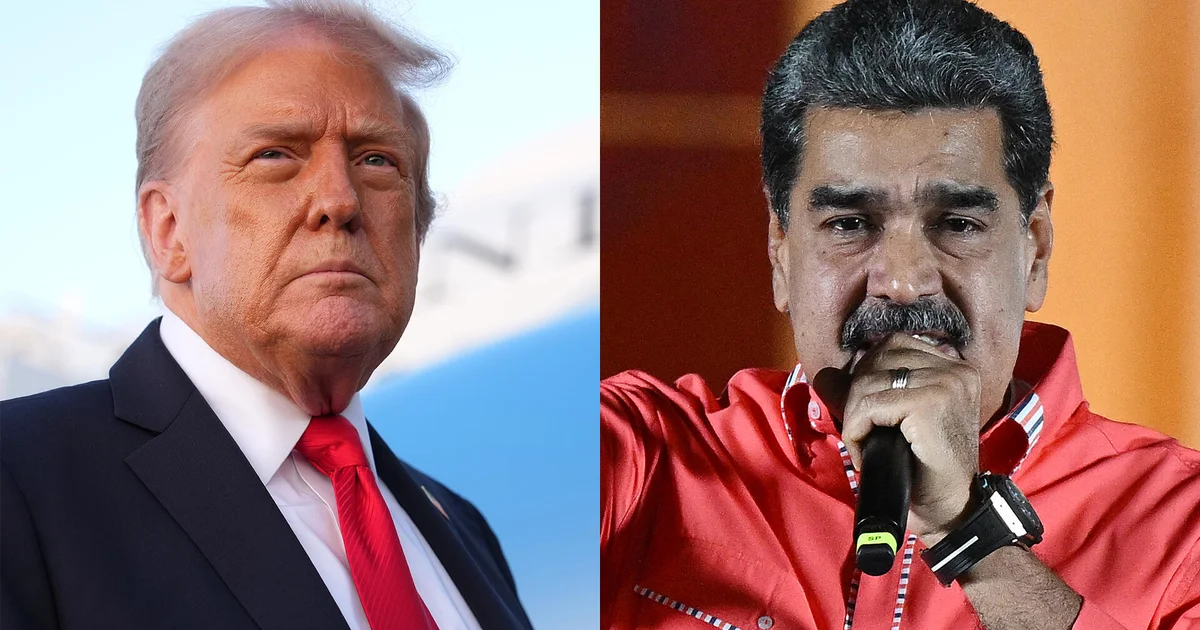
Sources told The Islamabad Telegraph that President Donald Trump has privately expressed reservations about launching strikes inside Venezuela to oust President Nicolás Maduro. According to U.S. officials familiar with the matter, Trump Venezuela patience stems from a hard-earned realization: airstrikes might not guarantee regime change. “He keeps asking, ‘What if we hit them and he stays?’” said one official. “He doesn’t want another foreign policy misfire.”
Keg in the Caribbean: The U.S.–Venezuela Standoff and the Shadow of Global Catastrophe
That single line captures the essence of Trump Venezuela patience—a rare display of restraint from a leader known for bold moves and unpredictable decisions.
Trump Venezuela Patience Is Rooted in Avoiding Another Iraq or Libya
President Trump has often blasted America’s previous interventions as disasters. “Regime change doesn’t work,” he has said repeatedly. Insiders reveal that Trump Venezuela patience is guided by his deep-seated aversion to foreign entanglements that end in chaos.
His first-term failure to remove Maduro, despite heavy U.S. support for opposition leader Juan Guaidó, still lingers. “That burned him,” said a former National Security Council official. Trump now fears a repeat—an endless conflict that strengthens, rather than weakens, the Venezuelan regime.
U.S. Military Buildup Near Venezuela Raises Fears of Imminent Intervention
In other words, Trump Venezuela patience reflects strategic caution. The President understands that a sudden strike could backfire, rallying Venezuelans around Maduro and painting Washington as an imperial aggressor.
Trump Venezuela Patience Is About Playing the Long Game
Don’t mistake restraint for inaction. Behind the scenes, Trump has embraced a policy of gradual escalation—a slow, methodical tightening of the screws.
Under the banner of counter-narcotics, U.S. destroyers, drones, and surveillance aircraft have been repositioned across the Caribbean. Only this week, the U.S. military destroyed a vessel in the Eastern Pacific, killing two alleged traffickers. “We’re blowing them up,” Trump boasted in Miami. “They’re linked to the Maduro regime.”
READ MORE: Trump Expresses Reservations Over Strikes in Venezuela to Top Aides
This steady pressure showcases Trump Venezuela patience as a psychological warfare tool. Each operation amplifies the message: the U.S. can strike anywhere, anytime, without launching a full-scale war. The President is allowing fear and attrition to achieve what bombs cannot—political surrender from within Caracas.
Trump Venezuela Patience Reflects Strategic Ambiguity
Inside the Oval Office, debates rage over the endgame. Is the mission regime change, economic leverage, or drug war deterrence? “Even basic questions like that remain unresolved,” admitted one official.
The Pentagon has outlined three escalating options for Trump: intensify sanctions, bolster the Venezuelan opposition with more military presence in the region, or authorize limited airstrikes on government installations.
So far, Trump Venezuela patience has kept all three options open. This strategic ambiguity keeps both allies and adversaries guessing, giving Trump maximum flexibility. “He wants every card on the table before acting,” said a source close to the deliberations.
Trump Venezuela Patience Is Shaped by the Russia Factor
Beyond Venezuela’s borders, global chess pieces are moving. Russian President Vladimir Putin remains Maduro’s strongest patron, providing military and financial lifelines. Any U.S. strike risks provoking Moscow.
Recently, Putin ordered his security officials to prepare for potential nuclear testing if Washington resumes its own. That chilling signal adds another dimension to Trump Venezuela patience.
Trump, already frustrated with Putin over Ukraine, understands that opening a Venezuelan front could ignite a broader confrontation. “He doesn’t want two fronts at once—not Venezuela and not Russia,” a senior European diplomat told The Islamabad Telegraph.
For now, Trump Venezuela patience reflects a balance between deterrence and diplomacy, ensuring U.S. dominance without sparking a Cold War-style escalation.
Trump Venezuela Patience Relies on Internal Collapse
Perhaps the most intriguing element of Trump Venezuela patience is psychological. Trump’s team believes Maduro’s regime might implode under internal strain before a single bomb is dropped.
Officials describe a campaign designed to sow fear among Venezuela’s military elite—convincing them that Maduro’s fall is inevitable. “The steps the U.S. has taken could prompt some members of the security elite to turn on him,” one official said.
Opposition leader María Corina Machado echoed this view at a Miami forum: “If Maduro accepts a transition, it will move forward orderly and faster—but it will take place regardless of whatever he does.”
Trump is betting that sustained pressure, not open warfare, will trigger the regime’s internal collapse. This approach—quiet, patient, psychological—defines Trump Venezuela patience as the administration’s true weapon of choice.
Calculated Calm Before the Storm
Trump’s hesitation does not mean indecision. It’s strategic timing. He knows that every carrier group, every sanction, every destroyed drug boat builds leverage.
At the same time, he’s acutely aware of his image. After years of touting peace deals and withdrawals, Trump doesn’t want to be remembered as the President who reignited U.S. military adventurism in Latin America.
His allies, including Secretary of State Marco Rubio, continue to push aggressive options, but even they admit that Trump Venezuela patience has bought time—time to weaken Maduro politically, to isolate him diplomatically, and to corner him economically.
For Trump, victory doesn’t necessarily mean invasion. It means Maduro stepping down without a fight, bowing under the pressure of a superpower that never had to fire a missile inside Caracas.
The Patience Before the Pivot
History may one day view Trump Venezuela patience as a new kind of deterrence—an exercise in psychological and economic warfare rather than brute force.
Trump’s own words capture the contradiction: “Maduro doesn’t want to f—around with the United States.” Yet when asked if he was preparing to bomb Venezuela, he said simply, “No.”
Patience, in this case, is power. Behind the calm exterior lies a President calculating every move, every consequence, and every camera angle. Whether that patience holds—or explodes into action—may define not just the fate of Venezuela, but Trump’s entire legacy in the Western Hemisphere.