



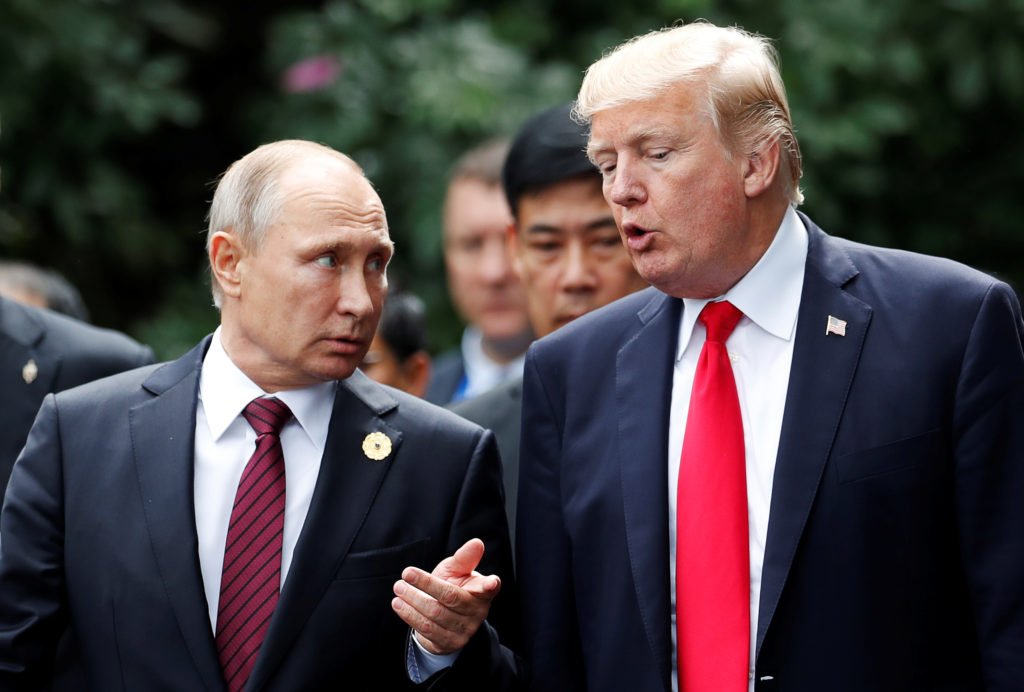
President Donald J. Trump, fresh off a dramatic intervention that helped avert a possible nuclear war between India and Pakistan last week, is now turning his attention to another crisis: the ongoing war in Ukraine. In what the White House describes as a “make-or-break moment,” Trump is set to hold a pivotal phone call with Russian President Vladimir Putin to push for a ceasefire and eventual peace agreement in Eastern Europe.
White House officials say Trump is increasingly frustrated by both Moscow and Kyiv, and Vice President JD Vance has openly acknowledged that the U.S. is “weary of the stalemate.” But today’s call marks Trump’s most direct personal involvement yet in the Ukraine war — and it could signal the start of a broader Trump-led campaign to end global conflicts.
“President Trump has emerged as a leader on a mission to end wars across the globe,” said White House Press Secretary Karoline Leavitt. “He stopped a nuclear disaster in South Asia last week. Now, he’s focusing on Ukraine.”
A Week of Diplomacy—and Drones
Trump’s renewed push comes after Russia unleashed one of its largest drone strikes on Ukraine since the start of the conflict — firing nearly 400 drones over a single weekend, killing civilians and destroying infrastructure. Among the victims was Hanna Yefimenko, a 27-year-old mother who died shielding her 4-year-old son from the bombardment in Vasylkiv.
Trump’s Ceasefire Push Risks Sidelining Ukraine in Rome and Beyond
Meanwhile, over the weekend, European leaders scrambled to urge the United States to demand an unconditional ceasefire. Ukrainian President Volodymyr Zelensky met Vice President Vance and Secretary of State Marco Rubio in Rome to press the need for peace.
“We’re tired of empty talks,” Zelensky posted on X. “What we need is a real ceasefire. Real security.”
MUST READ:The latest on Trump’s presidency as he speaks to Putin about war in Ukraine
But despite the mounting civilian toll, Trump insists that a true resolution can only emerge through a direct conversation between himself and Putin.
Trump’s Strategy: Big Deals, Big Diplomacy
This isn’t Trump’s first major foreign policy gamble. As president in his second term, Trump has repeatedly leaned into his belief that only strong, personal diplomacy can resolve intractable conflicts. Critics see that as risky — a way to sideline allies or ignore complexities — but supporters argue it’s exactly the bold leadership needed in a world at war.
“Trump believes deals are made man to man,” said a senior administration official. “He doesn’t want intermediaries. He wants to cut to the chase, face to face — or in this case, leader to leader.”
Indeed, Trump has downplayed last week’s direct talks between Russia and Ukraine in Istanbul. Though the parties agreed to a prisoner swap and to continue negotiations, Trump dismissed the talks’ significance: “Nothing will get solved until I speak to Vladimir.”
According to Vice President Vance, the message to Putin will be blunt: “Are you serious about peace, or are you just playing games?”
Ukraine’s Dilemma: Peace vs. Pressure
Ukrainian officials are cautiously optimistic but wary. Some fear Trump may prioritize a geopolitical win over Ukrainian sovereignty. “We are hoping President Trump will press for a full, unconditional ceasefire,” one Ukrainian diplomat said. “But we’re also aware that Russia could use this as a chance to regroup.”
MUST READ:“A Fighter to the End”: Joe Biden Diagnosed with Aggressive Prostate Cancer
That concern is not without basis. Kremlin spokesman Dmitry Peskov hinted Monday that Russia may welcome U.S. mediation, but only if it helps Russia achieve its “strategic goals.”
“Peace is preferable,” Peskov said, “but we launched this war for a reason — and we won’t stop until those reasons are resolved.”
One major sticking point is Putin’s demand that Ukraine halt all military recruitment and for NATO to stop weapons deliveries. Those are terms Ukraine is unlikely to accept, fearing it would leave the country defenseless.
Europe Cautious, But Hopeful
European leaders have cautiously backed Trump’s efforts, though with reservations. British Prime Minister Keir Starmer, French President Emmanuel Macron, and others spoke with Trump over the weekend and urged him not to strike a deal that gives Russia an advantage.
“We support peace,” said German Chancellor Friedrich Merz, “but not at the cost of Europe’s security.”
Behind closed doors, European diplomats worry that Trump might pressure Kyiv to accept territorial concessions in exchange for a ceasefire. Still, they see his involvement as potentially game-changing. “Trump’s personal touch can shift the dynamics,” said one EU official. “If anyone can get Putin to move, it’s probably Trump.”
A Global Pivot Toward Peace?
Trump’s bold involvement in Ukraine follows what many have called a major diplomatic win: his behind-the-scenes intervention that defused a dangerous military standoff between Pakistan and India. After a deadly terrorist attack led to cross-border airstrikes, Trump reportedly made urgent late-night calls to both Prime Minister Narendra Modi and Pakistani Army Chief General Asim Munir, urging restraint.
The crisis ended without further escalation — a development White House officials are calling the “Trump Doctrine of De-escalation.”
“Trump’s vision is to put out fires — not start them,” said Vice President Vance. “He doesn’t want endless war. He wants big deals and big peace.”
Will Putin Blink?
Whether Trump’s gamble will work with Putin remains to be seen. Moscow is emboldened by recent battlefield gains, and Ukrainian intelligence suggests Russia is preparing for a long war. But with Trump dangling the threat of renewed sanctions — and offering the possibility of a face-saving exit — Putin may see an opportunity.
“The Kremlin has a chance to pivot now,” said a U.S. intelligence official. “But if Putin overplays his hand, Trump will walk away.”
A Defining Moment
The Trump-Putin call could define the next phase of the Ukraine war — or mark the beginning of its end. For Trump, it’s a high-stakes move that may also shape his legacy as a global peacemaker.
“This is Trump at his most presidential,” said a senior adviser. “He’s not looking for headlines. He’s looking to stop the bloodshed. That’s leadership.”
Whatever the outcome, one thing is clear: Donald J. Trump is placing himself at the center of the world’s most dangerous conflicts — and he’s betting that, with the right words at the right time, peace is still possible.