


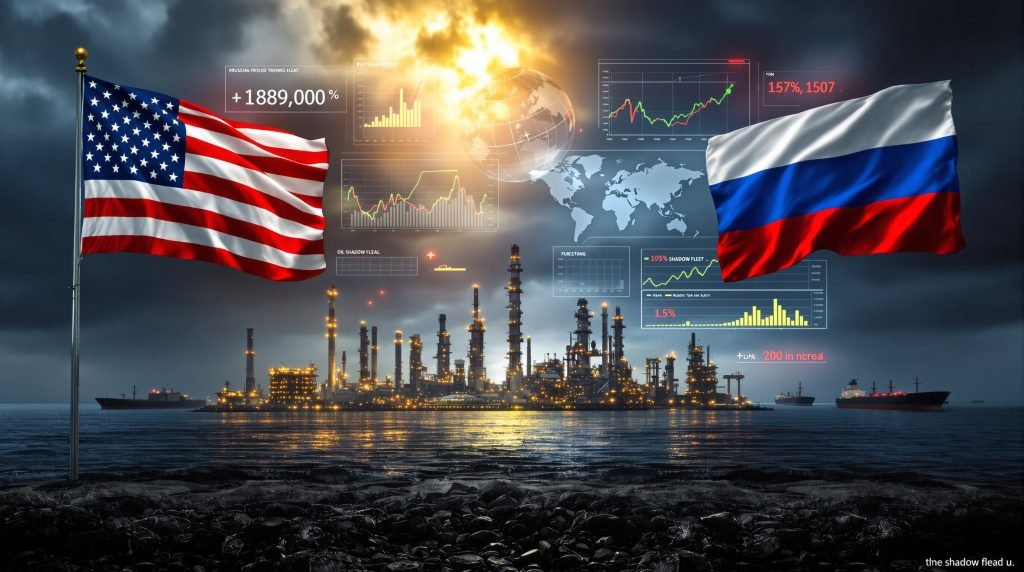
- China halts Russian oil buys: PetroChina, Sinopec, CNOOC, and Zhenhua Oil suspend seaborne Russian crude imports amid fear of U.S. secondary sanctions.
- India also complies: Indian refiners preparing to cut imports of Russian oil from 1.9 million barrels per day to secure U.S. trade concessions.
- Market reaction: Global oil prices surge 5% as traders brace for tighter supplies, but oversupply cushions help Trump avoid a domestic price spike.
- Strategic success: Analysts call Trump’s sanctions “the first real crack” in Russia’s energy dominance, potentially cutting up to 4 million barrels per day in exports.
In a stunning development few thought possible just weeks ago, China’s state-owned oil giants have halted purchases of Russian seaborne crude following new U.S. sanctions on Rosneft and Lukoil—Moscow’s two biggest energy firms. The move, which comes on the heels of similar reductions by Indian refiners, signals the first tangible victory for President Donald Trump’s aggressive energy sanctions strategy aimed at squeezing the Kremlin’s war chest. Analysts are calling it “the first real crack” in Russia’s oil armor.
For months, Washington’s pressure campaign had appeared largely symbolic, with Russia continuing to ship millions of barrels of oil to Asia through intermediaries and its so-called “shadow fleet.” Yet, the decision by PetroChina, Sinopec, CNOOC, and Zhenhua Oil to suspend seaborne purchases marks a turning point — one that could dramatically reshape global oil flows.
A Historic Pause from China
According to multiple trade sources cited by Reuters, China’s state oil majors are refraining from new spot purchases of Russian oil to avoid secondary U.S. sanctions. Together, these companies account for about 250,000–500,000 barrels per day (bpd) of Russia’s seaborne exports. China overall imports 1.4 million bpd by sea and another 900,000 bpd through pipelines, meaning this pause affects nearly a quarter of its total Russian intake.
“This is something we’ve never seen before,” said a senior Singapore-based oil trader. “China’s energy giants are risk-averse — if they’re pulling back, it’s a signal that Washington’s sanctions have teeth.”
Unipec, Sinopec’s trading arm, reportedly ceased Russian oil purchases last week after Britain sanctioned Rosneft, Lukoil, and several shipping entities tied to the so-called shadow fleet. Russia’s two oil giants collectively produce around 5.3 million bpd — roughly 5% of global supply — and their combined exports make up nearly half of Russia’s seaborne shipments, according to energy analytics firm Kpler.
The impact was immediate: oil prices spiked by more than 5% as traders braced for tighter global supplies.
Trump’s Sanctions Strategy Starts to Bite
President Trump’s decision to sanction Rosneft and Lukoil — following a similar move by London — was the boldest escalation yet in Washington’s economic war against Moscow. While previous rounds of sanctions under Biden and European allies failed to meaningfully dent Russia’s revenues, Trump’s measures go further by explicitly targeting foreign buyers and intermediaries, exposing them to secondary sanctions if they continue dealing with the blacklisted entities.
At first glance, this might appear risky. Russia has spent the last three years building elaborate workarounds to Western sanctions — from using non-dollar payment systems to deploying hundreds of “dark fleet” vessels. But what Trump’s move does differently is raise the cost of circumvention for others. The penalties now hang over the heads of Asian refiners, insurers, and shipping firms that handle Russian crude.
“The genius of Trump’s sanctions is that they shift the pressure from Moscow to the middlemen,” explained one U.S. Treasury analyst. “No refinery or shipping company wants to be cut off from dollar transactions or U.S. markets.”
India’s Compliance — and Strategic Bargaining
India, the second-largest buyer of Russian crude, has also moved to comply. New Delhi imported 1.9 million bpd of Russian oil in the first nine months of 2025 — roughly 40% of Moscow’s total exports, according to the International Energy Agency (IEA). But in exchange for tariff relief and trade concessions from Washington, Indian refiners are reportedly preparing to slash imports from Rosneft and Lukoil.
“India is playing it smart,” said energy economist Dr. Sunil Bhattacharya. “They’ll cut Russian barrels, gain U.S. trade incentives, and tap more crude from the Middle East and West Africa.”
With India onboard and China hesitating, the two markets that together buy three-quarters of Russia’s crude are suddenly in retreat — a devastating blow to Moscow’s revenue streams, which fund nearly 45% of the Russian federal budget.
The Ripple Effect: Global Markets Recalibrate
The ripple effects are already visible. With fewer buyers for Russian crude, Moscow faces the prospect of a severe export bottleneck. Traders estimate that if China and India both reduce purchases by even 30–40%, Russia could lose up to 4 million bpd in export capacity.
That’s a loss equivalent to the entire output of the United Arab Emirates and Kuwait combined.
While the Kremlin insists the sanctions will have “limited impact,” market analysts disagree. The ESPO crude — Russia’s flagship Far East grade — fell from a $1.70 per barrel premium to just $1 over Brent futures this week. Meanwhile, non-sanctioned oil from the Middle East and Africa is trading higher, as Chinese refiners pivot toward safer barrels from Saudi Arabia, Oman, and Angola.
Yet Trump may have chosen the perfect timing. The IEA projects a global oil surplus of 2.35 million bpd this year, rising to 4 million bpd in 2026 — a cushion large enough to absorb disruptions without triggering a severe price surge.
“Trump is walking a fine line,” said energy analyst Rachel Kwon in Seoul. “He’s cutting Russia’s revenue while keeping global prices stable — that’s politically and economically brilliant.”
China: The Real Test Ahead
The real test, however, will come from Beijing’s next move. While state refiners have paused purchases, independent “teapot” refiners — which handle the bulk of Russian crude imports — are still exploring ways to continue via intermediaries or yuan settlements.
China imported 2.1 million bpd of Russian oil in the first nine months of 2025, nearly 18% of its total crude supply. If Beijing chooses to sustain even half of that volume, Moscow’s pain will be mitigated.
But the initial suspension by state majors suggests that even Beijing may be wary of a full confrontation with Washington at a time when trade talks are delicately poised.
“If Trump enforces secondary sanctions against major Chinese oil firms, Beijing will have to weigh retaliation,” said Singapore-based risk consultant Adrian Low. “For now, China is signaling caution rather than defiance.”
A Calculated Gamble with Global Stakes
Ultimately, Trump’s sanctions gamble is designed not just to punish Russia but to reshape the geopolitical energy map. By forcing Moscow’s biggest customers to diversify, Washington is effectively tightening control over global oil flows.
If the trend holds, Russia could lose tens of billions in export revenue within months, weakening its ability to sustain its war effort in Ukraine. For Trump, that would be a strategic triumph — achieved not through bullets, but barrels.
As one European diplomat put it: “For the first time since the war began, Russia is truly feeling the economic pain. And it’s because Trump turned financial sanctions into a weapon that China can’t easily ignore.”
Whether this marks the beginning of Russia’s economic isolation or the start of a new round of energy brinkmanship remains to be seen. But one thing is clear — the ice between Beijing and Moscow has begun to crack, and Washington’s strategy may finally be working exactly as intended.