



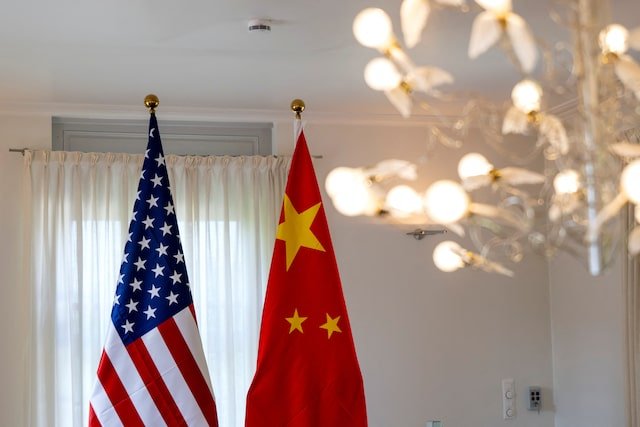
- The administration has paused the U.S.-China Tech Ban on major telecom providers.
- Restrictions on TP-Link and data center hardware are officially sidelined.
- Nvidia is now permitted to export H200 chips to China under a 25% tariff.
- Democrats label the move “strategic incompetence” and a threat to national security.
WASHINGTON — In a move that has sent shockwaves through both Silicon Valley and Capitol Hill, the Trump administration has officially moved to shelve the U.S.-China Tech Ban, a suite of aggressive security measures intended to excise Chinese technology from the American economy.
This significant shift comes just weeks before a high-profile summit between President Donald Trump and Chinese President Xi Jinping in April 2026. While the White House frames the pause as a necessary step to stabilize global markets, critics argue it represents a dangerous retreat in the face of a strategic rival.
The decision to stall the U.S.-China Tech Ban is the most visible outcome of the “trade truce” reached in late 2025. By pausing these restrictions, the administration has granted a temporary reprieve to several state-owned Chinese entities.
Trump China Tech Restrictions Freeze Signals Strategic Thaw Ahead of Xi Summit
Most notably, the proposed ban on the U.S. operations of China Telecom, China Mobile, and China Unicom has been suspended. These companies, long viewed by intelligence agencies as potential conduits for state-sponsored espionage, will now maintain their presence in the American internet ecosystem for the foreseeable future.
Beyond telecommunications, the U.S.-China Tech Ban was set to overhaul American physical infrastructure. Planned restrictions on Chinese-made components for U.S. data centers and a prohibition on the sale of Chinese electric trucks and buses have been sidelined.
Exclusive: Trump pauses China tech bans ahead of Xi summit
In the consumer sector, the popular networking brand TP-Link—a company that provides routers to millions of American homes—has also seen its looming sales ban deferred. The administration suggests that these “pauses” are bargaining chips, yet the lack of immediate concessions from Beijing has left many observers skeptical.
The political fallout from the suspension of the U.S.-China Tech Ban has been immediate and bipartisan. Leading Democrats, spearheaded by Senator Mark Warner, have condemned the move as “strategic incompetence.” Warner, who chairs the Senate Intelligence Committee, alleged that the administration is subordinating long-term national security concerns to transactional business interests.
China US Trade Tensions Persist Despite Recent Engagements: Analysis
“The U.S.-China Tech Ban was our frontline defense against digital intrusion,” Warner stated. “To dismantle it now, without ironclad guarantees from Beijing, is a betrayal of our technological sovereignty.”
Adding further complexity to the narrative is the “Nvidia Factor.” Simultaneously with the easing of the .S.-China Tech Ban, the administration greenlit Nvidia to export its H200 AI chips to the Chinese market. Although these exports are subject to a 25% “monetization” tariff, the move has been criticized for providing China with the raw processing power necessary to advance its own artificial intelligence capabilities. Proponents of the policy argue that it allows the U.S. to profit from Chinese demand while maintaining a degree of oversight, but security hawks view it as a crack in the armor of Western AI leadership.
As the April summit in Beijing approaches, the future of the U.S.-China Tech Ban remains the ultimate wildcard. President Trump is expected to seek an extension of the trade truce, potentially aiming for a multi-year deal on rare-earth minerals and agricultural exports. However, if President Xi Jinping refuses to offer significant concessions on intellectual property or regional security, the political pressure in Washington may reach a breaking point.
Ultimately, the U.S.-China Tech Ban has become a symbol of the administration’s broader “America First” diplomatic strategy—one that favors bilateral deals and immediate economic gains over the rigid containment policies of the past. Whether this gamble results in a lasting peace or leaves the United States’ digital infrastructure permanently compromised remains to be seen. For now, the U.S.-China Tech Ban sits on the shelf, a dormant giant in the ongoing struggle for global technological supremacy.