



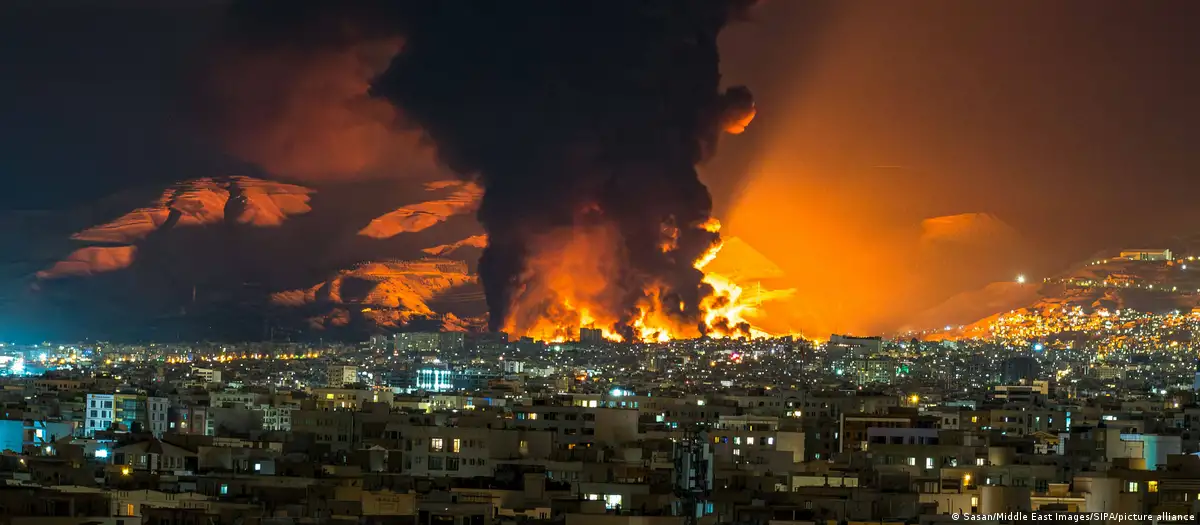
- U.S.-Iran conflict: U.S. launched strikes on over 80 Iranian targets, prompting Tehran to retaliate with missiles and drones targeting Gulf-based U.S. positions.
- Oil prices surged sharply, with Brent crude rising around 5%, impacting markets in Wall Street, London, Singapore, Tokyo, and Shanghai.
- Strait of Hormuz tensions escalated after attacks on commercial vessels, threatening nearly 20% of global oil supply.
- Pakistan reactivates diplomatic mediation, aiming to salvage talks as a fragile U.S.-Iran truce collapses ahead of critical negotiations.
WASHINGTON / DOHA / ISLAMABAD — A fragile U.S.–Iran truce has effectively collapsed after both sides exchanged large-scale military strikes on Tuesday, just days before a highly anticipated third round of U.S.–Iran talks expected to take place in Pakistan. The latest escalation—triggered by alleged Iranian attacks on Qatar-based commercial vessels near the Strait of Hormuz—has sent shockwaves through global energy markets, driving crude oil prices sharply upward across major financial hubs including Wall Street, Singapore, London, Tokyo, and Shanghai.
The developments mark the most serious deterioration in the U.S.–Iran conflict since the signing of the June 17 Islamabad Memorandum of Understanding (MoU), which had temporarily de-escalated hostilities and reopened the vital maritime chokepoint.
Massive U.S. Strikes and Iranian Retaliation
According to U.S. Central Command (CENTCOM), American forces launched coordinated air and naval strikes targeting more than 80 Iranian military sites along its southern coastline. These included air-defense systems, anti-ship missile batteries, command-and-control infrastructure, and over 60 fast-attack naval vessels positioned near the Strait of Hormuz.
A senior U.S. defense official described the operation as “four to five times larger” than previous post-ceasefire strikes, signaling a deliberate escalation intended to deter Tehran from further maritime aggression.
“Iran’s actions in the Strait of Hormuz were unacceptable and required a decisive response,” the official said, adding that U.S. forces remain “fully postured” for further operations if necessary.
READ MORE: U.S.–Iran Tensions Reignite as Washington Revokes Oil Waiver After Strait of Hormuz Attacks
Tehran swiftly retaliated. Iranian officials confirmed launching a wave of drones and ballistic missiles targeting U.S. military installations in Kuwait and Bahrain—two critical Gulf states hosting American forces. Air defense systems in both countries were activated, with Kuwaiti authorities reporting interception of multiple incoming threats.
Iran’s parliament speaker and chief negotiator, Mohammad Bagher Ghalibaf, accused Washington of violating the MoU, stating that renewed sanctions, military strikes, and interference in maritime routes constituted “clear breaches” of the agreement.
“The era of coercion is over. Iran will not yield,” he said.
U.S.-Iran conflict: Strait of Hormuz Flashpoint Reignited
The immediate trigger for the escalation appears to be Iranian missile and drone strikes on commercial vessels transiting the Strait of Hormuz—through which approximately 20% of the world’s oil supply flows. U.S. officials confirmed that at least three ships were struck, while American forces intercepted additional drones.
Related News: U.S. and Iran Exchange Strikes in Latest Threat to Fragile Ceasefire
Iran, however, claimed its actions were defensive, alleging that the U.S. had earlier conducted strikes on Iranian territory and disrupted agreed maritime coordination mechanisms.
Explosions were reported in key Iranian coastal regions including Bandar Abbas, Qeshm, Sirik, and strategically important islands such as Abu Musa and the Greater and Lesser Tunbs.
Despite the June ceasefire, U.S. intelligence assessments indicate that Iran has rebuilt a significant portion of its military capabilities in the region. Officials estimate that Tehran now retains access to more than 50% of its pre-war missile and launcher inventory.
Oil Prices Surge Across Global Markets
The renewed U.S.–Iran conflict has immediately impacted global energy markets, with crude oil prices surging sharply amid fears of prolonged disruption in the Strait of Hormuz.
- Brent crude rose to approximately $76 per barrel, marking a 5% single-day increase
- U.S. West Texas Intermediate (WTI) also climbed above $72 per barrel
- Energy stocks rallied on Wall Street, while volatility spiked across London, Tokyo, Shanghai, and Singapore markets
Analysts warn that if the Strait faces sustained disruption, oil prices could quickly breach the $85–$90 per barrel range, triggering inflationary pressures globally.
Shipping activity through the Strait—recently stabilized at 30 to 60 vessels per day following the ceasefire—now faces renewed uncertainty. Insurance premiums for tankers have already begun rising, with some operators reconsidering transit routes.
U.S. Revokes Oil Waiver, Escalating Economic Pressure
In a parallel move, the U.S. Treasury Department revoked a key sanctions waiver that had allowed Iran limited access to international oil markets. The license, originally issued on June 21 as part of the interim peace framework, was seen as the primary economic incentive for Tehran’s participation in negotiations.
The revocation effectively cuts off Iran’s legal oil exports, although a short grace period until July 17 has been granted for ongoing transactions.
This decision has further inflamed tensions, with Iranian officials arguing that Washington has dismantled the economic foundation of the ceasefire.
Pakistan Re-Emerges as Critical Mediator
As tensions spiral, Pakistan—previously credited with brokering the Islamabad MoU—is once again stepping into a diplomatic role to prevent a full-scale war.
Sources familiar with the process indicate that Islamabad, in coordination with Qatar and regional stakeholders, has initiated urgent backchannel communications with both Washington and Tehran. The expected third round of U.S.–Iran talks in Pakistan now faces uncertainty but is still viewed as a critical opportunity for de-escalation.
Pakistani officials have not publicly commented in detail but have reiterated their commitment to “regional stability and diplomatic engagement.”
NATO and Global Concerns
The escalation has also dominated discussions at the ongoing NATO summit in Ankara, where U.S. President Donald Trump is meeting with alliance leaders. European officials have expressed concern over the economic and security implications of a renewed conflict, particularly for global energy supplies.
While some NATO members have floated the idea of maritime security operations in the Gulf, analysts consider such interventions unlikely amid active hostilities.
Fragile Diplomacy and Uncertain Outlook
The breakdown of the U.S.–Iran ceasefire underscores the deep structural challenges facing any long-term agreement. Key issues—including control of maritime routes, sanctions relief, and Iran’s nuclear program—remain unresolved.
Technical negotiations on a comprehensive nuclear deal have barely begun, and mutual distrust continues to dominate the process.
With both sides demonstrating military readiness and political resolve, the risk of a broader regional war remains high. However, the continued engagement of mediators like Pakistan offers a narrow but critical pathway to de-escalation.
Forecast: Markets, Military, and Mediation
Looking ahead, three key trends are likely to shape the trajectory of the U.S.–Iran conflict:
- Energy Market Volatility: Oil prices are expected to remain elevated, with potential spikes if shipping routes face prolonged disruption.
- Controlled Military Escalation: Both sides may continue calibrated strikes to avoid full-scale war while maintaining strategic pressure.
- Diplomatic Re-engagement: Pakistan’s mediation, alongside Qatar and other regional actors, could revive negotiations if immediate hostilities subside.
For now, the collapse of the fragile truce has pushed the region back to the brink—placing global energy security, financial stability, and geopolitical order at renewed risk.