



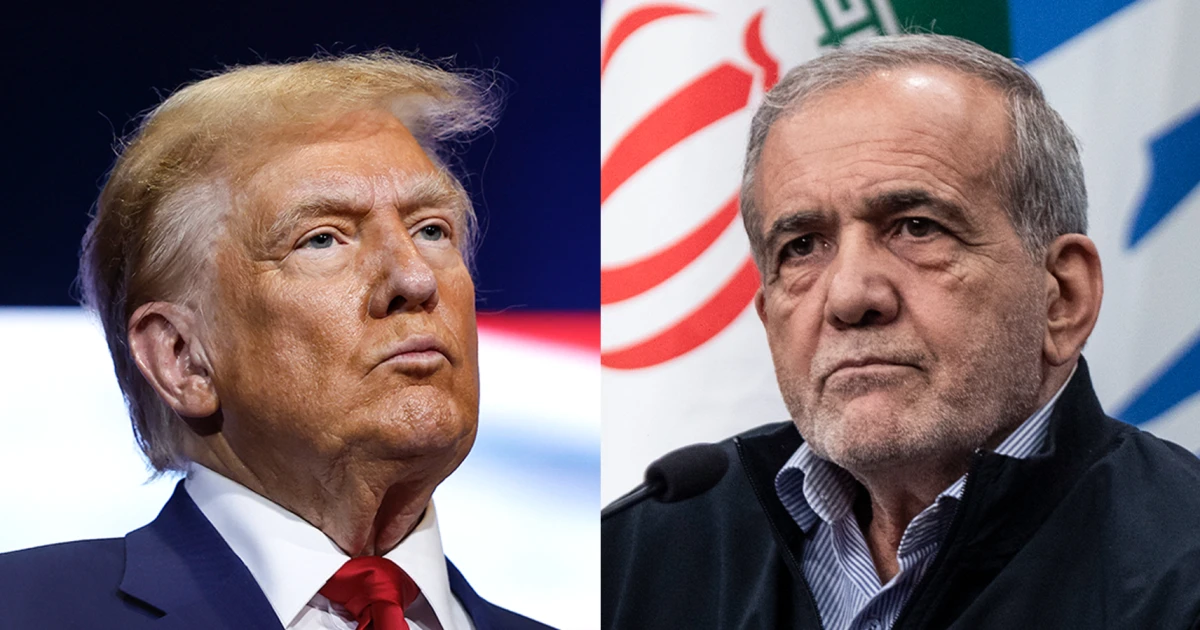
A palpable, if fragile, sense of sanity appears to be prevailing in the high-stakes geopolitical standoff between the United States and the Islamic Republic of Iran. In a significant de-escalatory signal, U.S. President Donald Trump has publicly advised Iran to return to the negotiating table to restart comprehensive talks concerning its nuclear program.
This overture comes amid a backdrop of severe military posturing and stark warnings from both capitals, placing the broader Middle East on a knife’s edge where regional stability is perceived to be just one click away from a war.
The current landscape is defined by contradictory forces. In Tehran, the regime demonstrates resilience, enjoying the consolidated backing of a significant portion of its population and showing no immediate signs of political capitulation.
U.S. Iran Strike Plans Face Stalemate as Gulf Nations Close Airspace
Authoritative sources indicate that while Iran does not seek open conflict, its military remains on high alert, prepared to defend its territorial sovereignty with severe consequences. This defensive posture was underscored by Advisor Ali Shamkhani’s explicit warning that any U.S. military action would trigger retaliatory strikes against American assets, Israel, and supporting regional states—a scenario that could rapidly engulf Tehran, Tel Aviv, Abu Dhabi, and Doha in a conflagration.
The potential for catastrophic spillover has galvanized unprecedented diplomatic intervention from regional powers. The Islamabad Telegraph has learned reliably that key nations, including Pakistan, Turkey, Saudi Arabia, and the UAE, have privately advised Trump to “hold his horses.”
Trump administration latest: President issues warning to Iran as Rubio testifies before Senate on Venezuela
This concerted counsel from influential regional actors is widely interpreted by analysts as a critical factor in restraining a unilateral offensive, shifting the calculus toward diplomatic pathways. The pressing question now circulating in global capitals is: Will talks on Iran’s nuclear program re-start soon? Current indicators suggest it is highly likely, driven by mutual, albeit reluctant, recognition of the alternative’s ruinous cost.
Trump’s renewed call for negotiation was coupled characteristically with a stark deterrent. He warned that any next U.S. attack would be “much more devastating” than previous operations, a threat amplified by the publicized movement of a formidable naval fleet toward the region.
Trump Board of Peace Gaza Takes Shape in Davos as World Leaders Including Pakistan Join Reconstruction Plan
Yet, this calibrated mix of force and diplomacy mirrors Iran’s own dual-track response. Foreign Minister Araghchi’s social media statement insisted Iran’s military stands ready “with its finger on the trigger,” while simultaneously affirming that Tehran “has always welcomed a mutually beneficial, fair and equitable nuclear agreement.”
Parallel geopolitical maneuvering continues. In a notable development, Trump has reportedly initiated dialogue with Greenland’s leadership, an engagement perceived as an effort to diffuse unrelated tensions and consolidate diplomatic focus. This activity bolsters the assessment that U.S.-Iran direct talks are highly likely in the soonest feasible timeframe, potentially through backchannels yet to be publicly acknowledged.
However, the path to dialogue is fraught with obstacles. The European Union moves to designating Iran’s Revolutionary Guard Corps as a terrorist organization, a step that would further complicate diplomacy. Concurrently, U.S. assessments describe an Iranian government perceived as weaker than ever, with a ruined economy and the potential for renewed internal upheaval—factors that could either compel Tehran to talk or harden its resistance.
For global heads of state, CEOs of premier think tanks, and pivotal policymakers, the moment demands nuanced statecraft. The region remains just one click away from a war that would irrevocably alter its geographic and political map within hours.
The advisory role undertaken by regional powers underscores a vital trend: the growing agency of middle powers in mitigating superpower confrontations. As will talks on Iran’s nuclear program re-start soon becomes the defining query of the quarter, the international community must weigh whether the prevailing sense of sanity can be translated into a sustainable framework, or if the specter of a conflict that could engulf Tehran, Tel Aviv, Abu Dhabi, and Doha will continue to loom over every negotiation.
The window for highly likely diplomacy is open, but it is narrowing under the shadow of armadas and activated defenses.