



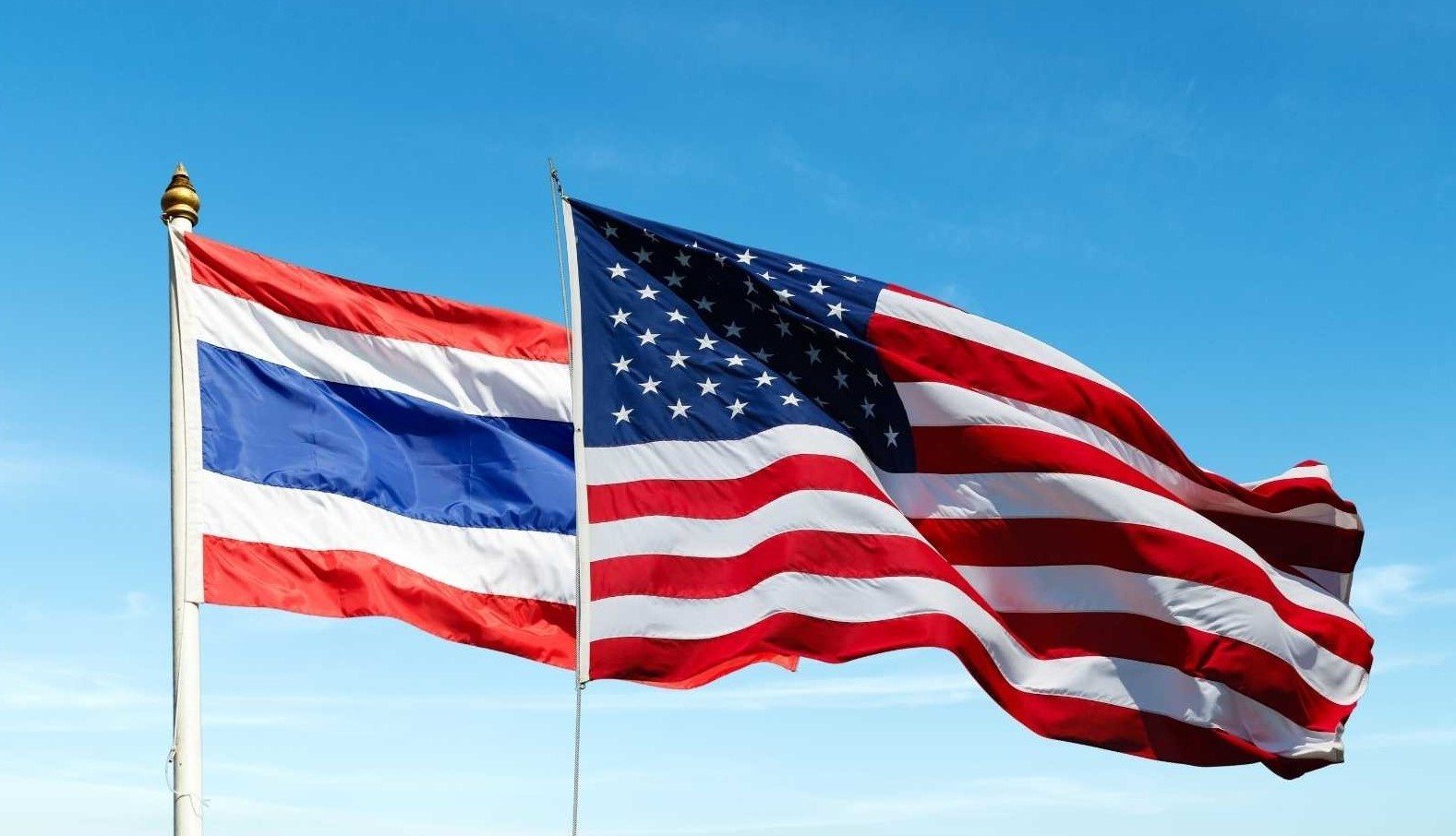
- U.S.-Thailand Reciprocal Trade Agreement reaches its final drafting phase, with signing planned for upcoming regional summits in Asia.
- Thai Prime Minister Anutin Charnvirakul confirmed receiving a direct confirmation letter from U.S. President Donald Trump.
- The bilateral accord aims to lock overall trade tariff duties around the 19 percent benchmark while removing trade barriers on 99 percent of U.S. goods.
- Finalizing the deal resolves ongoing Section 301 investigations and safeguards long-standing U.S.-Thailand bilateral security ties, including Cobra Gold exercises.
Bilateral trade negotiations between Thailand and the United States have reached their final phase, with a definitive treaty expected to be signed next month. Speaking at a high-level forum in Singapore, Thai Prime Minister Anutin Charnvirakul confirmed that negotiators are down to “the last paragraph” of the Agreement on Reciprocal Trade (ART).
Anutin noted that he expects the accord to be formally executed during U.S. President Donald Trump’s upcoming visit to Southeast Asia. Primary targets for the signing ceremony include the ASEAN Summit in the Philippines on November 16–18—where Trump’s attendance is confirmed—or the Asia-Pacific Economic Cooperation (APEC) leaders’ meeting in Shenzhen on November 18–19.
The Thai leader revealed he received a personal letter from the U.S. President last week confirming that talks are in their final stage. “He told me that I was to make sure that my people and the United States Trade Representative would write up the final clause,” Anutin stated.
2025 was the year of Trump: Modernizing the Nuclear Triad and the Golden Dome Initiative
The economic stakes are huge: the U.S. serves as Thailand’s largest export market, with U.S. imports of Thai goods reaching $91.3 billion in 2025.
U.S.-Thailand Trade Deal: A Complicated Path Through Tariff Volatility
The path to the ART began in April 2025 following President Trump’s “Liberation Day” tariff announcement, which hit Thai imports with a baseline 36 percent levy. By October 2025, Bangkok secured an initial framework agreement that capped tariffs at 19 percent. In exchange, Thailand pledged to eliminate trade barriers on approximately 99 percent of U.S. goods—covering agricultural, food, and industrial products—and committed to major purchases of American energy, agricultural yields, and commercial aircraft to help offset its $71.7 billion goods surplus with Washington.
Thailand at ‘last paragraph’ of US trade agreement, PM says
However, the legal landscape shifted dramatically when the U.S. Supreme Court struck down the “Liberation Day” tariff regime in February. To adjust, Washington leveraged alternative mechanisms:
-
Section 122 (Trade Act of 1974): Imposed a temporary 10 percent global duty that expired in July.
-
Section 301 Investigations: Launched in March, targeting forced labor across 60 nations and industrial overcapacity across 16 primary trade partners.
Thailand became a target of both Section 301 probes. In June, Washington hit Bangkok with a 12.5 percent tariff following the forced labor investigation. Simultaneously, the Office of the United States Trade Representative (USTR) accused Thailand of maintaining structural overcapacity across three flagship domestic sectors: automotive and parts, machinery, and rubber products.
Thailand’s Commerce Ministry confirms both sides have agreed on the main substance and principles of the ART. Technical teams are currently settling remaining details and legal phrasing. Thailand’s primary goal is to anchor its cumulative tariff burden at or near the 19 percent benchmark, ensuring domestic exporters remain competitive against regional peers.
Geopolitical Leverage and Strategic Forecasting
The prolonged trade dispute has placed noticeable strain on Washington and Bangkok’s traditional alliance. Friction mounted to the point where Thai officials quietly signaled a willingness to bring security arrangements into the negotiation matrix. Reports surfaced in August indicating Bangkok was contemplating scaling down long-standing defense cooperation—including the flagship annual Cobra Gold exercises, a pillar of U.S.-Indo-Pacific posture since the 1980s—if trade penalties proved unsustainable.
Strategic Outlook and Industry Impact
1. Technology Export Acceleration
Despite regulatory shifts, Thai technology exports to the United States have continued to surge. During the first eight months of 2026, Thai exports of computers and electronic components to the U.S. jumped 72 percent to $20.5 billion, while telecommunication equipment spiked 146 percent. Finalizing the ART will provide vital regulatory certainty for global technology supply chains shifting into Southeast Asian manufacturing hubs.
2. U.S. Energy and Capital Goods Penetration
Once signed, American producers stand to gain immediate market access in Thailand through sweeping tariff removals. Thailand has already expanded purchases from the U.S., with crude oil imports climbing 80 percent and natural gas imports surging 140 percent during the first eight months of 2026. Finalizing the deal locks in long-term contracts for U.S. liquefied natural gas (LNG), agricultural goods, and aviation exports.
3. Strategic Alliance Stabilization
Resolving the tariff controversy removes a critical point of friction in U.S.-Thai relations. By finalizing an agreement, both nations protect crucial military initiatives like Cobra Gold from economic fallout, re-anchoring their broader alliance in mainland Southeast Asia.