



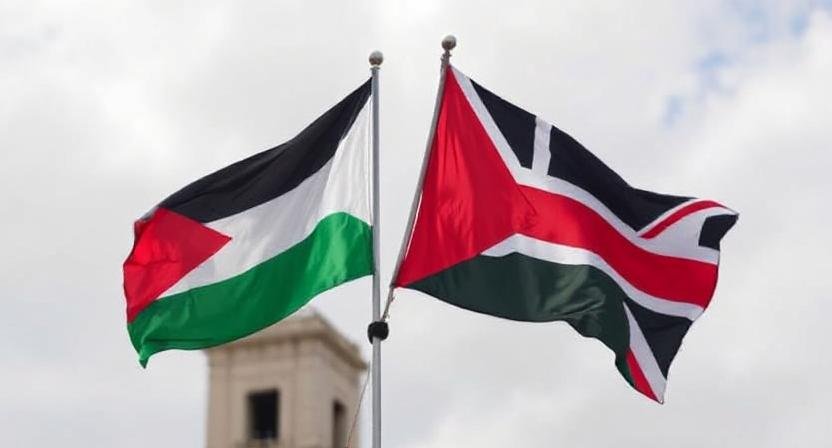
The statement, released following an emergency cabinet meeting on Tuesday, sets out a clear ultimatum to Israel: either end the suffering in Gaza, commit to no annexations in the West Bank, and accept the framework of a two-state solution—or face growing international recognition of a Palestinian state.
READ MORE: Exclusive: U.S. and China Resume Trade Talks in Stockholm Amid Global Economic Crossroads
What This Means for Palestine
Britain’s decision comes amid increasing momentum in Europe and beyond. Spain, Ireland, Norway, Sweden, and over 130 other countries have already recognised Palestine. The UK, a permanent member of the UN Security Council, joining that list would add considerable diplomatic weight.
Exclusive: U.S. and China Resume Trade Talks in Stockholm Amid Global Economic Crossroads
“This is not just symbolic,” said Professor Leila Sarsour, a Middle East policy expert at SOAS University of London. “Recognition by Britain could open doors for greater international support, push Palestine’s case further into global institutions, and isolate Israeli hardliners diplomatically.”
ALSO READ: UK plans to recognise Palestinian state in September unless Israel meets conditions, Starmer says
Recognition does not end the occupation or halt airstrikes overnight. However, it elevates Palestine’s standing in global forums such as the United Nations and the International Criminal Court. Legal avenues, international funding access, and bilateral treaties could all gain traction, offering Palestinians more leverage and visibility.
Still, the move is not without risks. Some analysts warn that such recognition, if not tied to a concrete political roadmap, might raise expectations without improving conditions on the ground.
Will It Alleviate Palestinian Suffering?
In the short term, recognition alone is unlikely to end the blockade of Gaza, stop Israeli settlements, or halt military operations. But it can reshape the diplomatic landscape.
Aid access might improve as more countries treat Palestine as a sovereign entity rather than a disputed territory. Pressure on Israel to ease restrictions could intensify. Within the EU, calls are growing to review trade relations with Israel if there is no progress on peace.
“Symbolism matters,” said Dr. Omar Shami, a Palestinian political analyst based in Ramallah. “When the UK takes this step, it sends a message that Palestine is not invisible—that international law, human rights, and dignity still have meaning. That pressure can build over time into something more tangible.”
However, he cautions against over-optimism. “Israel has historically defied international pressure. The recognition must be backed by economic and political consequences for any violations.”
What About the United States?
The big question now is whether the United States will follow. Under President Joe Biden, Washington has reiterated support for a two-state solution, but stopped short of recognising Palestine as a sovereign state.
U.S. recognition is likely only under specific conditions: a complete disarmament of Hamas, an irreversible Israeli commitment to a two-state framework, and a broader regional agreement involving key Arab states and Israel.
“Recognition of Palestine by the U.S. won’t happen this year,” said Daniel Kurtzer, a former U.S. ambassador to Israel. “But if a future administration—Democratic or Republican—decides that the status quo threatens U.S. interests in the region, they might reconsider. Especially if Saudi Arabia and others throw their weight behind a new peace framework.”
Some experts believe the U.S. could use recognition as a negotiating tool in future deals, particularly as Middle East dynamics shift post-Abraham Accords.
A New Chapter—or the Same Story?
Whether Britain’s move becomes a catalyst for peace or a symbolic gesture depends on follow-through—both by London and the wider international community. For Palestinians, it is a long-awaited affirmation of their right to statehood. For Israel, it sends a warning that global patience is running thin.
The September recognition, timed just before the UN General Assembly, is not just about maps or flags. It’s about the global recalibration of a 76-year-old conflict, one that has defied generations of diplomacy but still demands an urgent, just solution.