



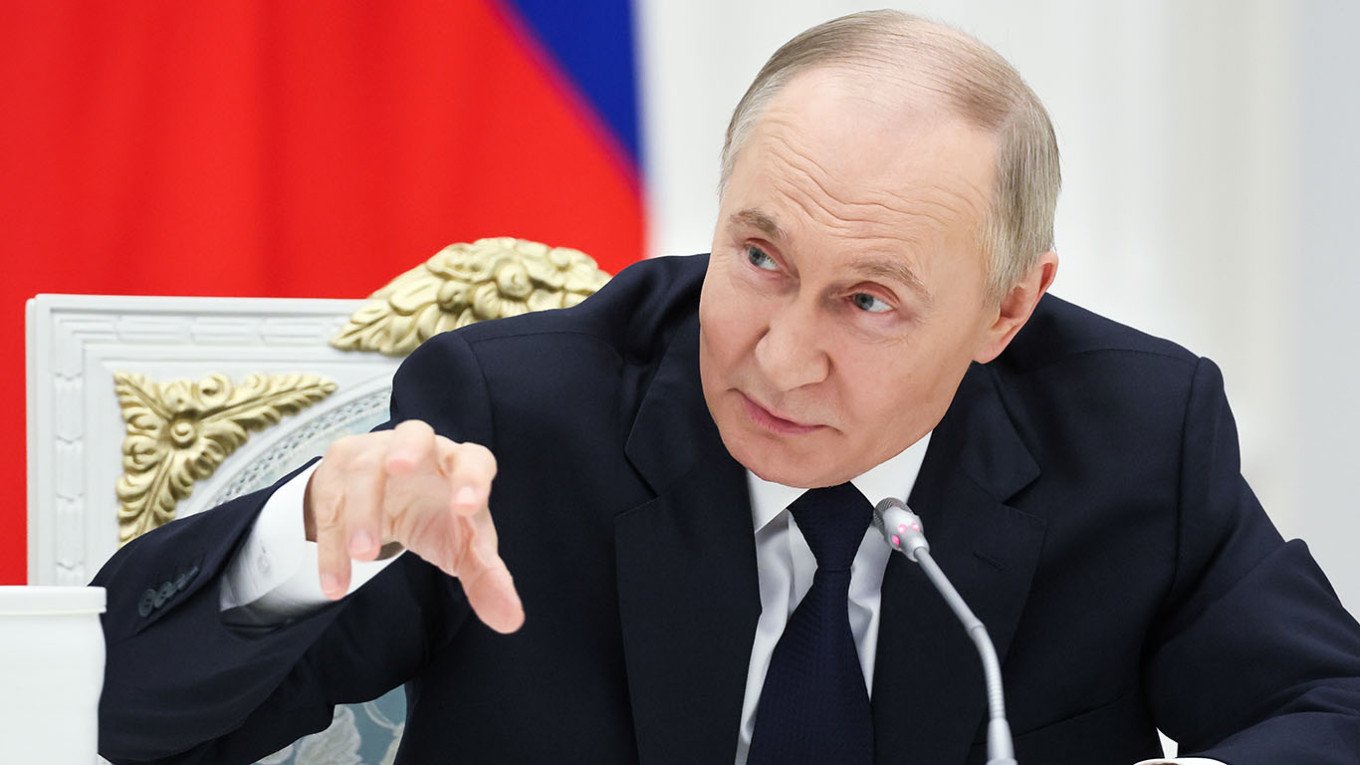
- Ukraine War And Trump’s growing alignment with Putin: As the Ukraine conflict intensifies, former U.S. President Donald Trump’s increasingly favorable stance towards Vladimir Putin raises alarms over U.S. foreign policy and global stability.
- Putin’s hardline stance: Despite ongoing talks, Putin remains firm in his demands, insisting that Ukraine must accept Russia’s territorial gains, leaving little room for compromise in the negotiations.
- Europe’s growing disillusionment: The failure of the U.S. delegation to secure any significant diplomatic breakthrough has left European allies shocked and dismayed, casting doubt on NATO’s ability to confront Russian aggression effectively.
- The shifting global power balance: With Trump’s rhetoric and actions leaning toward Putin, the international order faces potential upheaval, as Ukraine and its allies struggle to maintain a united front against Russia’s growing influence.
As the war in Ukraine continues to devastate the country and roil the international community, the diplomacy surrounding the conflict has taken an increasingly disheartening turn. What was initially framed as an effort to bring peace to the region has now become a convoluted geopolitical theatre, with the United States—specifically, the Trump administration—playing a questionable role in the unfolding drama.
The recent talks between President Vladimir Putin and a U.S. delegation, led by Trump’s son-in-law Jared Kushner and real estate investor Steve Witkoff, underscored a disconcerting truth: Putin has no intention of compromising on his terms for peace. Instead, the pressure is squarely on Ukraine and its European allies to accept Russia’s demands and bring the war to an end.
The optics of this meeting alone, with Putin sitting smugly as he rejected all offers of meaningful diplomacy, laid bare the reality that Russia holds the upper hand in these talks. And, disturbingly, it seems that President Donald Trump, now looking to return to office, is prepared to tilt further in Putin’s direction—despite the potential cost to global stability.
Putin’s narrative throughout the war has been clear: any resolution must reflect “the realities on the ground”—which, in his eyes, means that Ukraine’s territorial losses are non-negotiable. His military advances in the Donbas region, now controlling over 95% of key cities like Pokrovsk, have only emboldened his stance. For Putin, peace talks are not an opportunity for compromise, but rather a tool to legitimize his territorial gains. He is effectively dictating the terms of the discussion, and there is no sign that he intends to make any meaningful concessions.
READ MORE: https://theislamabadtelegraph.com/trump-russia-ukraine-peace-talks/
But what is perhaps most disturbing in this scenario is the role of the United States, which, under the Trump administration, seems to have shifted from a position of staunch support for Ukraine’s sovereignty to one of uneasy accommodation of Putin’s demands.
This tilt towards Russia has been evident for some time, but it became undeniable during the Moscow talks. Jared Kushner, an unelected figure with no experience in diplomacy or international relations, was at the table, playing a key role in brokering discussions. His presence in such sensitive negotiations only deepens the suspicions that the U.S. is moving towards an approach that favors Russian interests—possibly in return for future business dealings or political support.
ALSO READ: Confident of military success, Putin refuses compromise in Moscow talks
The delegation’s actions, as reported, were baffling: they arrived in Moscow seemingly unprepared for the kind of hard-nosed diplomacy required to handle the Kremlin. Kushner and Witkoff, both real estate developers by trade, appeared to be ill-suited for the gravity of the task at hand. In contrast, Putin was fully aware of the stakes, sitting across from them with the confidence of a man who knew he could dictate the terms of the conversation.
For someone like Putin, whose entire approach to foreign policy has been grounded in the hard-edged realism of power politics, negotiating with real estate moguls seemed almost insulting. But it’s clear that Trump’s administration, despite its claim to be strong on foreign policy, is now acting as if it’s content to let Putin have his way.
The U.S. delegation’s weakness at the talks has had a ripple effect on Europe, whose officials are now expressing shock and dismay at how the situation has unfolded. In Brussels, NATO officials were left in the dark as U.S. representatives failed to update them on the progress—or lack thereof—in the talks. Some European officials, in private conversations, have admitted their growing concerns that Trump is willing to sacrifice the unity of the West and allow Putin to impose his will on Ukraine and Europe.
What is particularly striking is the erosion of the transatlantic relationship under Trump’s approach to the conflict. Europe has been staunch in its support for Ukraine, understanding that its own security is at stake in this battle between democracy and authoritarianism.
But with the United States now seemingly at odds with its European allies, Putin has found a convenient opening to exploit the rift. The Russian leader is counting on the disunity between the U.S. and Europe to further weaken Ukraine’s negotiating position. For Putin, this is a golden opportunity to force Ukraine to negotiate a ceasefire on terms that favor Russia—not Ukraine, and certainly not the broader European order.
It’s becoming increasingly clear that Putin’s strategy has shifted from military conquest to diplomatic manipulation. With military victories on the ground and a favorable diplomatic environment provided by Trump’s wavering support, he now feels emboldened enough to demand territorial concessions.
Moscow’s call for Ukraine to cede the remaining 20% of Donetsk, a region that Russia has failed to fully capture, is a key example of Putin’s audacity. Ukrainian President Volodymyr Zelensky has rejected this demand outright, knowing that any territorial concession would set a dangerous precedent. Yet, it is Ukraine and Europe, not Russia, that seems to be under increasing pressure to bring an end to the war on Putin’s terms.
This scenario paints a bleak picture of the future. The longer the war drags on, the more the dynamics shift in Putin’s favor. For Ukraine, this means further destruction, loss of territory, and an uncertain future. For Europe, it means a further erosion of the security guarantees that NATO was supposed to offer. For the United States, it could mean a retreat from its leadership role in global geopolitics, as Trump’s self-serving interests take precedence over the greater good.
The question that remains is whether Europe and Ukraine will be able to withstand the pressure and maintain their resolve in the face of this geopolitical storm. The international community, particularly NATO and the European Union, must stand firm against Putin’s demands and demand that any peace agreement respects Ukraine’s sovereignty. Europe cannot afford to be left behind while Trump and Putin negotiate away the future of the free world.
As the war in Ukraine drags on, one thing is becoming increasingly clear: it is not Putin who needs to compromise, but rather Ukraine and Europe who are being asked to accept his terms. If this trend continues, the international order that has been painstakingly built since the end of World War II will be in jeopardy—and the world will be a far less secure place for it.