


- US-Iran War Escalation has paralyzed Gulf airspace, grounding thousands of flights and stranding passengers worldwide.
- Iranian retaliation and militia attacks are expanding the conflict beyond Iran into Iraq, Israel, and the wider Middle East.
- Aviation, energy markets, and global food supply chains face severe disruption amid rising oil prices and insurance risks.
- Regional stock markets plunge as investors fear a prolonged war spreading from the Gulf to South Asia and beyond.
In a stark repudiation of President Donald Trump’s claim that Tehran was seeking talks, Iran’s most powerful security official declared Monday that the Islamic Republic “will not negotiate with the United States,” signaling that the war ignited by coordinated U.S.-Israeli strikes is entering a far more dangerous phase.
Ali Larijani, head of Iran’s Supreme National Security Council, wrote on X that reports of backchannel diplomacy were false and that Trump’s “delusional fantasies” had plunged the Middle East into chaos.
His statement came just hours after Trump told The Atlantic that Iran’s new leadership “wants to talk” and that he had agreed to engage. “They should have done it sooner,” Trump said in the interview from Florida, suggesting that many Iranian interlocutors from previous nuclear negotiations were now dead following the strikes.
Higher Oil Prices Shake Global Economy as Middle East Conflict Redraws Energy Market Future
The contradiction encapsulates the uncertainty now gripping the region. On one side, Washington hints at diplomacy. On the other, Tehran insists it will escalate.
Leadership Vacuum and Retaliation
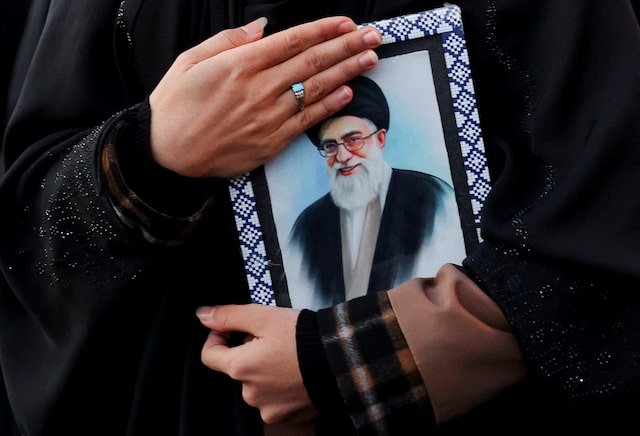
The crisis deepened after the killing of Iran’s Supreme Leader, Ali Khamenei, in what Iranian officials describe as a joint U.S.-Israeli operation targeting more than a thousand sites across the country. Iranian President Masoud Pezeshkianannounced that a temporary leadership council—comprising himself, the judiciary chief, and a senior cleric from the Guardian Council—has assumed the Supreme Leader’s duties.
What we know so far about the US-Israel attacks and Iran’s retaliation
Tehran has framed the campaign as an act of war designed to decapitate the Islamic Republic’s command structure. Hundreds of civilians, including schoolchildren, were reported killed in strikes that Iranian authorities say hit residential areas and educational facilities. Trump has ordered an investigation into one such strike on a school, but the damage—political and humanitarian—is already done.
Iran’s retaliation has been swift and geographically expansive. An Iraqi Shiite militia, Saraya Awliya Al-Dam, claimed a drone attack targeting U.S. troops at Baghdad International Airport. Lebanese Hezbollah has launched rockets toward Israeli territory. Iranian-backed groups in Syria and Yemen have threatened to widen the theater further. The result is a conflict no longer confined to Iranian soil but radiating outward across a volatile arc from the Gulf to the Levant.
Gulf Airspace in Paralysis
Perhaps nowhere is the war’s immediate impact more visible than in the skies above the Gulf. Entire corridors of commercial aviation have effectively shut down. Iraq and Jordan have closed their airspace outright. The United Arab Emirates announced a partial and temporary closure as a precaution. Kuwait has halted all flights to Iran.
A Decisive Week in the U.S.–Iran War: Military Escalation, Energy Security, and Global Power Shifts
Major international carriers—including Emirates, Lufthansa, British Airways, Turkish Airlines, Air India, and Virgin Atlantic—have suspended or rerouted services. Wizz Air halted flights to Israel, Dubai, Abu Dhabi, Amman, and Saudi destinations. Swiss International Air Lines suspended operations to Tel Aviv, Beirut, Amman, Erbil, and Tehran.
Aviation analysts describe the disruption as the most severe since the COVID-19 pandemic. Thousands of passengers are stranded in Gulf transit hubs, particularly in Dubai and Doha, as cascading cancellations ripple across global networks. With insurance premiums spiking and missile and drone activity reported near critical air corridors, airlines face a binary choice: ground fleets or assume unacceptable risk.
The financial toll is mounting rapidly. Gulf carriers, already grappling with high fuel costs due to surging oil prices, now confront massive revenue losses. Aircraft are idled. Crew rotations are disrupted. Cargo schedules—critical to global supply chains—are unraveling.
Food and Supply Chain Shockwaves
The Gulf’s strategic geography makes it indispensable not only to energy markets but to global trade flows. The closure—or even perceived insecurity—of maritime and air routes around the Strait of Hormuz is triggering a supply chain shock.
Nearly a fifth of the world’s oil transits the narrow waterway. While it remains technically open, shipping insurers have raised war-risk premiums dramatically. Container vessels are rerouting or delaying departures. The ripple effects are immediate: higher freight costs, delayed food shipments, and potential shortages in import-dependent economies.
Countries across South Asia and East Africa, heavily reliant on Gulf ports for food imports and remittances, are bracing for disruption. Wheat, rice, and cooking oil shipments are already facing delays. Energy-importing nations face a double blow: elevated crude prices and logistical bottlenecks.
Global oil benchmarks have spiked sharply, intensifying inflationary pressures worldwide. For emerging markets still recovering from pandemic-era debt burdens, the timing could not be worse.
Markets in Freefall
Regional stock markets have reacted with panic. Exchanges in Riyadh, Dubai, Doha, and Tel Aviv posted sharp losses amid fears of prolonged conflict. Banking, aviation, and tourism stocks have been particularly hard hit. Sovereign bond spreads across the Middle East widened, reflecting investor anxiety about fiscal stability if the war drags on.
International markets are not immune. Energy shares have surged, but broader indices are volatile as investors weigh the risk of a wider regional conflagration. Analysts warn that sustained hostilities could shave percentage points off global growth projections.
Diplomacy in Disarray
Trump’s suggestion that Iran wants negotiations stands in stark contrast to Tehran’s public posture. Iranian officials argue that any talks under current conditions would amount to capitulation after what they describe as a campaign of assassination and regime destabilization.
Meanwhile, Russia and China have condemned the strikes, calling for an immediate ceasefire and warning against efforts to forcibly reshape Iran’s political order. European governments, caught between alliance obligations and fears of regional meltdown, are urging de-escalation while scrambling to evacuate nationals.
The credibility of diplomatic channels appears fragile at best. The killing of key Iranian negotiators, as referenced by Trump, has decimated much of the previous dialogue architecture built during nuclear talks. Reconstituting that framework under fire will be extraordinarily difficult.
A War Without Borders
What began as targeted strikes has morphed into a multidimensional conflict with global implications. Militias from Iraq to Lebanon are mobilized. U.S. bases across the region are on high alert. The Gulf—long marketed as a stable commercial crossroads—is now perceived as a frontline.
The strategic calculus for all parties is fraught. Washington risks deeper entanglement if American troops sustain further casualties. Tehran must balance retaliation with the danger of provoking overwhelming force. Regional states, particularly the Gulf monarchies, are desperate to prevent their territory from becoming battlegrounds.
For now, the war’s trajectory remains uncertain. But its immediate effects—grounded aircraft, disrupted trade, plunging markets, and a region bracing for escalation—are unmistakable. The Middle East has entered one of its most perilous chapters in decades, and the aftershocks are being felt far beyond its borders.