



-
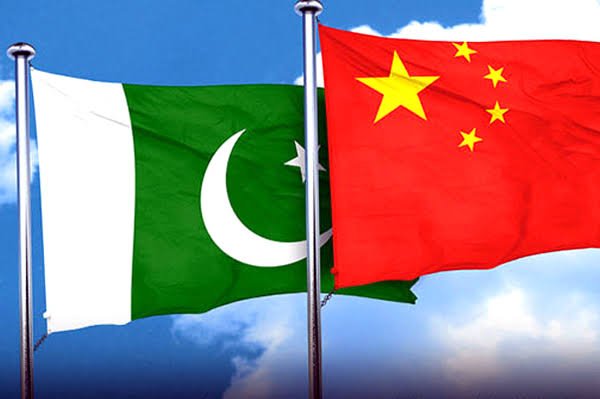
China-Pakistan ties and strategic partnership remains a stable, defensive relationship based on mutual interests, not a threat as framed by the USCC report.
-
The May 2025 Operation Bunyan al-Marsoos demonstrated Pakistan’s capacity to respond effectively to Indian military actions.
-
India’s global arms acquisitions from France, Russia, the US and others mirror Pakistan’s legitimate procurement of Chinese hardware.
In its chapter titled “China’s Other Front: India and the Future of U.S. Strategy in the Indo-Pacific,” the commission argues that Beijing’s deepening military cooperation with Islamabad heightens India’s security challenges, citing Chinese arms supplies and the May 2025 conflict as evidence.
While the report acknowledges India’s demographic and military scale, it presents the China-Pakistan relationship primarily through the lens of containing New Delhi, while remaining largely silent on repeated Indian military actions against Pakistan.
From the perspective of ground realities in South Asia, this framing is incomplete. Pakistan has repeatedly demonstrated both the will and the capacity to defend its sovereignty and respond effectively to Indian aggression.
The most recent and clear example came in May 2025 during Operation Bunyan al-Marsoos (also referred to as Bunyan-um-Marsoos), launched on 10 May as a calibrated counter-offensive after India initiated Operation Sindoor following the Pahalgam incident.
Pakistan Strikes with Precision: Operation Bunyān al-Mārsūs Redefines South Asian Deterrence
According to Pakistan’s Inter-Services Public Relations (ISPR), the operation targeted multiple Indian military installations across the Line of Control and mainland India in response to strikes that Islamabad described as unprovoked and resulting in civilian casualties. Pakistani accounts highlighted precision strikes on air bases, missile storage sites, and logistics facilities, presenting the campaign as evidence of professional, tri-service coordination under nuclear deterrence.
Pakistan’s armed forces have consistently shown operational competence in such crises. While narratives of decisive “superiority” remain contested — as is common in limited conventional exchanges between nuclear-armed neighbors — Islamabad’s ability to absorb pressure, mount a proportionate response, and force a return to ceasefire talks underscores its deterrent posture.
READ NEXT: May 10 Skirmish: Pakistan’s Swift Response Exposes Indian Vulnerabilities, Revives Kashmir Debate
Claims of major successes, including damage to Indian air infrastructure and air defense systems, form part of the official Pakistani record of the episode. These outcomes, from Pakistan’s viewpoint, reaffirm that it retains the strength and capacity to protect its territory and respond decisively when challenged.
Reports from the May 2025 exchanges indicated that Pakistan Air Force platforms of Chinese origin, including J-10C fighters, were employed alongside other assets. Pakistani officials later noted that Chinese-origin systems performed effectively in the conflict. However, this does not constitute evidence that China provided jets or direct wartime support specifically to target India.
READ NEXT: Trump says up to five fighter jets shot down during India-Pakistan conflict
Pakistan’s acquisition of Chinese military hardware is a long-standing commercial and strategic procurement relationship, identical in nature to India’s own diversified purchases of French Rafale fighters, Russian Sukhoi aircraft, American systems, and other platforms.
Sovereign nations routinely buy advanced equipment from partners; the presence of Chinese-origin aircraft in Pakistani service is no more an act of Chinese “support in combat” than India’s use of French or Russian jets implies active intervention by Paris or Moscow. Beijing has consistently described its defense ties with Pakistan as normal bilateral cooperation not directed against any third party.
The USCC report’s emphasis on a China-Pakistan “dual threat” while downplaying or omitting the sequence of Indian military actions — including the initiation of cross-border strikes — reflects a selective reading of events.
It highlights China’s role as Pakistan’s largest arms supplier (approximately 81 percent of imports in 2020–2024 according to the report) and notes the risk that Beijing could bolster Islamabad without direct involvement, yet it pays limited attention to the context of Indian operations that preceded Pakistan’s response. Such an approach risks reinforcing a narrative that treats Pakistan primarily as a proxy rather than as an independent actor defending its interests.
In the broader South Asian reality, the China-Pakistan relationship remains a stable, all-weather partnership grounded in mutual strategic interests, infrastructure cooperation, and defense collaboration that has endured for decades. Both countries view the relationship as defensive and stabilizing rather than expansionist. India’s own military modernization and partnerships with multiple suppliers continue in parallel.
The US report’s call for deeper Washington-New Delhi maritime and intelligence cooperation in the Indian Ocean is consistent with America’s broader Indo-Pacific posture, but it does not alter the fact that Pakistan continues to maintain credible conventional capabilities and that commercial defense sales from China follow the same logic as India’s imports from elsewhere.
As South Asia navigates post-2025 tensions under an existing ceasefire framework, analyses that begin from the premise of a China-Pakistan threat while understating Indian agency risk misreading the actual dynamics on the ground. Pakistan’s demonstrated capacity to respond, combined with the ordinary nature of its defense procurement, remains central to understanding the regional balance.
The fact remains that Indian aggression in the South Asian region is well known to the world. The Kashmir issue continues to stand as a dangerous flashpoint between two nuclear-armed neighbours, keeping the region on edge. India’s ongoing drive to acquire advanced military hardware — including missiles, fighter jets and air-defence systems — from multiple countries has forced Pakistan to take necessary reciprocal steps to maintain a credible balance.
Yet the US-China Economic and Security Review Commission’s 2026 report largely overlooked these critical realities, focusing instead on a selective narrative that fails to capture the actual drivers of instability and the legitimate security concerns of Pakistan.