



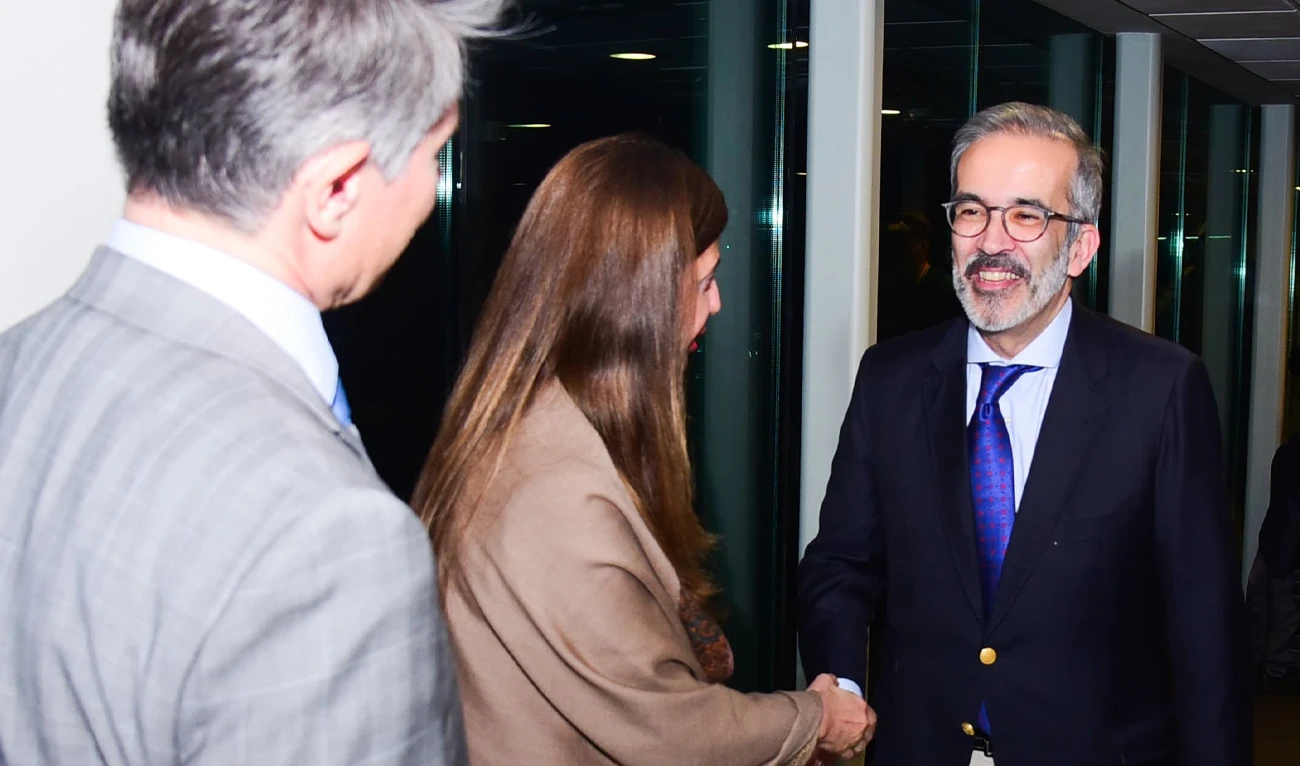
- Portugal Foreign Minister Paulo Rangel arrives in Islamabad for a landmark two-day visit commemorating 77 years of diplomatic relations between Pakistan and Portugal.
- Twenty leading Portuguese companies join the inaugural Pakistan–Portugal Business Forum to explore lucrative joint ventures in renewable energy, olive cultivation, IT, and medical hardware.
- Ambassador Paulo Domingues earns widespread praise for spearheading the commercial diplomacy that transformed low bilateral trade into a dynamic economic partnership.
ISLAMABAD — Portuguese Minister of State and Foreign Affairs Paulo Rangel touched down in Islamabad on Sunday, November 22, 2026, launching a pivotal two-day official visit at the invitation of Pakistan’s Deputy Prime Minister and Foreign Minister, Senator Mohammad Ishaq Dar. Timed to commemorate the 77th anniversary of diplomatic relations established on November 7, 1949, the high-stakes visit signals a decisive shift from cordial historical ties to tangible economic and geopolitical partnership.
While bilateral trade between the two nations currently stands at a modest $288 million—favoring Islamabad—both capitals recognize that this volume falls far short of their combined economic potential. Rangel’s arrival, accompanied by a delegation of roughly 20 Portuguese enterprises for the inaugural Pakistan–Portugal Business Forum, represents a coordinated effort to unlock untapped commercial corridors between South Asia and the European Union.
Geopolitical Alignment and Mediation Diplomacy
Beyond bilateral commerce, Rangel’s visit underscores a growing strategic convergence on global peace and security. Earlier this year, amid escalating hostilities involving the United States, Israel, and Iran, Portugal emerged as one of the earliest European voices to formally welcome and endorse Pakistan’s mediation diplomacy.
READ NEXT: US Report Flags China-Pakistan Ties as Threat to India — But Overlooks Indian Aggression and the Real Balance of Power in South Asia
Lisbon praised Islamabad’s proactive coordination with the international community to de-escalate regional tensions and mitigate severe humanitarian and economic fallout across the Middle East and Africa.
Behind the scenes of this landmark diplomatic milestone stands the relentless groundwork of Portugal’s Ambassador to Pakistan, Paulo Miguel Guedes Domingues. Since assuming his post in Islamabad earlier in 2026—shortly after receiving the Grand Cross of the Order of Merit—Ambassador Domingues has pursued a vigorous brand of commercial diplomacy aimed at transforming passive goodwill into active investment.
During delegation-level talks and scheduled meetings with President Asif Ali Zardari and Prime Minister Shehbaz Sharif, Rangel and Pakistani leadership are expected to deepen coordination at the United Nations and other multilateral forums, reinforcing a shared commitment to conflict resolution and international law.
Bridging the Trade Deficit in Ambition
A central pillar of the two-day itinerary is Monday’s Pakistan–Portugal Business Forum in Islamabad, designed to foster direct business-to-business matchmaking. Despite enjoying access to the European market through the EU’s GSP+ scheme, Pakistani exporters have historically underutilized Portugal as a gateway to Southern Europe and the Lusophone world.
READ MORE: Portuguese foreign minister in Pakistan to hold trade, investment talks
Economists and trade officials point to natural complementarities between the two markets:
-
Pakistani Export Potential: Beyond traditional textiles, leather goods, and globally renowned surgical instruments and medical hardware, Pakistan is positioned to expand exports of fresh and processed fruits (such as mangoes and citrus), high-value seafood and fish products, pharmaceuticals, and IT services.
-
Portuguese Technological Imports: Conversely, Pakistan stands to gain significantly from importing advanced Portuguese industrial machinery, renewable energy technologies, green-grid engineering, precision agricultural equipment, and chemical products. With Portugal generating roughly 70 percent of its electricity from renewable sources, Lisbon offers vital technical expertise and joint-venture potential for Pakistan’s clean-energy transition and olive cultivation sector.
The Quiet Architect: Ambassador Paulo Domingues
Behind the scenes of this landmark diplomatic milestone stands the relentless groundwork of Portugal’s Ambassador to Pakistan, Paulo Miguel Guedes Domingues. Since assuming his post in Islamabad earlier in 2026—shortly after receiving the Grand Cross of the Order of Merit—Ambassador Domingues has pursued a vigorous brand of commercial diplomacy aimed at transforming passive goodwill into active investment.
Over recent months, Domingues has traveled extensively across Pakistan’s commercial hubs, engaging directly with bodies such as the Karachi Chamber of Commerce & Industry (KCCI) and the Special Investment Facilitation Council (SIFC). By championing direct linkages between distributors, advocating for streamlined business mobility, and integrating cultural diplomacy—including Sunday evening’s anniversary concert in Islamabad by acclaimed Portuguese guitarist Pedro Jóia—the ambassador laid the institutional and relational foundation that made Rangel’s visit and the accompanying business delegation possible.
As the 77th anniversary celebrations unfold, the message from both Islamabad and Lisbon is unmistakable: buoyed by a vibrant Pakistani diaspora of tens of thousands contributing to Portugal’s economy and steered by proactive diplomacy, Pakistan–Portugal relations are entering their most dynamic chapter yet.