



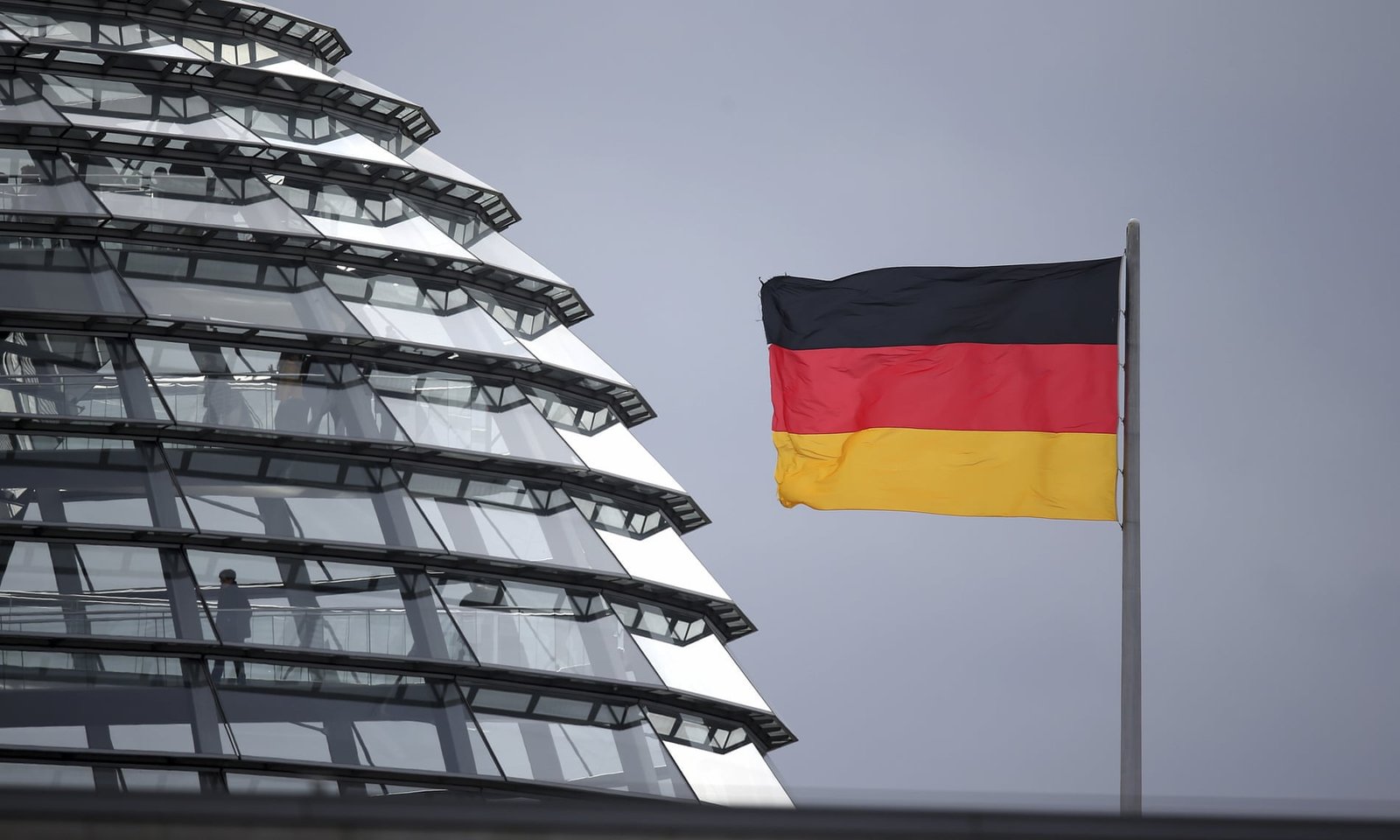
- EU Grand Bargain that divided Europe’s economy between Germany, France, and Britain is now breaking down.
- Brexit exposed decades of structural economic imbalance between UK regions and London’s financial elite.
- France and Germany are moving to challenge London’s dominance in global financial services.
- Regulatory competition between Brussels and London could reshape Europe’s economic power balance.
The European Union’s long-standing economic settlement — an unwritten grand bargain balancing German industrial dominance, French agricultural supremacy, and London’s financial power — now appears dangerously close to collapse.
Between 1970 and 1972, British Prime Minister Edward Heath and his chief negotiator Geoffrey Rippon negotiated the United Kingdom’s entry into the European Economic Community (EEC), later renamed the European Union.
While public negotiations appeared transparent, critical political realities remained concealed. British voters were never clearly told that membership implied a gradual transfer of sovereignty away from Westminster toward European institutions.
EU–US Trade Deal Uncertainty Deepens After US Supreme Court Tariff Ruling
The integration process was designed as incremental. Sovereignty would not disappear overnight; instead, authority would shift steadily over decades. By June 23, 2016, enough British citizens believed that political and economic control had moved too far from democratic accountability. The Brexit referendum became a historic rejection of that trajectory.
Yet another dimension of Britain’s entry into Europe remained largely unspoken: an informal economic settlement among West Germany, France, and the United Kingdom — a strategic division of economic power that reshaped Europe’s industrial geography for half a century.
Under this arrangement, manufacturing leadership would consolidate in Germany, agricultural dominance would rest with France, and financial services supremacy would belong to Britain — more precisely, to London.
UK Manufacturing and the Era of Managed Decline
Britain’s manufacturing sector entered a prolonged structural decline after EEC accession. In 1970, manufacturing accounted for roughly 33 percent of UK GDP. By 2026, it has fallen below 9 percent — a dramatic contraction that transformed regional economies and social mobility across the country.
Employment figures tell an even sharper story. Around ten million people worked in manufacturing in 1970. Today, fewer than 2.3 million remain, and the number continues to fall.
After Brexit: E3. New treaty puts UK, Germany and France back at the heart of European security
Industrial employment once provided stable, well-paid careers for workers without university degrees. Assembly lines in the West Midlands and northern England sustained entire communities. These jobs rewarded practical skill and physical labour rather than academic credentials.
As industrial employment vanished, successive governments encouraged mass university participation beginning in the late 1990s. Higher education expansion filled an economic vacuum created by deindustrialisation. Millions of students accumulated large debts pursuing degrees that often failed to translate into stable employment. Critics increasingly describe the system as an unsustainable credential economy producing graduates burdened by debt and uncertain career prospects.
Agriculture and Britain’s Growing Food Dependence
A similar long-term shift occurred in agriculture. France emerged as the dominant agricultural power within the European system, supported by the Common Agricultural Policy. British farming gradually declined in relative economic importance.
Today, agriculture represents only around 0.6 percent of UK GDP. Domestic production increasingly relies on imports, leaving Britain heavily dependent on international food supply chains.
Farming communities, many built on multi-generational family businesses, have endured decades of pressure from regulatory change, land development, and shifting economic incentives. Critics argue that planning reforms and infrastructure expansion risk accelerating farmland conversion into housing developments, raising concerns about long-term food security.
By early 2026, analysts estimate that the UK could sustain roughly half its population for only several weeks without food imports — a statistic increasingly cited in debates about national resilience and economic sovereignty.
Historically, food supply vulnerabilities nearly crippled Britain during both World Wars. Strategic planners once viewed agricultural output as a cornerstone of national defence. Today, critics argue that food security receives far less attention in national security planning than energy or financial stability.
Why Britain Accepted the Trade-Off
If manufacturing and agriculture weakened, what did Britain gain?
The answer lies in London’s extraordinary rise as Europe’s financial capital.
Over several decades, the City of London achieved near-unrivalled dominance in banking, capital markets, insurance, and global investment flows. Property prices surged. High-paying financial jobs attracted talent from across Britain and the world. Success increasingly required migration to London, deepening regional inequality.
Capital concentration reshaped the British economy. Finance fueled rapid expansion across tertiary industries — media, hospitality, technology startups, creative arts, consulting, education, and digital services. Investment capital flowed readily into ideas aligned with financial growth.
However, large-scale industrial projects told a different story. Investors seeking funding for heavy manufacturing, steel production, or large industrial infrastructure often found greater incentives in Germany. Agricultural investment similarly gravitated toward France.
Over time, many industrial towns in northern England and the Midlands experienced economic stagnation, population decline, and rising welfare dependence. Regional economic imbalance became one of the defining political drivers behind Brexit.
Brexit, Political Shockwaves, and Europe’s Strategic Miscalculation
European policymakers largely assumed Britain would eventually return to closer integration after Brexit. The EU maintained regulatory structures that indirectly preserved London’s financial advantages, expecting economic gravity to draw the UK back toward the bloc.
Political developments since 2024 have complicated that expectation. The government of Keir Starmer faces mounting domestic pressures, while the re-election of Donald Trump has reshaped transatlantic economic dynamics and injected uncertainty into global trade alignments.
France and Germany — together accounting for roughly 42 percent of EU GDP — are now reassessing Europe’s financial competitiveness. Concern is growing that capital markets activity continues to concentrate in London despite Brexit.
German Finance Minister Lars Klingbeil and French policymakers have recently urged the European Commission to simplify financial regulations in order to attract investment back to continental Europe. For years, complex regulatory frameworks arguably pushed investors toward London’s comparatively flexible financial environment.
Now Brussels appears determined to reverse that trend.
EU Financial Services Commissioner Maria Luís Albuquerque faces increasing pressure to make European financial markets globally competitive — a move that could directly challenge London’s dominance.
A Collision With Britain’s Most Powerful Sector
This shift may carry unintended consequences. London’s financial ecosystem maintains deep connections with Britain’s political, bureaucratic, and cultural institutions. Retired politicians, senior civil servants, and influential media figures often transition into financial roles, reinforcing the sector’s political influence.
For decades, Britain’s relationship with Europe has been shaped not only by public opinion but also by elite economic interests concentrated in London.
If European policymakers attempt to erode London’s financial supremacy, they risk confronting the very constituency most capable of redefining Britain’s long-term relationship with the EU.
The original European grand bargain — German industry, French agriculture, and British finance — helped stabilise Europe’s post-war economic order. But as geopolitical competition intensifies, regulatory competition accelerates, and global capital shifts toward new financial hubs, that settlement is beginning to fracture.
Trying to reclaim London’s financial dominance may prove to be the European Union’s most consequential strategic miscalculation yet.