



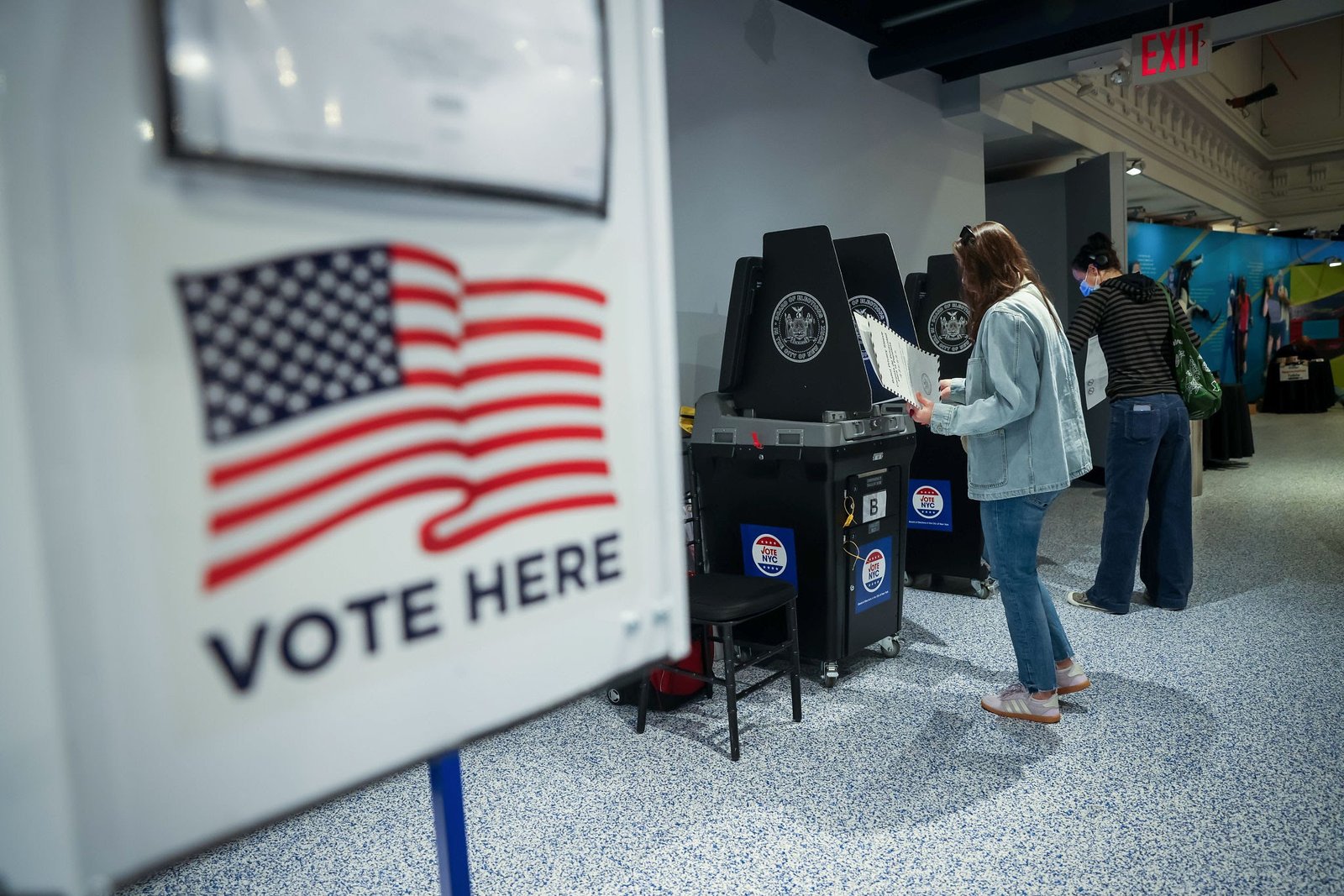
- US Midterm Elections serve as a major test for President Trump’s popularity, credibility, and key economic policies ahead of the vote.
- Intelligence agencies track foreign interference while communication gaps and technical challenges create friction between federal authorities and state election officials.
- Election outcomes are driving volatility across Asian markets, particularly in AI supply chains, semiconductor production, clean energy, and energy commodities.
WASHINGTON — With the midterm elections just days away, the historic midterm elections in the US are testing Trump’s popularity and credibility as voters across the country prepare to decide the control of Congress. Trump’s policies’ test is just a day ahead, with polls suggesting a clear win for Trump’s legislative allies in key battlegrounds.
Yet this victory will add heavy responsibilities on Trump’s shoulder as voters demand that his leadership address the nation’s most pressing domestic pressures. Above all, working families are looking for Washington to bring down the cost of living, drive food prices down, and deliver cheap gas at the pumps.
The high-stakes electoral environment reflects a deeply strained American electorate. Despite pledges to tackle inflation and restore economic stability, voters cite everyday household bills—from groceries to energy costs—as their primary concern entering the voting booth.
READ NEXT: Unstoppable Momentum: Why a Trump Midterm Election Victory Is Set to Secure Both Houses of Congress
With national gas prices elevated following recent geopolitical tensions and grocery bills remaining high, the political mandate emerging from this election is undeniable: whichever party controls the House and Senate must prioritize immediate economic relief over partisan battles.
US Midterm Elections: Intelligence Reports Highlight Foreign Interference and Communication Gaps
In addition to economic pressures, security officials are closely tracking sophisticated threats to the integrity of the vote. U.S. intelligence agencies have reported ongoing foreign interference operations from familiar state adversaries, including China, Russia, and Iran, aimed at influencing American voters and sowing division.
Israel’s Election Deadlock Puts Netanyahu’s Regional Strategy Under Pressure
Reports indicate that Chinese operations have increasingly targeted down-ballot contests and candidates involved in foreign policy debates, while Russian networks continue deploying artificial intelligence to generate misleading content across social platforms. Meanwhile, Iranian covert campaigns remain focused on exploiting geopolitical friction points and energy volatility to disrupt public confidence.
READ MORE: A field guide to the conspiracy theories you’ll likely see on Election Day
At the same time, the channels connecting federal security agencies with local election administrators face unprecedented friction. Budget cuts, structural changes, and past turnover at the Department of Homeland Security’s Cybersecurity and Infrastructure Security Agency (CISA) have hobbled the federal government’s ability to seamlessly relay real-time threat intelligence.
Recent technical glitches during classified briefings and skepticism surrounding federal political motivations have left many state and local election officials relying heavily on their own protocols. Despite these obstacles, election security experts across the nation continue working tirelessly to ensure the security and accuracy of every ballot cast.
Asian Markets Prepare for Political Shift and Market Volatility
The outcome of the U.S. midterms is casting a wide shadow over global financial hubs, with Asian markets bracing for the ripple effects of a shifting balance of power in Washington. Historical examples demonstrate that shifts in U.S. congressional leadership directly impact international equities, global trade policies, and currency valuations. Major regional benchmarks, including the Hang Seng Index, South Korea’s KOSPI, and Taiwan’s TAIEX, remain highly sensitive to incoming legislative results.
- Technology and Artificial Intelligence: Advanced semiconductor manufacturers in South Korea and Taiwan are closely watching U.S. political developments. A shift toward tighter congressional oversight could increase regulatory scrutiny over data center expansion, AI supply chains, and tech export policies. Conversely, policy continuity could preserve the momentum behind regional chip suppliers riding the American tech boom.
- Clean Energy and Defense: Exporters in the clean energy sector—including battery and solar manufacturers across East Asia—could see renewed market confidence under stronger Democratic leadership advocating for green transition policies. On the other hand, Japanese defense contractors and industrial suppliers stand to benefit if current fiscal defense spending priorities remain intact under Republican control.
- Energy Costs and Commodities: Historical election cycles paired with energy market disruptions show that surges in crude oil prices place severe downward pressure on energy-importing Asian economies. Elevated oil prices carry the potential to disrupt typical post-election market rallies, driving up borrowing costs and affecting local currency valuations against the U.S. dollar.
As polling stations close, financial institutions and international governments will be closely evaluating how the new political reality in Washington reshapes foreign trade, energy security, and global supply chains.