



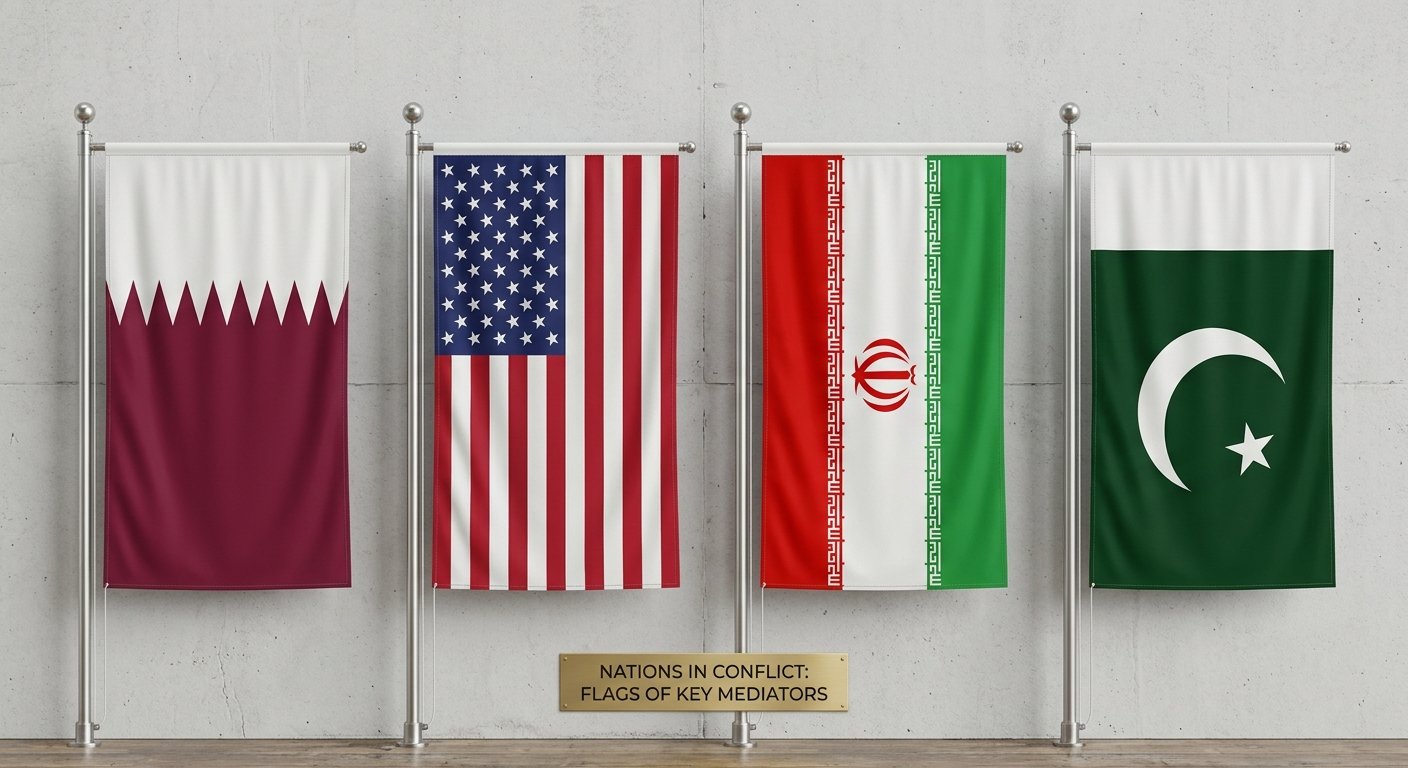
- Iran-U.S.-Israel War diplomacy gains momentum as Qatari and Pakistani mediators present a phased seven-day de-escalation framework.
- Islamabad and Doha leverage strategic and diplomatic channels to halt Houthi drone and missile strikes against Saudi Arabia.
- Iran-U.S.-Israel War negotiations focus on resolving key deadlocks involving naval blockades, nuclear commitments, and sanctions relief.
- Dual mediation by Pakistan and Qatar seeks to establish long-term regional security guarantees to avert broader military confrontation.
As military escalation across the Middle East threatens to trigger wider regional destabilization, an intricate diplomatic effort has emerged behind closed doors. Islamabad and Doha—two critical diplomatic intermediaries—are leveraging their regional credibility to negotiate an end to the Iran-U.S.-Israel war and halt persistent Houthi attacks targeting Saudi Arabia.
While Qatar acts as the primary shuttle diplomat carrying draft frameworks between Tehran and Washington, Pakistan brings uniquely potent diplomatic capital. As a nuclear-armed power maintaining strong defense relations with Riyadh alongside a 900-kilometer shared border with Iran, Islamabad holds significant structural leverage in regional security architecture.
READ MORE: Washington’s Iran War Warning Puts Gulf Diplomacy to the Test
This dual mediation mechanism represents a coordinated attempt to resolve one of the most volatile geopolitical deadlocks in modern history.
Iran-U.S.-Israel War: The Dual Mediation Paradigm
Qatar’s role as an indispensable regional interlocutor is well documented. Doha’s direct access to Washington and Tehran allows it to float draft peace agreements and test compromise thresholds without triggering public diplomatic fallout. However, Qatar’s financial and political leverage requires a military and strategic counterpart to reassure Gulf states concerned about proxy warfare.
READ NEXT: Diplomacy Expands Mecca Pact Influence
This is where Pakistan’s strategic calculus becomes essential. Islamabad’s diplomatic stance hinges on maintaining strict formal neutrality while actively guarding regional stability. Pakistan’s military leadership and foreign ministry maintain institutional trust with both the Saudi leadership and the Iranian Islamic Revolutionary Guard Corps (IRGC). By aligning diplomatic communications with Qatar, Pakistan provides the strategic weight necessary to back diplomatic proposals with regional security guarantees.
Iran-U.S.-Israel War: De-escalating the Regional Conflict
The central obstacle in negotiating an end to the Iran-U.S.-Israel war remains a fundamental mismatch in sequence and scope. Washington demands comprehensive nuclear concessions integrated into the initial phase of negotiations. Tehran demands an immediate cessation of naval and port blockades alongside full sanctions relief before entering substantive dialogue.
Pakistani and Qatari negotiators are working to construct a phased framework aimed at establishing a provisional seven-day operational pause. Under this mechanism:
-
Initial Protocol: A temporary freeze on offensive military operations allows humanitarian assistance to enter targeted zones.
-
Confidence-Building: Iran pauses high-level enrichment activities in exchange for targeted relief on maritime export blockades.
-
Multilateral Oversight: Pakistan and Qatar facilitate technical working groups to verify compliance across both sides.
Iran-U.S.-Israel War: Neutralizing the Houthi-Saudi Axis
Parallel to U.S.-Iran negotiations is the requirement to halt Houthi missile and drone strikes against Saudi critical infrastructure. The security of Saudi Arabia remains a vital red line for both Islamabad and Doha. A renewed wave of strikes targeting Saudi transport hubs and oil facilities threatens global energy corridors and risks dragging Gulf states into direct confrontation.
Pakistani foreign policy officials have engaged in intense bilateral discussions with Iranian authorities to emphasize that Houthi strikes against Saudi targets severely undermine Tehran’s diplomatic standing. Because Pakistan shares deep institutional defense commitments with Saudi Arabia, Islamabad has made it clear that further escalation targeting Saudi sovereignty risks forcing broader regional military re-alignments. Concurrently, Qatar is leveraging political channels with Yemeni political factions to tie a Red Sea ceasefire directly to broader economic stabilization initiatives.
Iran-U.S.-Israel War: Strategic Outlook
The joint effort by Pakistan and Qatar reflects a pragmatic recognition that neither Western pressure nor regional military actions can force a sustainable resolution to the Iran-U.S.-Israel war. While domestic political pressures in Washington, Tehran, and Tel Aviv continue to challenge diplomatic breakthroughs, the bilateral mediation axis remains the most viable channel for de-escalation.
If Islamabad and Doha successfully align Tehran’s security requirements with Washington’s strategic objectives, this dual-track mediation could establish a blueprint for lasting regional crisis management during the Iran-U.S.-Israel war.