



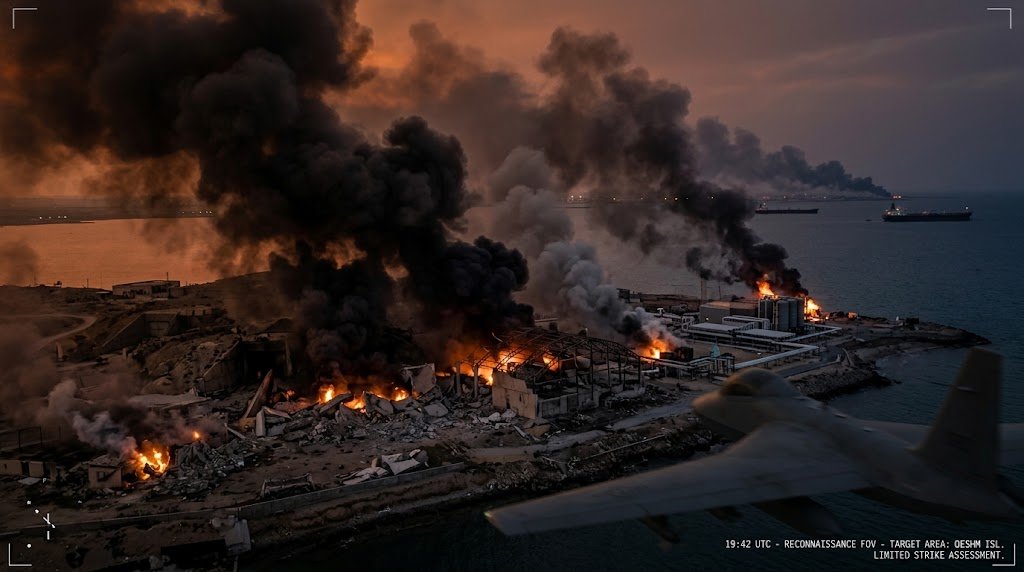
- U.S. Strikes on Qeshm Island: Qeshm Island was targeted by limited U.S. defensive strikes after Iran allegedly fired upon an American aircraft, raising fresh concerns over military escalation.
- The strike impacted critical infrastructure, including a major desalination plant, threatening severe water shortages for local Iranian populations.
- Maritime traffic through the vital Strait of Hormuz has been halted, causing renewed jitters across global energy and oil markets.
- Diplomatic efforts via Qatari mediators continue behind the scenes, though regional allies warn that further strikes could trigger widespread retaliation.
The U.S. military launched sudden defensive airstrikes against Iranian missile sites on Qeshm Island, shattering a delicate diplomatic quiet and threatening to reignite a stagnant regional war.
The airstrike carried out by the United States on Qeshm Island has dramatically escalated regional tensions, shattering a fragile diplomatic quiet and threatening to reignite an all-out military conflict across the Middle East.
Stuck commercial vessels in the Strait of Hormuz have effectively halted traffic, triggering immediate volatility in global oil markets as international energy analysts brace for a potentially severe wave of retaliatory attacks.
Beyond immediate military fallout, the strategic bombing of critical local desalination infrastructure risks plunging major Iranian cities into acute water shortages, deepening a catastrophic humanitarian crisis for the local civilian population.
The recent military engagement by the United States against Iran’s Qeshm Island has sent shockwaves through global markets and Middle Eastern capitals alike. While the White House has characterized the operation as a limited, defensive measure aimed at neutralizing surface-to-air missile threats against American aircraft, the timing on the eve of high-stakes midterm elections has intensified political friction.
President Donald Trump and Vice President JD Vance have publicly insisted that backchannel negotiations and Qatari-mediated talks remain active, pointing to potential off-ramps and expressing optimism over a prospective diplomatic breakthrough. However, this outward optimism contrasts sharply with the realities on the ground. Regional allies, including Saudi Arabia and Gulf state representatives, have warned that further military friction risks igniting a broader, more destructive multi-front war involving aligned militias and Houthi forces.
Humanitarian Fallout: The Targeting of Desalination Infrastructure
Beyond the immediate tactical exchanges, the strategic cost of the conflict has taken a devastating turn toward civilian infrastructure. Iran was already grappling with severe food supply shortages and economic strains resulting from long-standing sanctions and the ongoing naval blockade.
READ MORE: US military conducts strikes on Iran’s Qeshm Island in defensive operation, officials say
The inclusion of Qeshm Island’s critical infrastructure—notably its primary desalination plant and underground missile facilities—in the recent U.S. crosshairs marks a dangerous escalation. With the desalination plant heavily impacted, a massive segment of Iran’s coastal and urban population faces an impending clean water shortage. Humanitarian analysts fear that weaponizing civilian-supporting infrastructure will only harden Tehran’s resolve, turning a constrained geopolitical standoff into an acute humanitarian catastrophe that undermines any viable framework for a lasting peace agreement.
U.S. Strikes on Qeshm Island: Economic and Energy Security Convulsions
The ripple effects of the strike have immediately immobilized vital economic arteries. The Strait of Hormuz, through which a significant portion of the world’s daily petroleum supply moves, has seen commercial traffic severely disrupted and maritime transit largely halted as operators weigh the risks of active hostilities.
Although global oil prices experienced a brief downward correction amid initial rumors of diplomatic headway, the recent explosions and renewed military posturing caused an immediate rebound in market anxiety.
READ NEXT: Iran hosts Saudi Arabia and regional powers as fears grow of return to war
Shipping insurers, energy analysts, and regional leaders are increasingly vocal about the vulnerability of global trade routes. As long as the waterway remains a focal point for asymmetric retaliation and naval blockages, international energy markets will remain highly volatile and susceptible to sudden shocks.
Future Outlook and the Road to Escalation or Resolution
Looking ahead, the trajectory of the U.S.-Iran conflict hangs on a razor-thin margin between renewed diplomacy and total regional conflagration. While Washington faces domestic political pressure to wind down the costly campaign and bring troops home, hawkish regional actors continue to lobby for decisive air campaigns to permanently degrade Iranian military capabilities.
The new supreme leadership in Tehran has signaled that any future aggression will be met with immediate, unbounded retaliation. For a breakthrough to materialize, both sides must bridge vast ideological divides over the lifting of maritime blockages and nuclear program concessions. Without genuine compromises, the region risks sliding past the point of no return, where localized skirmishes transform into an all-out war with global economic and humanitarian repercussions.