
Trending
- Brazil’s Election Is a Battle Between Lula’s Record and Bolsonaro’s Rebellion
- Palestinian Prepare for First Legislative Elections in 20 Years
- Palestine Issue: The Two-State Solution May Be the Only Viable Exit
- Houthis’ Repeated Attacks on Saudi Arabia Put Mecca Pact to Real Test
- Trump’s TIME Interview Reveals a President Thinking Beyond the Midterms
- Why Rubio sent Iran’s delegation home — and what a Hormuz deal could look like
- Netanyahu Flydubai Flight: 9/11 Warning Sparks Political Storm in Israel
- What Happened In Tel Aviv-bound Flight FZ1073: Passengers and Crew Avert Horror


Author: ZORAIZ KLASRA
ZORAIZ KLASRA
Zoraiz Klasra is the National Security and Defence Correspondent for The Islamabad Telegraph. He specializes in exposing hybrid warfare, disinformation campaigns, and regional threats to Pakistan. His investigative reporting focuses on covert networks involving India, Israel, and anti-state proxies.
US Aircraft Carriers including the USS Abraham Lincoln are repositioning to the Middle East. The deployment follows President Trump’s warnings regarding the crackdown on Iranian protesters. Open-source intelligence shows a massive surge in supporting Air Force assets and tankers. The buildup mirrors the 2025 military strikes on Iranian nuclear facilities. In a dramatic escalation that could redefine Middle East geopolitics, U.S. aircraft carriers are reportedly steaming toward Iran, fueling speculation of the largest American military operation in the region since the 2025 strikes on Tehran’s nuclear facilities. Media reports and open-source intelligence indicate the USS Abraham Lincoln Carrier Strike Group,…
Iran protests sparked by economic collapse spread across all 31 provinces with over 100 cities witnessing unprecedented demonstrations demanding regime change and challenging Supreme Leader Khamenei’s authority. Government crackdown results in massive casualties with human rights organizations documenting between 2,677 to potentially 20,000 deaths, over 18,000 arrests, and widespread use of live ammunition against protesters. Internet blackout and digital resistance imposed January 8 failed to completely silence protesters who utilized VPNs and Starlink to smuggle videos showing violent clashes and defiant crowds across major cities. Regional powers adopt cautious stance as Gulf states, Turkey, and international bodies navigate tensions between…
Download South Asia Daily Briefing As of January 15, 2026, South Asia is navigating a period of intense strategic recalibration and volatility. The regional landscape is currently dominated by a “trinity of troubles” involving India, Pakistan, and Afghanistan, where cross-border tensions have escalated into intermittent drone strikes and military skirmishes. India’s advisory for its citizens to leave Iran highlights the fragility of its western “connectivity corridor,” as domestic unrest in Tehran threatens the viability of the Chabahar Port—New Delhi’s vital link to Central Asia. Simultaneously, Pakistan is pivoting toward economic diplomacy, leveraging its defense exports like the JF-17 Block…
Download South Asia Daily Briefing On January 14, 2026, South Asia’s geopolitical landscape is defined by a precarious intersection of traditional security anxieties and modern economic disruption. As the region navigates a shifting global order, the day’s events reveal a subcontinent increasingly forced to hedge between Western strategic interests and domestic imperatives. The current state of play highlights three critical themes: 1-Managed Strategic Friction: India General Upendra Dwivedi’s emphasis on “regular touch” with Dhaka serves as a vital diplomatic shock absorber. By downplaying fears of a Bangladesh-Pakistan military nexus, New Delhi is signaling a pragmatic commitment to prevent the…
U.S. strike on Iran is being considered as a direct response to the killing of over 600 protesters in Tehran and other major cities. The Pentagon has briefed the President on long-range missiles, cyber operations, and psychological warfare tools. Trump has announced a 25% tariff on any nation trading with the Islamic Republic to further isolate the regime. Iran has threatened to retaliate against U.S. bases and Israel if a military intervention begins. The drumbeat of war in the Middle East has reached a crescendo this week as President Donald Trump reviews an expansive menu of military and covert options…
Pakistan-Indonesia defense ties reached a new peak during the GHQ meeting on January 12, 2026. The deal involves the potential sale of over 40 JF-17 Thunder Block-III fighter jets. Discussions included the export of Shahpar-II killer drones and Super Mushshak trainers. Pakistan is emerging as a top-tier arms exporter for the Middle East and Southeast Asia. In a move that signals a tectonic shift in Southeast Asian security dynamics, Pakistan and Indonesia have moved to significantly deepen their military-to-military relationship. On Monday, January 12, 2026, Lieutenant General Sjafrie Sjamsoeddin (Retd), the Indonesian Minister of Defence, arrived at the General Headquarters…
South Asia Daily Briefing – January 12, 2026 Pakistan faces a surge in militancy as a targeted bomb attack in Tank district killed seven police officers, highlighting persistent security challenges along the northwestern frontier. In India, ISRO’s Polar Satellite Launch Vehicle suffered a critical setback when a rocket carrying 16 payloads veered off course, undermining the agency’s otherwise strong launch record. Across the border, a Nepalese Armed Police constable was found murdered near Bahraich, India, signaling cross-border criminal or insurgent risks. Sri Lanka hosted Chinese Foreign Minister Wang Yi, who pledged support for cyclone reconstruction and deepened economic ties, reflecting…
Iran Protests: The failure of “straight firing” tactics to deter a population with nothing left to lose. The strategic “state of war” involving Saudi Arabia, Yemen, and the UAE, complicating any unified response. U.S. military readiness and its unintended role in compounding the economic miseries of the Iranian people. The internal rift within the Iranian cabinet vs. the Revolutionary Guard’s “existential threat” mindset. TEHRAN / WASHINGTON — The silence across the Iranian plateau is not one of peace, but of a digital and physical blackout. As of January 12, 2026, the Islamic Republic is gripped by an iron-fisted stalemate that…
South Asia Weekly Briefing: A Region Realigning Under Pressure South Asia entered the second week of January with a rare combination of continuity and disruption—steady military cooperation on one end, and geopolitical recalibration everywhere else. Old rivalries are being rearranged, great-power footprints are deepening, and regional governments are hedging quietly, sensing that 2026 will be a year of consequence. The week’s developments suggest three converging trends: South Asia is becoming more multipolar and transactional, Washington’s influence remains strong but contested, and India’s choices are shaping the region more than ever. Below is what matters, and why. PAKISTAN & THE UNITED…
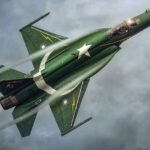
The JF-17 Thunder Block-III proved its lethality by engaging and neutralizing advanced fourth-generation threats. Nations including Iraq, Bangladesh, and Saudi Arabia are now pursuing formal procurement talks for the platform. Pakistan’s indigenous defense industry has reached a point of technological sovereignty through the Thunder program. The aircraft offers a high-performance, cost-effective alternative to expensive Western defense acquisitions. The brief but decisive conflict between Pakistan and India last May did more than silence artillery along the Line of Control—it permanently altered the geopolitical architecture of South Asia. For the first time in decades, Pakistan demonstrated more than mere deterrence; it showcased…