



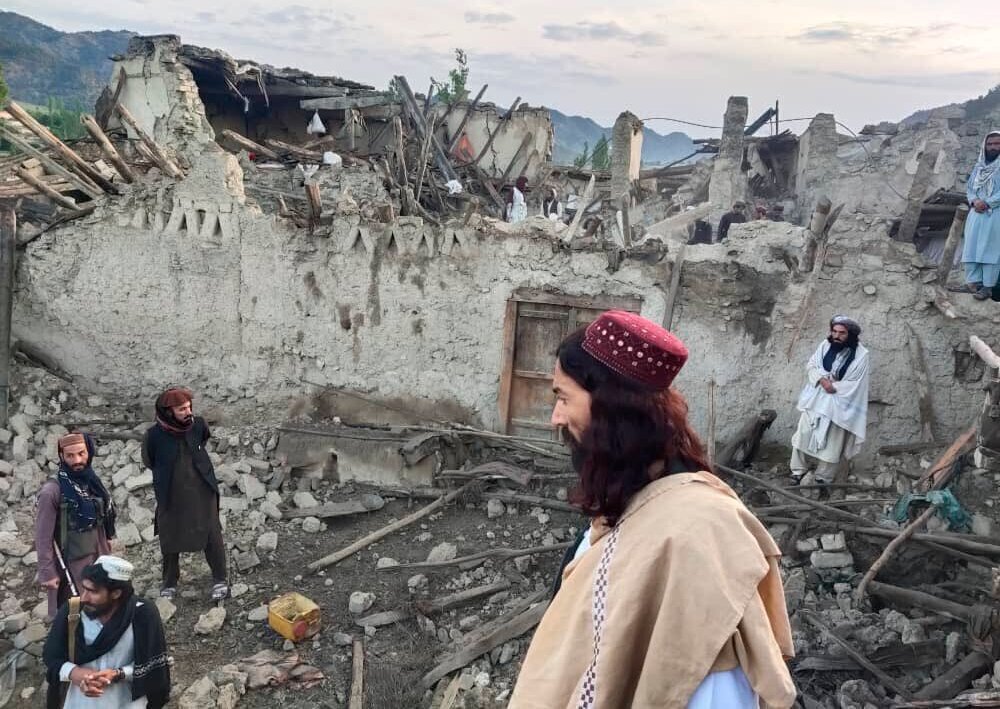
- Over 250 dead, 500 injured as mud houses crumble in Afghanistan’s eastern provinces
- Children and women account for most of the casualties amid chaotic rescue efforts
- Lack of infrastructure, skilled responders turn a natural disaster into mass tragedy
- Global aid organizations call for urgent help as aftershocks terrify survivors
The night in Jalalabad had begun like any other—a dusty, chilly evening when the last rays of sunlight faded behind the Hindu Kush mountains, and families in the countryside retreated to their mud-brick homes, lighting dim lanterns as children drifted into sleep. The air carried the usual scent of earth and wood smoke. But by midnight, the earth itself would betray them.
At 12:47 a.m., with no warning, the ground convulsed violently. A deafening roar rose from deep beneath the soil, like some ancient beast breaking free. Walls of fragile mud homes cracked before anyone could scramble to safety. Within seconds, entire clusters of houses collapsed like toys scattered by a careless child. The 6.0-magnitude earthquake did not discriminate—it ripped through villages near Jalalabad with merciless force, killing mothers, fathers, and children alike.
A Vote of Confidence: Trump Administration Ends TPS for Afghans Amid Taliban Stabilization
By dawn, the death toll had already crossed 250. More than 500 lay injured, many trapped beneath rubble, their cries muffled by layers of dust and stone. And as the sun rose, it revealed a scene that words can barely carry: a valley turned into a graveyard, villages reduced to jagged outlines of broken walls, and survivors wandering in shock, clutching photographs, shoes, or scraps of clothing belonging to the loved ones they would never see again.
Afghanistan on Its Knees
Afghanistan has lived through wars, invasions, and hunger, but this earthquake felt cruel in its timing and scale. The epicenter, just 17 miles from Jalalabad, was a place of small farms, narrow dirt roads, and villages where homes were built not with steel or cement but with the very earth they stood on—sun-dried bricks of mud and straw.
“Everything we had is gone,” whispered Hamidullah, a farmer whose wife and two daughters were buried alive when their home collapsed. His voice trembled, his clothes caked with dust as he sat beside what used to be his house, now just a heap of mud and splintered wood.
READ MORE: Earthquake Kills Hundreds in Afghanistan
The quake did not just kill people; it erased entire generations in seconds. In Kunar Province, where most casualties occurred, rescuers pulled out the bodies of 18 children from a single madrasa. In another village, a wedding hall that had been filled with guests for a Sunday night celebration now stood silent, its roof fallen, the laughter and music buried with dozens inside.
Zabihullah Mujahid, the government spokesman, confirmed the deaths in a brief message, calling it a “calamity for our nation.” But for families huddled under the open sky that night, it was more than a calamity—it was the end of the only world they knew.
Rescue Without Resources
By early Monday, volunteers and a few local officials began digging with bare hands, shovels, and whatever tools they could find. But Afghanistan, crippled by decades of war and international isolation, lacks the kind of machinery and expertise needed for large-scale rescue operations.
ALSO READ: Trump, Putin, and the Alaska Gamble: A Missed Opportunity or the Start of a Grand Bargain?
There were no cranes to lift heavy debris, no specialized teams with sniffer dogs, no helicopters dropping aid parcels as in other parts of the world. Instead, villagers worked frantically, their palms bleeding, lifting stones one by one to find survivors.
“We could hear voices under the rubble, but we had nothing to cut through the wood and stone,” said Ahmad Shah, a young man who spent the entire night digging at a collapsed school in Kunar. By the time they pulled out the last child, his tiny body was cold.
In hospitals across Jalalabad, doctors struggled with the flood of injured arriving in tractor trolleys and pickup trucks. The main provincial hospital ran out of painkillers within hours. There was no electricity in some wards; families used phone flashlights as nurses stitched wounds in the dark.
“We have seen war injuries before,” said Dr. Farid, a surgeon at the hospital. “But this was different. Whole families crushed in their sleep—children with broken spines, mothers with shattered skulls. We have nothing—no medicine, no equipment, not even enough beds.”
A History of Quakes—and Neglect
Earthquakes are not new to Afghanistan. The country sits atop several major fault lines, and every few years, tremors bring death and destruction. In 2022, a 5.9-magnitude quake killed over 1,000 people in the southeast. But nothing changes.
Years of conflict have left the country with almost no disaster preparedness. There are no strict building codes, no early warning systems, no trained rescue brigades. Homes in rural areas are built by the residents themselves, using cheap materials. When the earth shakes, these houses become death traps.
Experts have long warned that Afghanistan’s infrastructure is a ticking time bomb. Yet aid money goes to food, refugees, or politics—rarely to earthquake safety. After this disaster, international agencies may send tents, food parcels, and blankets. But will they help build quake-resistant homes? Will they train rescue teams? History suggests otherwise.
The Faces of Grief
By Tuesday, mass funerals began. In village after village, men dug long trenches in frozen earth as women wailed nearby. Children, wrapped in white shrouds, were lowered into the ground as grieving fathers clutched at the soil, refusing to let go.
One man, Gul Rahman, lost his entire family—his wife, three sons, and two daughters. He sat beside six freshly dug graves, staring at them in silence. When a journalist asked him what he would do now, he simply said, “There is no now. There is only yesterday.”
In another village, survivors gathered under a tree where aid workers distributed bread and water. Among them was 9-year-old Amina, her arm in a makeshift sling. Her parents had died in the quake; she had no relatives nearby. When someone asked her where she would live now, she looked down at the ground and whispered, “Maybe with God.”
These are not just statistics for reports in Kabul or New York. These are lives—dreams, laughter, families—erased in seconds.
A Plea to the World
Afghanistan’s tragedy should shake the conscience of the world. From Washington to Paris, from Islamabad to Moscow, leaders must understand that disasters in forgotten corners of the globe deserve as much attention as those in wealthy nations.
When earthquakes strike Japan or Italy, rescue teams from around the world rush in within hours. Donations pour in; the dead are mourned on global television. But in Afghanistan, where poverty and politics have reduced people to mere footnotes, the world looks away after a few headlines.
This time must be different. Afghanistan needs not just food aid but long-term investment in disaster preparedness—earthquake-resistant housing, early warning systems, medical training, and rescue equipment. Natural disasters cannot be prevented, but their death tolls can.
The Night That Changed Everything
As darkness fell again over Jalalabad two nights later, survivors huddled around small fires in open fields. Afraid of aftershocks, they refused to sleep indoors. The mountains around them stood silent, as if mourning the lives lost beneath their shadow.
Somewhere in the rubble, the cries had stopped. Either the trapped had been rescued, or their voices had faded forever.
For the people of eastern Afghanistan, life will now be divided into before and after the quake. Before, there were homes, schools, weddings, and children’s laughter. After, there is only loss, hunger, and the long road of rebuilding—a road they will walk mostly alone unless the world decides to walk with them.
Because for the villagers of Jalalabad and Kunar, this was not just an earthquake. It was the night the earth itself turned against them, leaving behind a silence that screams to be heard across continents.